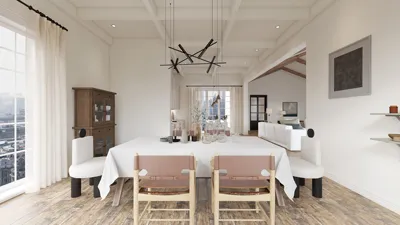


I once took on the challenge of fitting a washer and dryer into a 4.5 sqm bathroom because the client insisted that these appliances "must stay in the tub area." It was a daunting task, but I discovered three invaluable strategies that rescued the project — and my sanity. This intriguing challenge evolved into my favorite small-space endeavor: a small bathroom-laundry conversion that actually worked, showcasing the versatility of designs with tools like Homestyler.
1. Stack smart: vertical saves floorspace
I typically begin with the option of stacking a washer and a condenser dryer, or a combined washer-dryer, in order to optimize floor area. This method is straightforward: it provides additional storage or a folding shelf above without necessitating plumbing changes. While the trade-off includes slightly less accessibility and often increased vibration, I recommend using anti-vibration pads along with a pull-out shelf for folding clothes, further enhancing convenience.
save pin
2. Wet-room approach: embrace waterproof design
Transforming the bathroom into a wet zone allows you to discreetly position appliances behind a glass panel or adjacent to a walk-in shower. This bold and contemporary approach not only streamlines cleaning but also provides a cohesive aesthetic. However, this requires an upgrade in waterproofing and ventilation; the outcome is a stylish and continuous appearance, along with fewer concerns about moisture.
save pin
3. Cabinetize and conceal: hide the chaos
Incorporating built-in cabinets with roll-out trays can make laundry seem less like a chore area and more like stylish cabinetry. I once created a slender utility cabinet featuring a tilt-out laundry basket and a slim drain pan to provide added reassurance. Although this option may incur slightly higher costs, the final appearance is worth it, especially for compact urban apartments.
save pin
4. Multi-use surfaces: folding & drying cleverly
A countertop positioned above a front-loader can serve as a folding station, while a retractable drying rack installed over the tub or a heated towel rail can double as a dryer. For budget-conscious clients, I design quick layout sketches to help them visualize the necessary counter depth, as early visualization can prevent costly renovations later. Be prepared for trade-offs: you may need to sacrifice some storage or elbow room for these additional functionalities.
save pin
5. Venting & plumbing: plan like a pro
Proper venting and a suitable condensate drain are critical factors. Sometimes, the simplest solution is a compact condensate pump connected to an existing drain, or replacing a dryer with a ventless heat-pump variant. I often utilize 3D mockups to gain clients' trust in minor alterations — they help visualize clearance and access before we proceed with any tile cutting. The advantages include improved moisture control and simplified maintenance, though it may involve a small initial investment.
save pin
FAQ
Q1: Can I put a washer in my bathroom?
A1: Yes—provided you have the proper plumbing, drainage, and electrical connections. Ensure that a GFCI outlet is installed and adhere to local codes for wet areas.
Q2: Is a ventless dryer acceptable for a bathroom?
A2: Ventless dryers (like heat-pump or condenser types) are suitable for small bathrooms as they don’t require exterior ventilation; however, they can slightly raise humidity levels, so it's essential to pair them with effective ventilation.
Q3: How can I prevent mold with laundry in the bathroom?
A3: Implement strong exhaust ventilation and keep doors or cabinets ajar post-cycle to allow for drying; regularly wipe down wet surfaces and opt for mildew-resistant finishes.
Q4: Are stacked units less reliable?
A4: Stacked units can be very reliable if they are installed and leveled correctly; always utilize manufacturer stacking kits and take anti-vibration measures to minimize wear.
Q5: What’s the minimum space required for a washer-dryer?
A5: A slim front-loader can fit within a width of as little as 24 inches and a depth of 24-28 inches, but additional clearance should be allowed for doors and maintenance access.
Q6: Do building codes impose limits on laundry in bathrooms?
A6: Regulations differ by jurisdiction; it’s essential to check local electrical and plumbing codes. Some condominium regulations may restrict the installation of appliances in certain areas.
Q7: How much does upgrading to a small bathroom laundry cost?
A7: Cost-effective options (like stacking or ventless dryers) are generally affordable; however, anticipate higher expenses if you require waterproofing, plumbing adjustments, or custom cabinetry.
Q8: Where can I find reliable information about ventilation and moisture control?
A8: The U.S. Environmental Protection Agency offers comprehensive guidance on moisture management and indoor air quality; you can find their valuable recommendations regarding mold and moisture at https://www.epa.gov/mold for professional advice.
save pin
Originally incubated at Autodesk, Homestyler has grown into one of the most widely adopted home design platforms in the world, now trusted by over 18 million users. Whether you're a homeowner exploring ideas or a professional designer delivering client-ready renders, Homestyler brings industry-leading 3D technology to your fingertips — no experience required.
Discover your dream space with Homestyler! This user-friendly online design platform offers an intuitive design tool, stunning 3D renderings, and a plethora of inspiring design projects. Plus, you can learn through engaging DIY video tutorials, making home design accessible and fun for everyone!
Design jetzt kostenlos
































