

I create designs for spaces that are as functional as the individuals utilizing them, and one of my preferred small-space enhancements is a wall-mounted shoe rack. Utilizing vertical storage optimizes circulation space, reduces visual clutter, and transforms a practical requirement into an appealing feature wall. In residences where every square inch is precious, relocating shoes from the floor can reclaim up to 12% of usable space within entryways and closets by eliminating hazards and enhancing accessibility. Research from Steelcase shows that decreasing visual disorder significantly enhances perceived control and concentration—an effect you’ll notice immediately after clearing away the shoe pile. Additionally, WELL v2 stresses the importance of clear pathways and ergonomic reach areas; positioning everyday shoes between 24 to 60 inches high can minimize awkward bending and shoulder strain.
The significance of light and color often exceeds people's expectations. The Illuminating Engineering Society recommends 300 to 500 lux for visibility in residential organization spaces; opt for the higher end if the wall finish is dark or matte to avoid shadowing. For those hurried morning selections, using neutral, high-CRI lighting (90+) ensures accurate color rendering. From a psychological perspective, guidance from VerywellMind indicates that warm neutrals provide a calming effect, while muted blues and greens promote order and routine—these hues can be effectively employed behind the rack to facilitate an effortless selection process. For broader planning principles and ergonomic standards, the WELL Building Standard provides clear thresholds you can adapt to your home projects, such as those designed with the help of Homestyler.
Evaluate Your Space and Shoe Inventory
Begin with an honest audit of your footwear. Categorize pairs: casual sneakers, workplace shoes, heels, boots, and seasonal items. Measure the wall for usable width, height, and any obstructions (like switch plates or baseboards). Target a workable height range of 24 to 72 inches; keep the lower 24 inches available for items accessible to kids, while reserving the 60 to 72-inch range for occasional or dress shoes. Typical shoe sizes: sneakers usually require 9–11 inches of depth, heels around 8 inches, ankle boots 10–12 inches, and tall boots up to 16–18 inches; plan the projection off the wall accordingly.
Select Your Mounting System
Choose mounting hardware suited to your shoes and the wall's material. For drywall over studs, consider using a French cleat or a standard bracket system which offers versatility and durability. Masonry walls necessitate sleeve anchors or specialized screws. For those renting, tension-mount tracks or over-the-door frames reduce the need for drilling. Assess the weight: a pair of men’s boots can weigh between 3 to 5 pounds; if using a four-foot shelf for 10 to 12 pairs, expect it to exceed 40 pounds. Space brackets every 16 inches and ensure each bracket is secured with at least two fasteners into the studs; if the studs are misaligned, install a continuous plywood backer (3/4 inch) anchored to multiple studs, then attach the shelves to the backer.
Depth, Pitch, and Spacing: The Ergonomic Essentials
Shallow shelves are advantageous for reducing clutter and increasing accessibility. An 8 to 9-inch depth is generally sufficient for sneakers and heels, especially if you incorporate a 1 to 1.5-inch lip or a slight pitch of 5 to 7° to prevent shoes from sliding off. Boots will need 12 to 14 inches of depth. Recommended vertical spacing is 6 to 7 inches for flats, 7 to 8 inches for sneakers, 9 to 10 inches for heels, and 14 to 18 inches for taller boots. Maintain the primary grab area between 30 to 50 inches high. Adding a toe stop, like a slim dowel or metal edge, allows shoes to be angled for better visibility, thereby shortening selection time and lessening wrist strain that may occur with deep cubbies.
Durable Material Choices
Select finishes that withstand moisture and wear. Powder-coated steel is durable against scuffs and has a slim profile. Solid hardwood, when finished with waterborne polyurethane, can handle wet footwear. Avoid softwoods that can easily dent. For a minimal aesthetic, consider using perforated metal or slotted rails paired with acrylic ledges. For an eco-friendly choice, opt for bamboo or FSC-certified plywood, finished with low-VOC, waterborne coatings to enhance indoor air quality.
Layout Techniques for Various Spaces
In entryways, maintain commonly used shoes at mid-height and include a boot section lower down equipped with a drainage tray. For bedroom closets, integrate shallow angled shelves behind doors; reserve higher levels for seasonal heels. In garages or mudrooms, opt for deeper shelves made from robust materials and include airflow spaces for drying athletic shoes. If planning multiple walls and needing visual references, a room layout tool can assist in previewing clearances and door swings before making any modifications, much like using Homestyler.
Lighting for Easy Access and Comfort
Implement layered lighting to enhance usability of the shoe rack. Combine a diffuse ceiling light with a linear LED strip underneath the shelves (2700–3000K for warmth, 3500–4000K for a fresher morning atmosphere). Maintain a low Unified Glare Rating (UGR) with frosted lenses and indirect placement to minimize glare on glossy surfaces. Motion sensors are practical in entryways and can be set to delay for 60 to 120 seconds to ensure you're not left in the dark during your search. Aim for around 400 to 500 lux on the front edges of shelves to ensure color accuracy and promptly identify signs of wear.
Airflow and Odor Management
Shoes thrive with adequate ventilation. Maintain 1 to 2 inches of space between pairs and 3 to 4 inches from the wall to prevent moisture retention. Shelving with perforations or mesh panels can facilitate drying. In mudrooms, contemplate a low-noise fan or mounted grille near the rack for air circulation. Cedar inserts or activated charcoal bags can absorb odors; steer clear of powerful fragrances that merely mask the problem instead of resolving it.
Safety and Installation Guidelines
Utilize a reliable detector to locate studs and confirm by pilot drilling. Use screws sized #10–#12 and 2.5 to 3 inches long, accompanied by washers when using metal brackets. For French cleats, cut a 45° angle on 3/4 inch hardwood or plywood; anchor the wall cleat across at least three studs. Pre-finish components to seal all surfaces—especially the undersides of shelves—to avoid cupping. Incorporate rounded front edges or a slim bullnose to mitigate scuffing.
Design Aesthetics: Make It Stand Out
A shoe wall can resemble open shelving within a living area when shelf reveals are aligned and a consistent rhythm is maintained. Standardized modules—such as 24-inch bays—establish a visual flow. Introduce color-coded zones with subtle backgrounds: a warm gray for everyday shoes, muted sage for athletic pairs, and deep navy for formal footwear. Keep the upper edge clean and allow negative space; avoid overly filling the top. A thin ledge above the rack can accommodate a tray for accessories, brushes, or polishes, perfectly complemented by Homestyler’s design tools.
Compact Space Solutions
Inverted U-brackets can be employed to suspend heels from the back; this approach saves depth while maintaining alignment. Clip-on toe stops convert flat shelves into angled displays. For taller boots, consider using discreet shapers or hangers to maintain their structure and prevent creasing. If sharing the rack, consider marking segments with slim dividers and placing name tags under shelves to streamline your morning routine.
Maintenance and Longevity
Regularly wipe down shelves weekly, focusing on the front edges where dust gathers. Rotate shoes seasonally to even out wear patterns. Re-check and tighten hardware every six months; vibrations from nearby doors can loosen screws over time. Replace felt pads or protective liners as they wear down. Keep a small brush in a wall-mounted caddy to ensure treads are clean before placing shoes back.
Budgeting and Timelines
A fundamental DIY shoe rack using pine, acrylic toe bars, and standard brackets may cost between $80 to $120 for a 4 to 6-foot section. Transitioning to hardwood and powder-coated steel brackets typically ranges from $180 to $350 based on material choices. Expect to spend half a day to build once you have the materials ready; be sure to account for drying time if you are finishing the wood.
Step-by-Step Construction Overview
1) Measure and mark where the studs are located. 2) Choose the number of shelves and spacing based on shoe types. 3) Cut shelves to the required depth (between 8 and 14 inches) and create a 5 to 7° angle or install a toe stop. 4) Pre-finish and allow to dry. 5) Install a continuous backing if studs are not aligned. 6) Level brackets or cleats and check with a straight edge. 7) Place the shelves, test with full load, and adjust spacing as needed. 8) Consider adding labels or subtle icons to maintain consistent categorization.
Frequently Asked Questions
Start by positioning the lower edge 10 to 12 inches above the floor to facilitate drip trays and toe clearance; increase to 14 inches if primarily storing boots.
Utilize LED strips or downlights at 3500 to 4000K with CRI 90+; this range reveals true colors while accurately displaying warm tones.
While it’s possible to use glass, opt for tempered, 8 to 10 mm thickness, and incorporate anti-slip dots. Glass tends to exhibit dust more prominently and can reflect light harshly.
To enhance stability, incorporate a 1 to 1.5 inch front lip, a slight 5 to 7° pitch, or utilize a thin dowel as a toe stop. High-friction liners are also beneficial.
Yes, if constructed from 3/4 inch hardwood or plywood and secured across multiple studs using #10–#12 screws. Stress-test the rack with a staged load before full implementation.
Opt for powder-coated steel or aluminum with ventilation perforations; refrain from using MDF in damp environments due to swelling and deterioration.
Maintain 1 to 2 inches between shoes and 3 to 4 inches from the wall for ventilation; increase space for footwear that takes longer to dry after use.
Consider placing a narrow bench around 16 to 18 inches high next to the rack. Ensure at least 30 inches of clear passage for easy navigation.
Allocate 14 to 18 inches of vertical space and utilize boot shapers or hangers to prevent creasing.
Apply waterborne polyurethane to hardwood or utilize powder-coated steel. Matte finishes tend to hide minor scratches better compared to glossy ones.
Adhere to IES lighting recommendations (300 to 500 lux for organizing areas) and follow WELL v2 guidelines for ergonomic reach dimensions and clear pathways.
Incorporate freestanding ladders with angled shelves or tension-mount tracks; limit wall attachments to removable, small-diameter fasteners.
What began as an Autodesk innovation has evolved into a design platform used by more than 18 million people around the globe. Homestyler combines powerful rendering, an intuitive editor, and a vast furniture library to help you turn inspiration into photorealistic designs — whether you're redesigning a single room or planning an entire home.
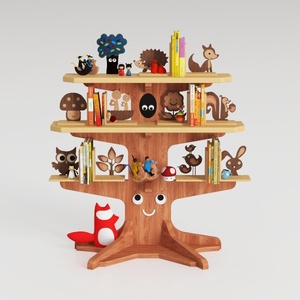

Cartoon Solid Wood Tree Shaped Kids Bookshelf 3D Model

Minimalist Solid Oak Wall Mounted Floating Shelves 3D Model

Minimalist Japandi Rattan Solid Wood Sideboard 3D Model
Homestyler is your go-to online home design platform. With an easy-to-use design tool, stunning 3D renderings, and a wealth of DIY video tutorials, you can effortlessly create your dream space. Discover endless design possibilities and transform your home with confidence!
Zaprojektuj teraz za darmo
































