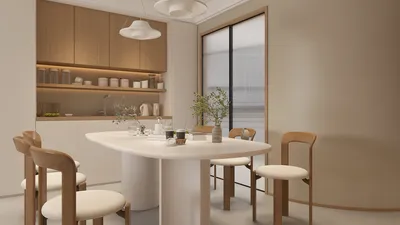


I once persuaded a client that adding a chandelier would inject a ‘dramatic’ flair into her petite galley kitchen—until, during the first week, she bumped her head against it. We quickly replaced it with layered lighting, and miraculously, the kitchen felt almost twice as spacious. That experience taught me that effective lighting strikes a balance between functionality and character, particularly in smaller kitchens. To this day, I refer back to that kitchen design when mentoring junior designers on how to approach scale.
Compact spaces inspire vast creativity, and in this article, I'll guide you through five lighting ideas for kitchens that I've successfully implemented in real projects. Be ready for practical advantages as well as some candid drawbacks—I will also share budget adjustments and a few shortcuts that have saved time and money.
1. Layered lighting: ambient, task, and accent
I always implement three layers of lighting: general ambient illumination, focused task lighting above preparation areas, and accent lighting to showcase textures or backsplashes. The benefits are clear—each area of the kitchen becomes functional and adjustable, though it does demand planning and may require multiple switches or smart controls.
Tip: Integrate dimmers and group circuits early in your design to manage the various layers without needing to rewire later. For a simple renovation, prioritize task and ambient lighting first, then consider accents as the budget permits.
save pin
2. Statement pendants for islands and dining areas
Pendants are the ideal way to inject personality into a kitchen. I select fixtures that are visible at eye level—metal for a modern appearance and woven shades for a softer aesthetic. They serve as focal points without overwhelming a smaller space, though hanging them too low can obstruct sightlines.
Keep pendants positioned 30–36 inches above the island for elongated, narrow designs and between 28–34 inches for broader shades. If you're on a budget, investing in one high-quality pendant is always better than opting for three inferior ones.
save pin
3. Under-cabinet and toe-kick lighting for task efficiency
Under-cabinet LEDs are a beloved renovation choice, as they effectively address challenges like chopping and reading. I once revamped a dimly lit kitchen with strip LEDs, and the client no longer needed a flashlight for reading recipes. The instant usability is evident; however, concealing wiring neatly in older cabinets can be tricky.
For those who prefer visual representations before purchasing fixtures, I frequently present clients with impressive 3D renderings that showcase how light interacts with their backsplash and countertop finishes, often utilizing tools like Homestyler to enhance visualization.
save pin
4. Recessed and track lighting for seamless versatility
Recessed fixtures provide a clean ceiling appearance while delivering excellent general lighting. Adjustable track heads offer the flexibility to redirect light for varied layouts or art displays. The advantage is in their adaptability; however, overusing them can lead to glare and a cluttered ceiling look.
Utilize recessed lights with baffles to diminish glare, and plan their installation to prevent bright and dark areas. For cost-efficiency, it's better to install fewer high-quality fixtures than a multitude of cheaper ones, as placement is more critical than quantity.
save pin
5. Smart, tunable LEDs for customizable atmospheres
Smart bulbs and color-tunable strips allow you to transition from bright prep lighting to warm dinner ambiance without altering the circuit breakers. This setup proved invaluable in a small open-plan kitchen, adapting the mood from weekday breakfasts to weekend dinners—clients adored it. The only downside? Smart systems can introduce complexity and occasional connectivity issues.
For a hassle-free option, select fixtures that are compatible with a single ecosystem, whether it's a voice assistant or smart hub. If you're seeking forward-thinking inspiration, consider exploring an AI-supported kitchen transformations case that quickly tests various color temperatures and layout designs.
save pin
Tips 1:
Start by focusing on task lighting and expand outwards: reliable prep illumination enhances daily tasks far more than an extravagant chandelier. Invest in quality dimmers and LED color temperature controls from the outset. If uncertain, simulate minor adjustments with clamps or clip-on fixtures before committing to permanent installations.
save pin
FAQ
Q1: What color temperature works best for kitchen lighting?
A: For the majority of kitchens, I recommend 2700K–3000K for dining areas and 3000K–4000K for task zones. Warmer shades create a cozy atmosphere, while neutral-cool whites assist with food preparation and color accuracy.
Q2: How many lumens should I have in a kitchen?
A: Aim for around 3000–4000 lumens in total from your ambient sources, plus an additional 300–500 lumens in each task area. Layering both task and ambient light will provide the most effective illumination.
Q3: Are LED lights superior for kitchen use?
A: Absolutely—LEDs are far more energy-efficient and have a longer lifespan compared to incandescent or halogen bulbs. According to ENERGY STAR, LEDs consume at least 75% less energy and endure 25 times longer than traditional lighting.
Q4: Can I combine different fixture styles in one kitchen?
A: Definitely. Combining styles—such as modern pendants with traditional sconces—injects character into the space. Just ensure a harmonious finish or color palette to maintain cohesiveness.
Q5: How can I minimize glare from shiny countertops?
A: Utilize indirect lighting or position fixtures so that the light doesn’t shine directly into the cook’s eyes. Matte finishes, frosted diffusers, and baffles on recessed lights can effectively reduce glare.
Q6: Is under-cabinet lighting worth the investment?
A: Very much so—it offers one of the most substantial upgrades in terms of functionality. Low-profile LED strips are affordable and can usually be installed without extensive carpentry work.
Q7: Do smart lighting systems lead to cost savings?
A: They have the potential to do so—smart LEDs are generally energy-efficient, and features like scheduling or occupancy sensing can reduce unnecessary lighting. However, savings can vary based on usage patterns and the initial cost of the system.
Q8: How should I plan lighting for a small galley kitchen?
A: Focus on establishing continuous task lighting along countertops, a solid ambient layer to eliminate shadows, and a singular decorative fixture to infuse character. Ensure that fixtures are proportional to the space to prevent visual overwhelm.
save pin
Discover the ease of home design with Homestyler! This intuitive online platform offers a powerful design tool, stunning 3D renderings, and a wealth of DIY video tutorials. Whether you're a beginner or an expert, Homestyler empowers you to create beautiful spaces effortlessly.
Design jetzt kostenlos
































