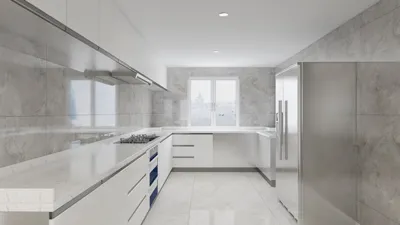


The pressures of modern living are coming together—hybrid work arrangements, micro-care routines, and energy efficiency—while traditional homes still feature static spaces and inadequate storage. According to NAHB, flexible spaces and home offices have become some of the most sought-after features in recent times, a trend I can observe in every anthesis floor plan for 2.5 BHK. The future is demanding design adaptations, and I'm already strategizing for this bandwidth with tools like Homestyler.
The Split-Core Layout: Living Spine + Half Room Node
Design Logic: Position the living and dining areas as a central spine while the half-bedroom serves as a versatile node for work or a nursery; future preferences lean toward modular spaces rather than fixed elements.
Flow: Entryway leads to a drop zone, progressing through the living spine to the bedrooms positioned in a quiet zone; the half-room is placed to benefit from daylight, making it suitable for use as an office or guest buffer.
Sightlines: Framed perspectives from the entry to the balcony enhance visibility; private areas branch off into soft thresholds to diminish visual distractions.
Storage: Generous wall bays function as storage caches along the hallway; a hidden utility bench near the kitchen facilitates daily tasks seamlessly.
Furniture Fit: Abiding by API constraints with 900–1000 mm circulation, utilizing compact sectionals, foldable desks in the half-room, and queen beds with integrated headboard shelving.
Verdict: This layout is designed to accommodate hybrid lifestyles, allowing the half-room to transform into an office, nursery, or hobby space within the next five years.
save pin
The Courtyard-Edge Plan: Perimeter Light, Internal Calm
Design Logic: Position primary living spaces along the perimeter for natural light, while keeping the half-bedroom and study alcove toward the center for focused deliberation and acoustic peace.
Flow: From the kitchen to the dining area and then to the terrace edge; bedrooms secure the corners, with the half-room at the center for quick versatility.
Sightlines: Establishing a layered perspective: extended views of greenery paired with short looks towards task areas; the UI hierarchy underscores natural light as the predominant signal.
Storage: Perimeter wardrobes act as buffer zones; tall kitchen units and a linen hub maintain system coherence.
Furniture Fit: Round dining tables enhance circulation, a low media console maintains eye-level visibility, and a pocket door to the half-room avoids spatial conflicts.
Verdict: Illumination along the edges and tranquility at the core—this design moderates stimuli, making it ideal for multiple users and energy-efficient living.
save pin
The Dual-Pivot Plan: Two Suites + Adaptive Half
Design Logic: Provide two bedrooms with semi-suite autonomy while allowing the half-room to flex between a guest micro-suite and a zoom cocoon; upcoming family needs dictate parallel functionalities instead of a single focus.
Flow: Two pivot points: main suite oriented towards the bathroom, secondary suite leading to a balcony; the half-room connects to the hallway featuring sliding partitions for adaptable use.
Sightlines: Controlled openings cut down on cross-noise; a diagonal viewpoint from the entry to the window anchors spatial orientation like a HUD in a home.
Storage: Scattered storage solutions including under-bed drawers, tall lockers in the hallway, and a peg grid along the desk wall; every node minimizes friction.
Furniture Fit: Compact king in primary suite, sofa-bed in half-room, 1200 mm workbench with integrated cable management; designs remain uncluttered.
Verdict: Two solid anchors complemented by a flexible micro-node enhance the home’s resilience as roles and routines evolve.
save pin
Final Takeaway
A well-crafted anthesis floor plan for 2.5 BHK acts as a dynamic interface that adjusts to changing roles without unnecessarily expanding square footage. Variants like dual-suite layouts, split-core spines, and perimeter light strategies illustrate how a half-room can host future-oriented uses—such as a home office, caregiver nook, or guest space. From my perspective, the most intelligent designs won’t necessarily be larger, just more purposeful in flow, storage, and sightline configurations; through tools like Homestyler, subtle spatial decisions continuously reshape how my clients experience their living environments.
Homestyler's roots trace back to Autodesk, the global leader in design and engineering software. That heritage lives on in every feature we build. Today, with a community of more than 18 million users worldwide, Homestyler continues to make professional-quality interior design accessible to everyone — from first-time decorators to seasoned architects.

Minimalist Walnut Glass Door Tall Display Cabinet 3D Model


Modern Walnut Metal Multi functional Entryway Cabinet With Mirror And Stool 3D Model
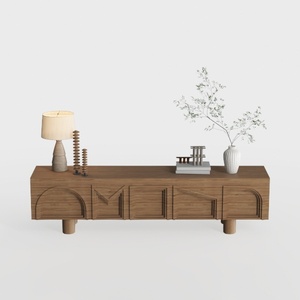
Minimalist Carved Solid Wood TV Stand Console Table 3D Model
Homestyler is an outstanding online home design platform, perfect for anyone looking to transform their space. With its easy-to-use design tool, stunning 3D renderings, and a wealth of DIY video tutorials, you can effortlessly create and visualize your ideal home. Start designing today!
Design Now for FREE
































