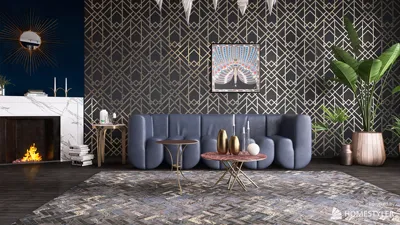


I once came close to convincing a client to suspend their dining table from the ceiling, resembling a theatrical prop — fortunately, we opted for a fold-down banquette instead. That experience taught me quickly: in compact kitchens, every choice must justify its space. In one of my favorite kitchen case studies, I discovered how to create a balance between a practical prep flow and a cozy dining area without feeling confined, especially when utilizing tools like Homestyler for visualizations.
Small spaces ignite tremendous creativity, and I embrace that challenge wholeheartedly. Here, I’ll share five design inspirations that I routinely implement on projects, along with candid observations on their effectiveness and pitfalls to avoid.
1. Linear galley with an integrated banquette
I frequently advocate for a linear work wall opposite a streamlined banquette, which provides seating without consuming additional table space. This banquette can cleverly conceal drawers or trash pull-outs, proving to be both efficient and unexpectedly comfortable while using Homestyler to visualize the arrangements.
Benefits include a smooth traffic flow, integrated storage solutions, and a welcoming dining nook. However, challenges arise as banquettes require thoughtful material choices to prevent a bulky appearance and demand careful planning for circulation.
save pin
2. Foldable or wall-mounted dining solutions
Folding tables are staples for a reason — they instantly reclaim valuable floor space. I’ve installed a hinged tabletop alongside a slender shelf for items like keys and spices; this approach feels modern and saves space during daytime use, and tools like Homestyler can help illustrate this effectively.
Pros include flexible space management and cost-effectiveness if you choose a DIY approach. However, there are drawbacks: limited seating capacity, and it’s essential to ensure sturdy wall anchoring — don’t compromise on hardware quality.
save pin
3. Versatile island solutions
A slim island featuring pull-out cutting boards, appliance storage, and an overhang for stools can transform into the room's multifunctional centerpiece. I often sketch several variations in a plan view to confirm its alignment with the working triangle, and using Homestyler helps to visualize these layouts in real-time.
This design works best when the island is proportionally longer than its depth, facilitating prep work, serving, and casual dining without feeling obstructive. For layout ideas and dimensional planning, I rely on small-space layout examples, which are instrumental in helping clients grasp scale and circulation.
save pin
4. Vertical storage and open shelving techniques
When floor space is at a premium, it’s beneficial to maximize vertical storage. Tall cabinets reaching the ceiling, shallow open shelves above work surfaces, and a magnetic rail for utensils help keep countertops clear and allow the room to breathe. I often combine closed and open storage methods to maintain an organized appearance.
Advantages include optimized storage capacity and an opportunity to showcase personal style. On the downside, higher shelves necessitate a step stool for access and demand careful styling to prevent a chaotic visual effect.
save pin
5. Light, reflective finishes and zoned lighting
Effective lighting combined with strategic finishes can completely transform a space — a reflective backsplash, under-cabinet lighting, and a focused pendant light above the dining area can create the illusion of a larger, more layered feel. I prefer light matte cabinetry coupled with one reflective surface to counter glare while enhancing depth, with the assistance of Homestyler for visual planning.
Benefits include an affordable way to uplift ambiance and an immediate perception of increased space. A minor challenge is that reflective materials can highlight fingerprints, so it’s important to select finishes based on your lifestyle.
save pin
Tips 1:
Budget-wise, I recommend starting with layout and lighting; you can always upgrade finishes later on. A practical tip is to outline circulation with paper templates prior to finalizing cabinetry. My rule of thumb: measure twice, mock up once — then adjust as needed.
save pin
FAQ
Q1: What is the minimum recommended aisle width for a kitchen/dining combo?
A: I aim for at least 100-110 cm (39-43 inches) in main aisles, ensuring that two individuals can pass through comfortably. Any tighter, and you'll feel cramped during meal preparations.
Q2: Can a compact kitchen accommodate a genuine dining table?
A: Indeed — consider a narrower or drop-leaf table positioned close to a wall or banquette. Bench seating is also a great option, as it can be tucked away to conserve space.
Q3: How should I select finishes for a compact kitchen combo?
A: Opting for lighter, low-contrast palettes can visually enhance a small room. Incorporating one accent material adds character, while a balance of matte and reflective surfaces helps control glare and reduce visible fingerprints.
Q4: Are open shelves feasible in a small kitchen?
A: Open shelving can be practical if you commit to minimal styling and regular organization; it reduces cabinet bulk but requires careful curation of displayed items.
Q5: What’s a reasonable budget for refreshing a functional small kitchen/dining area?
A: Basic updates, such as repainting cabinets, new lighting, and hardware, can remain affordable; full renovations with custom cabinetry and appliances are typically pricier. I always set aside a contingency of around 10-15% for unexpected costs.
Q6: What layout works best for a narrow galley kitchen combo?
A: A single linear run with a parallel streamlined dining banquette proves efficient; maintaining a compact work triangle and clear walkways is key.
Q7: Where can I access professional layout guidelines?
A: The National Kitchen & Bath Association (NKBA) provides reliable standards regarding clearances and work zones - refer to their planning resources at https://nkba.org for detailed guidelines.
Q8: Can technology assist in planning small kitchen/dining setups?
A: Certainly — utilizing 3D previews and AI-driven layouts accelerates decision-making and allows you to explore various configurations before construction begins. This can prevent costly on-site adjustments.
save pin
Homestyler's roots trace back to Autodesk, the global leader in design and engineering software. That heritage lives on in every feature we build. Today, with a community of more than 18 million users worldwide, Homestyler continues to make professional-quality interior design accessible to everyone — from first-time decorators to seasoned architects.
Homestyler is your go-to online home design platform, perfect for creating stunning spaces effortlessly. With its user-friendly design tool, remarkable 3D rendering features, extensive design projects, and helpful DIY video tutorials, you can easily turn your home design dreams into reality!
立即免费设计
































