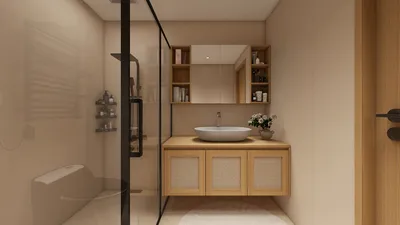


In my experience, a client once requested that her kitchen be painted in a shade resembling ‘the color of morning tea’. This led me to spend a week sampling various paints, eliciting laughter from her, and realizing the significant impact kitchen color choices can have on both mood and functionality. Particularly in smaller kitchens, selecting the right colors becomes crucial; they can enhance light reflection, mask splatters, or create a serene atmosphere amid morning rushes. In this article, I will outline five feng shui kitchen colors that I've applied in actual projects, discussing their effectiveness and important considerations.
1. Gentle Sage Green
Sage green brings to mind a refreshing ambiance — it harmonizes wooden and plant elements, which is beneficial for fostering family connections and health in feng shui. I incorporate it into compact kitchens to create a soft backdrop that is effective at concealing minor stains better than stark white. Its main advantage lies in offering a tranquil and classic appearance; however, care must be taken to select the correct undertone to prevent it from appearing too gray in spaces facing north.
save pin
2. Cozy Cream
Warm creamy hues exude a sense of abundance and hospitality, pairing beautifully with brass accents and wooden cabinets. In a narrow galley kitchen, cream reflects light effectively, making the area feel more spacious. One drawback, however, is the upkeep: creamy walls can attract grease stains, so I would advise opting for washable finishes or incorporating a tiled splashback.
save pin
3. Bold Deep Teal Highlight
Utilizing a deep teal accent wall or island merges the energies of water and wood, adding dimension to the kitchen without making it feel smaller. I have applied this color to lower cabinets to anchor the room; it is striking yet surprisingly easy to manage in terms of fingerprints. Just ensure to balance it with lighter countertops to avoid an overwhelmingly dark atmosphere.
save pin
4. Warm Terracotta
Terracotta adds immediate warmth to a kitchen and connects with earth energy, which is excellent for encouraging nourishment and stability. I utilized it in a compact urban apartment to create a cozy and thoughtfully designed kitchen. However, it can become overpowering if used excessively, so I generally advise using it for backsplashes, open shelves, or decorative accessories instead of covering all four walls.
save pin
5. Pristine White with Natural Wood Accents
White signifies cleanliness and clarity in feng shui, particularly when complemented by natural wood to introduce warmth. This pairing is my preferred choice for enhancing the perception of space and light. While versatile, the challenge lies in steering clear of a sterile ambiance, which is why I incorporate textiles, plants, and warm metallics to create a more inviting feel.
save pin
Tips 1:
A practical tip from my experiences: always assess paint samples under both morning and evening lighting, and test them near the stove to observe how grease might alter the color. If you're revising layouts while selecting colors, I sometimes use a room planner to envision how finishes will come together. For quick checks of floor plans and layout, I rely on a 3D floor planner to evaluate the balance of colors before committing to final painting.
save pin
FAQ
Q1: Which kitchen color is most auspicious for wealth according to feng shui?
A1: Traditionally, colors associated with the wood element (greens) and the earth element (warm neutrals) are linked to health and prosperity. Employ them thoughtfully, balancing with accents of water or metal.
Q2: Is it acceptable to use darker colors in a compact kitchen?
A2: Certainly — employ dark tones as accents, such as on an island or lower cabinets, while keeping the walls lighter to maintain a sense of openness.
Q3: Are cool or warm colors preferable for energizing the kitchen?
A3: Warm colors generate a vibrant and nourishing atmosphere, while cool colors offer a calming effect. Your choice should align with the vibe you wish to create and how natural light enters the kitchen.
Q4: How do I prevent white kitchens from feeling sterile?
A4: Infuse life and warmth into a white-themed kitchen by adding natural wood elements, textured fabrics, greenery, and warm metal finishes.
Q5: What paint finish is optimal for kitchens?
A5: Satin or semi-gloss finishes are the easiest to clean and resist grease splatters, whereas flat finishes disguise imperfections but are typically harder to wipe down.
Q6: Can feng shui colors assist in improving layout decisions for small kitchens?
A6: Absolutely — color plays a significant role in visually expanding or grounding areas. When refining layouts, I frequently utilize a free floor plan creator to ensure a harmonious balance between functional and social zones.
Q7: Does science support the idea that color can influence mood?
A7: Numerous studies in environmental psychology indicate that color can significantly affect mood and perceived temperature. For a comprehensive review, consult the scholarly article by Kaya & Epps (2004) on color-emotion associations within the Journal of Experimental Psychology.
Q8: How can I combine several feng shui colors without creating visual clutter?
A8: Limit your palette to a primary neutral, one grounding tone, and one accent color; ensure cohesion by repeating each color across different materials.
save pin
Homestyler is your go-to online home design platform! With its user-friendly design tool, stunning 3D rendering, and a wealth of inspiring design projects and DIY video tutorials, you can effortlessly create your dream space. Transform your home design journey today with Homestyler!
Zaprojektuj teraz za darmo
































