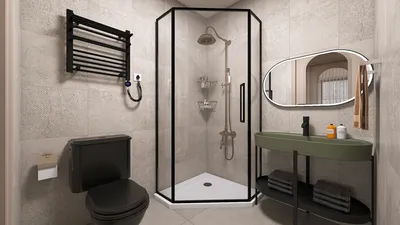


In my experience, I once encountered a client wanting a complete bathroom redesign with a walk-in shower, a double vanity, and a laundry nook all within a compact 5 x 8 space. Initially amused, I quickly sketched a feasible layout on a takeout box. This experience reinforced my belief that the key lies not in magic, but in effectively visualizing the space's layout while prioritizing aspects like flow, storage, and waterproofing. By visualizing with tools such as Homestyler early in the process, one can sidestep potential issues down the line.
1. Arrange a linear walk-in shower on the long wall
Position a frameless walk-in shower along the 8-foot wall and set the vanity across from it. This arrangement not only balances the room but also enhances visibility — an essential element in small spaces. A possible drawback may come from plumbing relocation costs if existing drains are misaligned, yet the open and airy feel often justifies these expenses.
2. Consider a wet-room design featuring a half-glass partition
Embrace the wet-room concept by slightly sloping the floor, incorporating a half-glass partition, and utilizing large-format tiles throughout. In a rental conversion I undertook, this continuity visually expanded the bathroom space; however, it demands meticulous waterproofing and a slight increase in tiling expenses.
save pin
3. Install a corner walk-in shower with niche storage
Relocate the shower into a corner with a diagonal entry, including built-in niches for essentials like shampoo and soap. This repositions central circulation while allowing space for a tall, slim cabinet next to the entry. To visualize the end result in striking detail, a well-crafted 3D render can show sightlines and material selections to fit your style before making commitments.
save pin
4. Offset shower and toilet with a pocket door
Implement a pocket door to maintain unobstructed movement, offsetting the shower and toilet to enhance privacy without full walls. Although this doortype conserves floor space, it does necessitate proper framing and a bit more investment; I’ve successfully utilized this design in two projects where clients preferred avoiding a swinging door, and they were thrilled with the outcome.
save pin
5. Design a curbless walk-in with a linear drain and a custom bench
Opt for a curbless design to create a seamless, accessible walk-in shower featuring a linear drain on one side and a fold-out bench for both seating and storage. This design is visually appealing and future-proof, though professional installation is essential for the floor pitch and waterproof membrane. For those wanting to explore various options interactively, scheduling a bathroom design session using a tool like Homestyler can help you experiment with bench sizes and tile layouts.
save pin
Tips to Remember:
Before all else, prioritize waterproofing and drainage as these are often the unseen elements that lead to the most significant problems later on. Incorporating small touches like recessed niches, larger tiles, and a single decorative wall can impart a sense of luxury without overwhelming your budget.
save pin
Frequently Asked Questions
Q1: Is it possible to fit a walk-in shower in a 5 x 8 bathroom comfortably?
A1: Indeed. A walk-in shower can fit well by aligning it along the 8-foot wall or opting for a corner design that leaves enough space for a vanity and easy movement. Smart storage solutions and unobstructed sightlines can create an illusion of more space.
Q2: What is the minimum space required for a comfortable walk-in shower?
A2: Typically, a walk-in shower needs to be at least 36 inches deep and between 36 to 48 inches wide, although designs that utilize corners or lines can adapt to smaller areas.
Q3: Are curbless showers advisable in compact bathrooms?
A3: Yes, curbless showers can visually enlarge a space and enhance accessibility. However, they demand careful floor sloping and waterproofing strategies to prevent water leaks, which implies a bit more complexity in installation.
Q4: How can I maximize storage in a 5 x 8 bathroom equipped with a walk-in shower?
A4: Effective strategies include installing recessed niches in the shower, opting for a tall, slim cabinet, and utilizing mirrored medicine cabinets and vertical hooks. Open shelving above the toilet can deliver character without consuming floor space.
Q5: Should I pick glass or solid partitions for my shower?
A5: Glass partitions tend to keep sightlines open and create a more spacious feel, while solid partitions offer additional privacy and can better conceal wet areas. In small bathrooms, I generally recommend glass, unless privacy is a primary concern.
Q6: What is the typical cost increase for re-routing plumbing?
A6: Costs can vary considerably by location, but generally, re-routing plumbing can add several hundred to a few thousand dollars depending on the accessibility and distance; it's wise to obtain multiple estimates.
Q7: Are there specific code requirements regarding shower dimensions?
A7: Yes, building codes such as the International Residential Code (IRC) provide guidelines related to shower structure, drainage, and waterproofing; always check with your local building authority or the IRC for relevant regulations prior to gaining permits.
Q8: Can I preview several layouts before making a decision?
A8: Absolutely! Utilizing floor planning and 3D design software allows you to experiment with layouts, finishes, and spatial clearances, streamlining the process and minimizing potential issues during construction.
save pin
Discover your dream home with Homestyler! This user-friendly online design platform offers an intuitive design tool, stunning 3D renderings, and a wealth of design projects and DIY video tutorials. Bring your creative vision to life effortlessly, whether you're a beginner or a seasoned designer!
Design Now for FREE
































