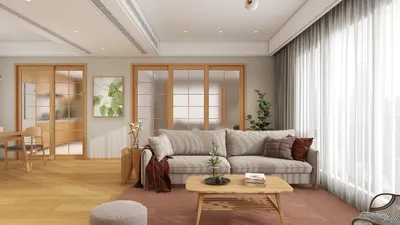


I've always held the view that smaller or uniquely shaped spaces can lead to the most innovative design concepts, and L-shaped living rooms are perfect examples of this. Throughout my experience, I have transformed numerous layouts that many consider challenging into distinct design opportunities. In this article, I will present 10 expert-driven living room ideas for L-shaped spaces—merging my personal insights with strategies that you can implement using Homestyler to enhance your own designs.
1. Clear Zones for Enhanced Functionality
My Insight: During the renovation of my friend's L-shaped apartment, we designated one side as a cozy reading nook and the other as a movie-watching area—it created an immediate sense of purpose. Defining distinct zones prevents the area from feeling scattered and unfocused.
Benefits: Facilitates smooth traffic flow; accommodates various activities; integrates seamlessly with an L-shaped living room design using Homestyler.
Drawbacks: Overly defined spaces may appear smaller; could require a larger furniture budget.
Suggestion: Utilize rugs or varying wall colors to subtly distinguish each zone.
2. Floating Furniture Arrangement
My Insight: Frequently, L-shaped rooms are too constricted by wall space. In one project, I positioned the sofa toward the center of the room, which opened up the area visually. This adjustment allowed space for a narrow console table behind the sofa.
Benefits: Improves line of sight; fosters better conversation flow; enhances storage possibilities.
Drawbacks: Requires sufficient floor space for movement; might seem odd without appropriate area rugs.
3. Open-Shelf Room Dividers
My Insight: I once implemented a low open-shelf unit to separate the dining area from the lounge in a client's L-shaped space—it maintained an open feel while still providing definition. Employing open-shelf dividers in modern living spaces is a practical, budget-conscious approach that I frequently recommend.
Benefits: Provides extra storage while allowing light flow; suitable for changing decor; perfect for renters.
Drawbacks: Requires regular organization; may not be suitable for homes with small children unless secured properly.
4. Bold Corner Accent Wall
My Insight: Applying a striking color to just the inner corner of an L-shaped room can attract attention and create a focal point. I painted a deep emerald green in my own space; it has become a favored backdrop for photographs.
Benefits: Establishes a visual centerpiece; cost-effective; simple weekend project.
Drawbacks: May restrict future color scheme adjustments; needs adequate lighting to shine.
5. Dual-Axis Lighting
My Insight: With L-shaped rooms having two distinct areas, lighting can feel uneven. By combining a central pendant light in one section with layered floor lamps in the other, I managed to balance the ambiance and add warmth.
Benefits: Eliminates dark spots; highlights different zones; brings attention to decorative features.
Drawbacks: Might require additional electrical work; higher upfront costs for lighting.
6. Customized Seating in the Short Arm
My Insight: In a compact L-shaped unit, we designed a custom bench underneath the shorter arm’s window—it provided both storage and additional seating for gatherings. Custom built-in seating solutions for unconventional corners have become a popular request.
Benefits: Maximizes small spaces; adds character; ideal for relaxing and enjoying coffee breaks.
Drawbacks: It’s a permanent feature; requires quality padding for comfort.
7. Layered Area Rugs
My Insight: I usually lay a larger area rug in the main section and a smaller one in the secondary area—this approach cohesively links the spaces while honoring their distinctiveness.
Benefits: Visually integrates both zones; often budget-friendly; allows for seasonal updates.
Drawbacks: Requires careful color matching; overlapping rugs could become tripping hazards.
8. Media Wall Strategically Placed
My Insight: In one client's L-shaped combined living/dining area, we positioned the TV at the corner where the two arms intersected. This surprisingly created shared visibility without overcrowding either side.
Benefits: Makes use of otherwise wasted corners; improves sightlines; can double as a storage solution.
Drawbacks: Managing cables can be difficult; not the best option for large televisions.
9. Glass Partitions for Enhanced Light Flow
My Insight: Incorporating a framed glass screen between the legs of the L allowed natural light to flow while still offering some division. Glass partitions that maintain an airy feel are a staple in my design renovations.
Benefits: Preserves brightness and openness; adaptable in design; adds a contemporary touch.
Drawbacks: Needs regular cleaning; may not fit traditional décor preferences.
10. Diagonal Furniture Arrangement
My Insight: Rather than aligning paths against walls, I angle the furniture to promote a natural flow of movement diagonally. This minor adjustment often creates a sense of spaciousness and liveliness in the room.
Benefits: Enhances spatial energy; introduces visual interest; can emphasize architectural features.
Drawbacks: Requires thoughtful planning; not all furniture designs accommodate angled placements.
Conclusion
An L-shaped living room should not be seen as a constraint, but rather as an opportunity to explore creative solutions for zoning, decor, and spatial flow. As emphasized by the American Society of Interior Designers (ASID), strategic space planning can enhance both functionality and comfort. Which of these 10 strategies will you implement in your home using tools like Homestyler?
FAQ
1. What are the main guidelines for designing an L-shaped living room?
Clearly define zones, ensure sufficient lighting, and maintain a consistent color and material scheme to create flow.
2. How can I give the illusion of a larger L-shaped space?
Incorporate mirrors, opt for floating furniture arrangements, and choose light-colored walls. Utilizing glass partitions can also keep natural light circulating.
3. What type of furniture is best for an L-shaped area?
Sectionals, modular sofas, and corner pieces typically optimize seating while keeping the room uncluttered.
4. Can an L-shaped living space function as a dual living-dining area?
Definitely, and using rugs or lighting for zoning enhances effectiveness, as noted in ASID’s space planning guidelines.
5. How should I select rugs for L-shaped layouts?
Select distinct rugs for each zone, ensuring they coordinate in color or pattern for harmony.
6. Is it better to place a TV in one section or centrally for both?
If it needs to serve both areas, position the TV at the bend of the L to enable shared viewing without obstructing pathways.
7. Should I consider hiring a designer for my L-shaped room?
If your space is constrained or if you're looking for built-in features, a designer can help you maximize functionality while avoiding costly errors.
8. Can built-in furniture be suitable for a rental?
In rentals, choose modular or standalone built-ins for versatility, allowing you to transport them when you move. Occasionally, elements like low open-shelf dividers can also function effectively as adaptable room solutions.
Discover your dream space with Homestyler! This user-friendly platform offers an impressive online design tool, stunning 3D renderings, and a wealth of design projects and DIY video tutorials. Transform your home design ideas into reality effortlessly, regardless of your experience level!
Design Now for FREE
































