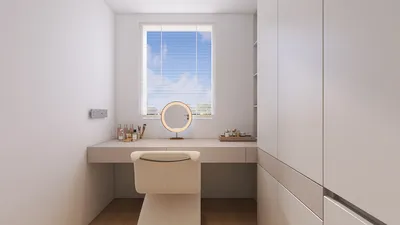


Designing a small 10 x 5 bathroom requires meticulous attention. With only 50 square feet available, every aspect—from door swings to fixture placements, as well as lighting and storage solutions—plays a vital role in the overall comfort of the space. My experience in crafting numerous narrow bathrooms for both residential and hospitality settings has taught me that the most effective designs strike a balance between seamless circulation, varied lighting, and durable materials that can withstand moisture over time, just like the tools offered by Homestyler.
Maximizing space efficiency is essential, as it significantly enhances functionality and wellness. In compact bathrooms, adequate features like glare-free lighting, safe slip-resistant flooring, and ergonomic placements are essential. Adopting the WELL v2 guidelines promotes layered lighting and visual ease, leading to reduced eye strain while augmenting the perception of space through controlled lighting and minimized glare, as detailed in the WELL v2 lighting concepts. Research by Steelcase indicates that clear sightlines and logical flows can decrease cognitive overload, a concept that is especially applicable in small residential areas where cluttered layouts contribute to heightened stress levels.
For optimal lighting, I recommend maintaining task lighting around mirrors at approximately 300–500 lux, complemented by ambient lighting around 100–200 lux, aligning with IES guidelines for residential grooming. A color temperature within the range of 3000–3500K keeps skin tones looking natural, while a Color Rendering Index (CRI) of 90 or higher prevents any dullness in the appearance. These seemingly small adjustments can significantly enhance the comfort and authenticity of a narrow bathroom setup.
Idea 1: Opt for Pocket Doors with a Linear Layout
By replacing a traditional swinging door with a pocket or barn-style slider, you can free up 8–10 square feet of maneuvering space. Implement a linear layout: place the door on one end, the vanity next, followed by the toilet, and finally the shower at the opposite end. Ensure a clear pathway width of at least 30–32 inches. To experiment with your layout, using a room design tool such as Homestyler can assist in visualizing door placements and fixture arrangements before making final decisions.
Idea 2: Wall-Mounted Fixtures to Open Up Floor Space
Incorporating a wall-hung vanity and toilet will enhance the visibility of the floor area, creating a sense of increased space and making cleaning easier. Aim for a vanity depth of 18–20 inches, with the sink centered to ensure clear elbow space. Confirm that your in-wall tank or carrier aligns with the stud bay and meets local building codes.
Idea 3: Medicine Cabinet with Integrated Lighting for Better Visibility
A recessed medicine cabinet paired with vertical lights offers even facial illumination, eliminating top-down shadows. Set the color temperature between 3000–3500K and maintain a CRI of 90+ while utilizing diffusers to reduce glare. A cabinet width of 24–30 inches is suitable for most 10 x 5 bathrooms, ensuring door clearance remains unhindered.
Idea 4: Implementing a Wet Room Design
Create a cohesive waterproof zone by merging the shower and floor using uniform porcelain tiles and a linear drain along the longer wall. This design avoids curbs, enhancing accessibility and visual continuity. Ensure a minimum slope of 1/4 inch per foot towards the drain, and choose matte tiles (DCOF ≥ 0.42) for safety in wet conditions.
Idea 5: Use Glass Thoughtfully
Incorporate low-iron tempered glass for the shower area to avoid any green tints and maintain uninterrupted sightlines. Opt for a frameless design with a fixed panel and a minimal swing door to optimize space. Ensure that edges are sealed properly and select hardware that withstands humidity effectively—316 stainless steel or brass finishes will outperform mixed alloys over time.
Idea 6: Vertical Storage Solutions and Niches
In a compact 10 x 5 design, vertical storage proves more effective than deep cabinets. By integrating 14–16 inch tall niches in the shower and above the toilet, you can better utilize space. A slender 5–6 inch deep storage tower next to the vanity keeps essential items within easy reach while avoiding interference with elbow space.
Idea 7: Utilizing Color Psychology for an Enhanced Experience
Light, warm neutrals can uplift mood while increasing perceived brightness. Soft whites and pale greiges with a reflectance of 60–70% create a buoyant atmosphere without causing glare. Incorporate a singular saturated accent—such as navy paneling, olive tiles, or a terracotta mat—to impart personality to the room while anchoring its narrow proportions. High contrasts at eye level can compress space; therefore, limit strong contrasts to controlled stripes or lower features.
Idea 8: Ensuring Acoustic Comfort
Small bathrooms often amplify sound, so incorporating acoustic materials such as solid-core doors, adding mineral wool to stud bays, and implementing continuous tile underlayments can help diminish echoes. While upholstered elements aren't always practical, maintaining surface continuity combined with attention to sealant details can significantly lessen noise levels.
Idea 9: Ensure Layered Lighting for Depth
Implementing three lighting layers—ambient (like backlit ceiling panels or recessed fixtures), task (vertical lights beside mirrors), and accent (toe-kick LEDs or niche lighting)—can add depth to the room. Incorporating dimmers to lower brightness at night aligns well with circadian rhythm management. I typically avoid direct downlights over the mirror to prevent harsh overhead shadows.
Idea 10: Choose Durable Materials
Selecting resilient materials such as matte porcelain tiles, quartz countertops, and marine-grade paints is key. Specify epoxy grout in shower areas to combat staining. A micro-veneer wood, like engineered oak, can introduce warmth without warping when properly sealed. Ensure ventilation systems are rated at 80–110 CFM and feature timers to effectively regulate humidity.
Designing the 10 x 5 Space: Understand Clearances and Ratios
Maintain at least 21 inches of clearance in front of the toilet and vanity, with 24 inches offering a more comfortable experience if the door swing allows. The shower’s width should ideally begin at 30 inches, though 34–36 inches provides a more spacious feel. Creating a consistent visual rhythm with repeated horizontal lines—such as tile coursing, the vanity edge, and mirror height—allows the narrow bathroom to feel more cohesive rather than cramped. Utilizing an interior layout planner can simulate circulation pathways and door clearances prior to finalizing your plumbing choices.
Consideration of Human Aspects and Daily Routines
In smaller bathrooms, an intuitive layout is beneficial: place towels near the shower exit, the toilet paper holder within 26–30 inches from the floor and 8–12 inches from the front edge, hooks set at 68–70 inches, and dimmer controls placed near the entry. These minute decisions can significantly alleviate morning rush friction.
Focus on Safety, Glare Reduction, and Moisture Management
Incorporate tamper-resistant GFCI outlets, non-slip flooring, rounded corners on shelves, and fixtures rated for wet environments. Minimizing glare can be achieved with diffused lenses, while glossy tiles around mirrors should be avoided. Maintain appropriate ventilation while using sealed trims to prevent mold growth along transitions.
Budgeting and Phasing Your Bathroom Renovation
Focus on essential elements first—waterproofing, ventilation, and lighting—before opting for upgrades like specialty tiles. A smart plan minimizes the risk of rework: align plumbing stacks to one wall, choose modular fixtures, and select easy-to-maintain finishes that can be replaced without hassle.
FAQ Section
In small bathrooms, consider using wall-hung fixtures, a frameless glass shower design, and seamless flooring to enhance space perception. Maintain the color temperature near the 3000–3500K range and provide vertical lighting at mirrors to minimize shadows that can visually constrict the area.
Aim for lighting around 300–500 lux at the mirror for grooming tasks like shaving and makeup application, and opt for 100–200 lux in ambient light. Choose materials with a CRI of 90+ and dimming functionality for adjusting nighttime brightness.
Absolutely. A linear drain along with a curb-free shower enhances accessibility and gives the illusion of a wider space. Maintain a slope of 1/4 inch per foot and choose matte tiles with a DCOF of 0.42 or higher for safety.
A sliding pocket or barn door can conserve space. If a hinged door is necessary, ensure it swings outward or towards a less critical area to protect clearances.
Maintain a depth of 18–20 inches to allow for smooth circulation. Widths between 24–36 inches are suitable for most designs; consider a single centered sink to create more elbow room.
Ensure ventilation systems operate at 80–110 CFM with a timer. Properly seal corners with appropriate membranes, and use epoxy grout in wet zones. Keep towels and paper away from direct steam pathways.
Employ light, warm neutrals combined with a controlled accent color. Avoid high-gloss finishes near mirrors to minimize glare and prevent visual compression.
Utilize solid-core doors, consider adding mineral wool in wall cavities, and install continuous underlayment. Secure seals around door frames to lessen echoes and sound transmission.
Incorporate recessed niches into the shower area and above the toilet, along with a shallow vertical storage tower adjacent to the vanity. Keep frequently accessed items easily reachable and out of the way of the door swing.
The WELL v2 guidelines stress the significance of controlling glare and implementing layered lighting for enhanced visual comfort, which is vital for functionality in compact areas.


Homestyler is your go-to platform for effortless home design. With its user-friendly online design tool, impressive 3D rendering features, and a wealth of creative design projects and video tutorials, it empowers you to transform your space with inspiration and ease. Dive into design today!
Zaprojektuj teraz za darmo
































