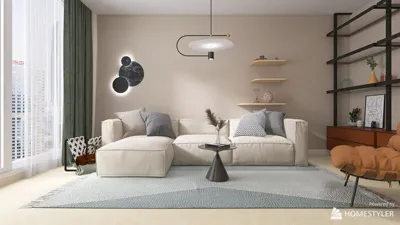


I once guided a couple towards purchasing a compact sectional that featured a recliner, as the husband insisted on having a "man cave seat" that could fold away. Sadly, we later realized the recliner couldn’t clear the coffee table by a mere two inches. To remedy this, we completely rearranged the room and drafted a quick layout plan. This little experience highlighted how crucial clever compromises and precise planning are when dealing with small spaces. For a productive beginning, I prefer using space planning case studies to sidestep any last-minute furniture adjustments while utilizing tools like Homestyler for visualization.
1. Opt for a compact L-shaped sectional equipped with a single reclining chaise
I often recommend choosing a short L-shaped sectional with only one reclining chaise. This design provides the comfort of a recliner without doubling the expense or space requirement. The benefit is clear: you maintain a snug lounging area while keeping the rest of the space streamlined. Although this may lead to less symmetry, balancing it out with cushions or a side table can provide an appealing solution.
save pin
2. Explore modular designs — replace an armless module with a recliner module
Modular sectionals are my preferred choice for unpredictable layouts. You can initiate with a small armless sofa and seamlessly incorporate a recliner module wherever it fits best. This flexibility aids in moving and rearranging, though it's essential to consider that the reclining components tend to be more expensive and heavier during transit—check your door and hallway dimensions carefully.
save pin
3. Choose narrow-profile recliner mechanisms to lessen depth
Not every recliner extends far back; several modern designs employ wall-hugger mechanisms or drop-down footrests that require minimal space. This adjustment conserves valuable walk space behind the sofa, although these mechanisms may restrict reclining angles. To visualize your space requirements before making a purchase, create a mockup with a 3D design tool like Homestyler to avoid any measurement mishaps upon delivery.
save pin
4. Incorporate armless sections and exposed legs for an airy feel
Armless seating and elevated, visible legs can create an illusion of more space. I once enhanced a tiny studio by swapping bulky arms for slender metal legs, allowing the entire room to feel more open. The catch is that armless seats can be slightly less cushioned, so consider adding lumbar pillows for added comfort. From a budget perspective, armless designs typically require less fabric and provide a less visually dominant presence.
save pin
5. Combine storage solutions and ensure coordination with adjacent areas
In compact living rooms, I often position the sectional next to a storage console or floating shelf, providing dual functionality for hiding blankets and remotes while offering a surface for lamps. For open-plan areas, ensuring that the sectional complements the kitchen zone is essential, so think about maintaining consistent scales and sightlines; I frequently draw inspiration from kitchen layout examples to align seating with traffic flow. A small challenge here is finding the right balance between accessibility and clutter—aim for a few practical storage options instead of towering cabinets.
save pin
FAQ
Q1: What size sectional is most suitable for a compact living room?
A1: Measure your space and ensure at least 30–36 inches for main pathways. Opt for a sectional depth of under 36 inches if you aim to optimize walkway space.
Q2: Can a recliner fit into a studio apartment?
A2: Absolutely — choose a slim-profile or wall-hugger recliner, and consider a single recliner module to avoid overwhelming the area. Modular elements significantly ease rearranging.
Q3: Are armless sectionals less comfortable than traditional ones?
A3: They may feel somewhat less enveloping, but incorporating bolsters and cushions can enhance comfort while maintaining space and a lighter aesthetic. High-density foam materials can ensure solid support.
Q4: How much clearance is necessary behind a recliner?
A4: Standard recliners usually require 12–18 inches behind, whereas wall-hugger or sliding models may only need 2–6 inches; always verify manufacturer specifications prior to purchasing.
Q5: Is it advisable to select sectionals with exposed legs or skirted bases for compact spaces?
A5: Exposed legs promote visual openness and can make a room appear larger, whereas skirted bases tend to feel heavier and can shrink the perceived floor area. If you have kids or pets, also consider maintenance factors.
Q6: How can I protect my floors from the movement of a recliner?
A6: Utilize a low-profile rug or furniture pads under contact points, and consider hard floor glides for rolling mechanisms. This will help prevent scratches and keep the piece stable.
Q7: Where can I access reliable planning examples for testing layouts?
A7: Numerous case studies and visualization tools are available for testing spatial dimensions; for detailed layout references, I suggest using established planning tools like Homestyler to minimize surprises upon delivery.
Q8: Are there safety issues associated with recliners?
A8: Indeed — pinch points and unstable products may pose risks. The U.S. Consumer Product Safety Commission (CPSC) offers safety guidelines on furniture and recommendations to mitigate tipping and entrapment hazards (https://www.cpsc.gov).
save pin
Homestyler is your go-to online home design platform! With its user-friendly design tool, stunning 3D renderings, and a treasure trove of design projects and DIY video tutorials, transforming your home has never been easier. Unleash your creativity and design your dream space today!
Design Now for FREE
































