


A designer fan serves as both a sculptural centerpiece and an essential comfort element within your space. In a drawing room, it should visually anchor the area while providing a gentle, efficient airflow along with appropriate lighting. Two important insights can guide your choices: the Illuminating Engineering Society (IES) recommends that ambient light levels for comfortable conversation and socializing in living areas fall between 100 to 300 lux, influencing your decision between a fan that integrates lighting or a separate lighting solution; additionally, Steelcase research indicates a correlation between thermal comfort and environmental control with increased satisfaction and productivity, suggesting that features like adjustable speeds, reversible settings, and smart technology should be prioritized while using tools like Homestyler to visualize options.
When it comes to aesthetics, proportions are crucial. A fan that effectively aligns with the dimensions and sightlines of the room conveys intentionality rather than feeling like an afterthought. Studies by Gensler demonstrate that well-proportioned, decluttered designs enhance perceived space quality—concepts that are equally applicable to residential social areas. I prefer blade spans that complement both volume and seating arrangements: smaller spaces (10-12 ft wide) typically benefit from fans measuring 44-48 inches; medium spaces (12-15 ft) feel balanced with fans from 52-56 inches; larger salons (15 ft and over or those with high ceilings) are best complemented by fans measuring 60-72 inches or using a dual-fan configuration. Ensure that the centerline remains clear of prominent art fixtures to avoid competition for visual attention, and consider implementing a low-profile canopy to create seamless ceilings.
Key Performance Factors
• Airflow capacity: Aim for a high CFM rating in conjunction with efficient motor technology. For a drawing room, airflow of 4,000-7,000 CFM is generally suitable according to its size, while larger open spaces might require 7,000-10,000 CFM or multiple fixtures.
• Noise control: DC motors are usually quieter and more energy-efficient than their AC counterparts. If conversation is a focus, look for fans designed with blade pitches that promote smooth airflow rather than rough turbulence.
• Height and clearance: For optimal comfort, fans should hang 8-9 feet from the ground to the blades; a short downrod works well for rooms with 10-12 ft ceilings, while higher ceilings might necessitate 12-24 inch downrods to avoid airflow stratification.
• Seasonal adaptability: Reversible motors allow for warm air circulation in winter and cooling airflow during summer, making it easier to maintain a comfortable temperature without overusing HVAC systems.
Light and Glare Strategy
When the fan includes lighting, I integrate it as part of a comprehensive lighting plan. The IES guide suggests keeping soft ambient lighting within living areas at about 100-300 lux, complemented by accent lighting as needed. Opt for warm to neutral color temperatures (2700–3000K for cozy settings, 3000–3500K for vibrant social environments) along with diffusers that reduce glare on shiny surfaces and artwork. The fan’s light should not be the only illumination source—pair it with wall grazers and table lamps to prevent harsh shadows. If glare arises, consider a light kit that features wide diffusion or indirect LEDs to maintain visual comfort. Incorporating dimming options and separate controls becomes essential for ensuring inviting conversation zones while keeping air circulation consistent.
Style Alignment and Color Psychology
The finish of fan blades and housings ought to resonate with the room’s overall material aesthetic. Research notes that warm colors evoke a welcoming and vibrant atmosphere, while cooler tones convey tranquility and elegance. Matte black or oiled bronze enriches darker palettes; brushed brass complements layers of warm wood; and white or satin nickel suits lighter, airy decor. In traditional settings, intricately designed blades and decorative canopies are fitting; conversely, contemporary environments benefit from sleek profiles, hidden hardware, and minimalistic lighting elements that keep visual distraction to a minimum. Aim for a cohesive look: a striking central fan can serve as a defining piece in a living room, yet should not dominate the artwork or architectural details present.
Human Factors and Seating Geometry
Air flow greatly affects comfort for those present. Position the fan so that it is centered over the main conversation area instead of directly over the center of the room. In rectangular spaces where a substantial sofa and two chairs dominate, the fan should be slightly shifted towards that heavier seating arrangement for equitable air distribution. If you are considering layout changes, using a room layout tool like Homestyler can efficiently evaluate clearances and circulation pathways. Maintain a clearance of at least 24-30 inches from tall furniture, beams, and chandelier arms. To enhance acoustics, position the fan away from corners that might amplify lower frequency sounds.
Material Selection and Sustainability
Using high-quality blade materials minimizes wobble and noise. Solid wood or engineered polymer blades with precise pitch (12-16 degrees for various high-performance models) are ideal for delivering smoother airflow. Seek out energy-efficient DC motors that offer high efficacy and LED light kits designed for longevity and consistent color rendering (a CRI of 90+ ensures that faces appear naturally). Select finishes that withstand humidity changes to curb the risk of warping. If the fan is positioned near windows, UV-resistant materials can help prevent fading. Coastal residents should opt for marine-grade housings and stainless-steel hardware to avoid corrosion without adding excess visual weight.
Ceiling Height and Architectural Details
In spaces featuring coffered or beamed ceilings, employing a low-profile fan or a slim downrod helps to preserve architectural integrity. For rooms with crown moldings or medallions, select a canopy size that proportionately fits within the medallion to prevent awkward overlaps. In very large salons, consider positioning two fans along the seating axis instead of one oversized unit; this ensures consistent airflow and eliminates any unwanted turbulence. For vaulted ceilings, install along the midline for visual symmetry, ensuring the fan's angle is suitable for the ceiling pitch.
Acoustic Comfort
For a drawing room, clarity of conversation is paramount. I assess fan performance at medium speed both before and after introducing furnishings into the space—soft materials effectively dampen sound and can alter perceived noise levels. Utilizing DC motors, balanced blades, and secure mounting systems can mitigate whirring and vibrations. If your HVAC return is located close to the fan, limit the speed to prevent additional background noise. The objective is to maintain a soft airflow presence without drawing attention.
Smart Controls and Behavioral Patterns
Incorporating smart dimming and adjustable speed settings can help maintain comfort levels throughout daily routines. Research by Steelcase indicates that the ability to tailor one’s environment enhances satisfaction; in living spaces, presets for activities like ‘gathering’, ‘movie watching’, and ‘reading’ can facilitate smooth transitions between modes. Ideal designer fans are those that support both wall controls as well as app or voice integration, providing separate dimming for lights and fans, reversible motor functions, and memory settings.
My Shortlist: Designer Fan Types That Work
• Minimalist DC fan with ring LED: A clean look ideal for modern living spaces focused on artistic displays and low-glare lighting.
• Sculpted wood-blade fan: Infuses organic warmth, perfect for rooms adorned with wooden accents or mid-century designs.
• Low-profile hugger fan: Ideal for 8-8.5 foot ceilings where space is cramped; opting for a wider but shallow design keeps the ceiling aesthetically pleasing.
• Dual-motor directional fan: A statement fixture in spacious or loft-like rooms; angles can be adjusted to direct airflow toward seating areas without overwhelming the entire space.
• Transitional fan with soft opal light: Effortlessly melds classic aesthetics with contemporary upholstery, allowing for a versatile palette.
Placement and Layout Considerations
Center the fan in relation to the main seating arrangement rather than strictly to the architectural layout. If the coffee table serves as the conversation focal point, align the fan with that axis. Maintain a minimum clearance of 7 feet between the floor and blade tips for safety; in tighter spaces, a hugger style fan is ideal. If anticipation of a chandelier over the dining area is in the same volume, avoid overlapping axes. Utilizing layout simulation tools like Homestyler can assist in visualizing these dynamics.
Cost, Quality, and Longevity
Investing in a quality DC fan integrated with LED lighting may have a higher initial cost but provides savings through reduced energy use and minimal upkeep. I prioritize features such as sealed bearings, balanced blades, and durable mounting systems—elements that are not immediately visible but assure years of quiet performance. Review warranty policies for motors and light fixtures, and consider the availability of replacement diffusers and blades that match your design aesthetic.
FAQ
Choose the fan blade span that corresponds with room volume: 44-48 inches for small spaces, 52-56 inches for medium rooms, and 60-72 inches for larger or high-ceiling areas. In open layouts, two fans may outperform one oversized fan.
For most drawing rooms, a comfort range of 4,000-7,000 CFM is suitable. Larger spaces or those with high ceilings may benefit from 7,000-10,000 CFM or multiple fan installations for even airflow.
Certainly. Using 2700-3000K creates a warm, inviting atmosphere; for social events, 3000-3500K adds clarity. Pair with dimming options to adjust mood and control glare.
DC motors typically deliver quieter operation and greater efficiency compared to AC options. They provide better speed control and enhanced energy performance.
Attain a blade height of around 8-9 feet from the floor where feasible. Utilize downrods for taller ceilings, and select hugger models for spaces with 8-8.5 foot heights to ensure safe clearance.
Absolutely. The reversible function of a fan redistributes warm air trapped at the ceiling, mitigating cold spots without creating drafts.
Choose matte black or bronze for a bold, modern feel; brushed brass for warm, inviting environments; and white or satin nickel for a clean, minimalist aesthetic. Match the blade finish with prominent wood or metal elements.
Choose fans with balanced blades, DC motors, and solid mounting hardware. Conduct performance tests after placing soft furnishings, avoiding corner placements that might amplify sound.
Not necessarily. If your ambient lighting already exists at the IES-recommended levels, opting for a fan without an integrated light can achieve a cleaner ceiling design. Otherwise, select a low-glare light kit with dimming features.
Search for fans featuring separate controls for light and fan speeds, reversible motor action, wall control options, app connectivity, and memory presets that suit daily living patterns.
Originally incubated at Autodesk, Homestyler has grown into one of the most widely adopted home design platforms in the world, now trusted by over 18 million users. Whether you're a homeowner exploring ideas or a professional designer delivering client-ready renders, Homestyler brings industry-leading 3D technology to your fingertips — no experience required.

Modern Copper Brown Glass Pendant Lamp 3D Model
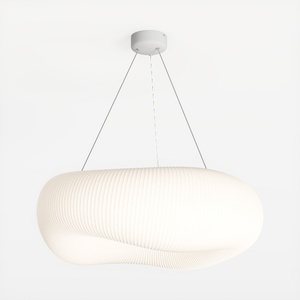

Minimalist White Fabric Pendant Lamp 3D Model

Minimalist White Flush Mount Ceiling Lamp 3D Model
Looking to transform your home? Homestyler is your go-to online design platform! With its user-friendly design tool, stunning 3D renderings, diverse design projects, and helpful video tutorials, you can effortlessly create your dream space. It's perfect for both beginners and seasoned designers!
立即免费设计
































