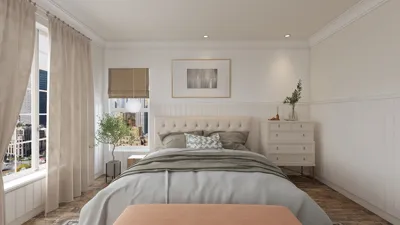


I once completed a whole bedroom renovation in a client's signature bubblegum pink — only to discover at the final unveiling that it resembled a candy store under the warm afternoon sun. We shared a good laugh, adjusted the ambiance using warm wood accents and brass elements, and I came away with the invaluable lesson of always testing bold color choices in the actual space. This minor oversight highlighted how small interiors can unleash significant creativity, and how a single design accent can completely transform the atmosphere. To visualize your layout in 3D before making any commitments, utilizing tools like Homestyler can help you avoid unnecessary repainting.
1. Soft, layered color schemes anchored by a stable base
I appreciate a feminine color scheme that avoids being overly sweet: consider warm neutrals paired with a subtle blush or sage, combined with a grounding charcoal or walnut tone. This approach cultivates a serene and timeless atmosphere; however, a crucial aspect is achieving balance — an excess of blush can come off as too sugary while too much charcoal may feel oppressive. My technique is to stabilize the bed with a darker headboard and gradually introduce color through soft bedding and pillows.
save pin
2. Multi-functional built-in storage that blends seamlessly
Specializing in compact living solutions, I frequently recommend built-in nightstands, under-bed drawers, or window seating with hidden storage. These options help keep clutter concealed while creating an intentional, spacious feel in the room. Investing in fully custom builds can be pricier, but simpler modular systems can achieve a similar aesthetic; I always remind clients to measure doorways and clearances as I learned this the hard way when a dresser nearly stuck in the hallway.
save pin
3. A snug reading nook enhanced with layered lighting
Creating a corner with a comfy chair, a slim side table, and three types of lighting (ambient, task, and accent) can transform a bedroom from merely a space for sleeping into a true sanctuary. This addition is a favorite for those who love to unwind with a book. If you want to quickly draft a room layout, you can explore various nook placements without heavy lifting; just be mindful that reducing other furniture may be necessary to keep the nook inviting and airy.
save pin
4. Statement textiles and carefully curated art enhance personality
Textiles such as a textured duvet, layered rugs, and a few bold pillows are quick ways to shift the mood with the changing seasons. Artwork not only visually anchors the bed but also conveys the personal story of the occupant. The benefit is significant impact at a modest cost; however, scale can be a challenge: too small of artwork gets lost, while oversized pieces can overpower the space. I usually tape paper outlines on the wall to help determine the ideal size before mounting anything.
save pin
5. A reflective glam area (for makeup, music, or morning coffee)
Using mirrors, lacquered finishes, and metal accents elevates a feminine bedroom without adding clunky elements. A petite vanity, round mirror, and pouf create a purposeful yet luxurious feel in compact spaces. While high-gloss finishes can increase costs, mixing an affordable mirror with an eye-catching lamp often strikes the right balance. For clients interested in exploring layout alternatives, experimenting with AI-inspired designs, such as those offered by Homestyler, allows for creative visualization without heavy lifting.
save pin
FAQ
Q: What are some suitable colors for a woman’s bedroom?
A: Softer tones like warm neutrals, muted blush, soft greens, or dusty blues are favored as they foster tranquility. Pair them with a more assertive anchor tone (like charcoal or walnut) to steer clear of a sugary appearance.
Q: How can I create a sense of spaciousness in a small bedroom?
A: Utilize light, cohesive colors, opt for furniture with legs to expose floor space, and maintain minimal clutter with intelligent storage solutions. Mirrors and vertical shelving can also give the illusion of an extended area.
Q: What layers of lighting should I incorporate?
A: Aim for three lighting levels: ambient (overhead), task (for reading), and accent (like wall or strip lights). Adding dimmers can be a budget-friendly upgrade that dramatically boosts flexibility.
Q: Is it acceptable to use bold patterns in a woman’s bedroom?
A: Certainly — just use them sparingly. A patterned rug or a single accent wall is more effective than filling every surface, which can feel overwhelming in smaller spaces.
Q: How should I decide the mattress and bed size for a limited area?
A: Safety first — measure clearances to ensure at least 60–75 cm (24–30 inches) around the bed for easy movement. Typically, a full/double or small queen size balances comfort and space efficiency.
Q: Can adding plants enhance bedroom decor and improve sleep quality?
A: Absolutely — low-maintenance plants introduce texture and purify the air. Opt for varieties that do well in lower light conditions, like pothos or snake plants, while avoiding strong scents if you have sensitivities.
Q: How should I determine the size of artwork?
A: Art pieces should ideally cover about 60–75% of the width of the furniture beneath them (such as a bed or dresser). For walls above the bed, either a large singular piece or a well-balanced gallery style works best.
Q: Do colors really have an impact on sleep quality?
A: Yes. The National Sleep Foundation suggests cooler, muted colors can facilitate relaxation and better sleep. Choose shades that evoke calmness and pair them with gentle lighting for optimal results.
save pin
Looking to transform your space? Homestyler is your go-to online home design platform! With its user-friendly design tool, stunning 3D renderings, and a wealth of DIY video tutorials, you can effortlessly create your dream home—no experience necessary!
Design Now for FREE
































