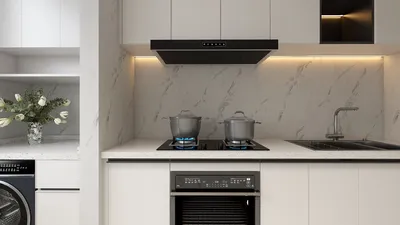


U-shaped kitchens are renowned for their efficiency, yet incorporating an island into a smaller area can be a challenge. The objective is to add additional prep space, storage, and seating while maintaining good circulation, ergonomics, and light flow. In my designs, the first step is to focus on clearances and task zoning, followed by customized island designs—such as peninsulas, compact islands, or movable carts—aligned with the specific dynamics of the room. Research from Steelcase indicates that disruptions and spatial constraints can hinder productivity, highlighting the need for islands to align with movement patterns to minimize workflow disruptions. Additionally, WELL v2 advocates for thoughtful layout designs that promote accessibility and comfort in daily tasks, making tools like Homestyler invaluable for visualizing these elements.
When it comes to specific measurements, aim for a minimum walkway of 36 inches on all sides; ideally, 42 inches in cooking areas to accommodate door swings and simultaneous use. NKBA guidelines suggest maintaining a clearance of 36–48 inches around islands, with 24 inches recommended for the depth of seating to ensure comfort. I generally keep countertop heights at 36 inches and consider increasing this to 42 inches for raised bars if seating must fit into narrower aisles. To minimize glare and cast shadows, I adhere to IES recommended lighting levels for counters and cooktops, layering ambient and task lighting for balanced light distribution. Ergonomically speaking, the classic work triangle remains crucial: keep the sink, cooktop, and refrigerator within a 4 to 9 feet range while ensuring no pinch points are created around the island. Insights from Herman Miller on human factors and reach zones translate well into residential kitchen design: reduce overreaching, standardize heights, and ensure frequently used items are within arm's reach.
Effective Island Designs That Fit the Space
In cramped U-shaped kitchens, it’s vital that the island is appropriately sized. I typically recommend three configurations: a micro fixed island measuring 24–30 inches deep, a peninsula anchored to one side of the U, or a mobile cart equipped with lockable wheels. A peninsula often maximizes storage and seating without creating congestion; it can accommodate a dishwasher or a pull-out trash receptacle, while also serving as a convenient landing spot near the fridge. A micro island is perfect for dedicated prep tasks, featuring shallow drawers and a slim butcher-block top. Movable carts provide flexibility for weekend baking or extra space when hosting. Utilizing planning tools like Homestyler to simulate aisle widths and clearance can significantly aid in designing these areas.
Considerations for Size, Clearances, and Seating
For confined spaces, I design islands ranging from 36–60 inches in length and 24–30 inches in depth. It is essential to maintain a minimum clearance of 36 inches beside the sink and refrigerator, increasing to 42 inches if multiple cooks are sharing the kitchen. For seating, allow 24 inches of width per stool and 12 inches of knee space for counter height, with a depth of 15 inches for bar height seating. An overhang of 10–12 inches typically provides adequate knee space without creating shin hazards with additional support brackets. If foot traffic naturally flows through one side of the U, avoid placing seating in that pathway and shift stools to the quieter side instead.
Lighting Techniques and Color Strategies to Enhance Perception of Space
Small kitchens thrive on a well-planned lighting hierarchy: ambient lighting (like recessed or surface-mounted fixtures), task lighting (under-cabinet LEDs at 3000–3500K), and accent lighting (pendants fitted with diffusers to minimize contrast glare). According to the IES, adequate task lighting helps prevent eye strain and improves accuracy in food preparation zones; balancing vertical light on splashbacks creates a sense of greater spatial depth. Utilizing color psychology, airy color schemes featuring soft neutrals with a high Light Reflectance Value (LRV) for the island base can enhance light reflection and reduce visual clutter. Warm white lighting around 3000K enhances the appeal of food, whereas cooler temperatures around 3500K can help highlight contrast during chopping. Pendants with frosted glass or fabric shades contribute to softening shadows across the island area.
Choosing Materials for Durability in Small Spaces
Compact islands must withstand daily use, thus selecting durable materials is essential. I prefer resilient quartz with rounded edges, robust laminates featuring ABS edging, or solid wood finishes treated with food-safe oils for prep zones. Matte surface finishes tend to conceal fingerprints better than glossy finishes, and integrated pulls yield a streamlined look. For those prioritizing sustainability, resource libraries like Material ConneXion can assist in sourcing low-VOC materials and long-lasting surfaces that age gracefully. Opting for a thinner countertop (1.2–2 cm) can help lessen visual bulk, creating a lighter atmosphere in tighter kitchens.
Smart Storage Solutions That Don’t Complicate the Space
Utilizing shallow drawers (18–21 inches deep) can significantly enhance accessibility and reduce wasted space. I incorporate narrow pull-out compartments for spices, a combined 12-inch trash and recycling drawer, along with a knife block in the top drawer of the island for efficient prep routines. If the dishwasher is situated within the peninsula, position the cutlery drawer right next to it for faster unloading. A flip-up charging station with hidden outlets can neatly tuck away small appliances and cords. In smaller kitchens, avoid tall installations (e.g., appliance garages, wine racks) on the island to maintain clear sightlines and maximize natural light.
Optimizing Workflow and Human Factors
An island should facilitate the primary daily activities. If cooking is the main focus, the island transitions into a prep area—consider adding a secondary prep sink and a waste pull-out on one side for right-handed users. When social interactions take precedence, move seating to the side facing the living area, keeping prep activities within the kitchen space. Research by Steelcase shows that minor disruptions can accumulate to create significant inconveniences; in kitchens, this could manifest as a cabinet colliding with a stool, a fridge door obstructing pathways, or a trash pull-out interfering with the oven's access. It’s beneficial to thoughtfully map out actions—approach, prep, cook, plate, and clean—and establish landing zones around 12 inches next to essential appliances to avoid crossing paths with hot dishes and busy seating areas.
Ventilation, Acoustics, and Comfort Enhancements
Even in compact kitchens, activity levels rise with the addition of an island, making acoustic comfort critical. Incorporating soft materials such as upholstered stools, cork underlay, and fabric pendants helps absorb sound. For ventilation, downdraft systems can be a good option in tight spaces where overhead hoods might dominate sightlines—be sure to verify manufacturer specifications and air intake needs. Keeping the noisiest appliances away from conversation zones, and using rubber bumpers along with soft-close mechanisms can significantly minimize noise impact.
Evaluating When to Use a Peninsula Versus an Island
In many compact U-shaped kitchens, a peninsula often provides more functional advantages than a freestanding island. It can lengthen counter space, maintain a more significant central aisle, and accommodate seating without interfering with the work triangle. I typically recommend a freestanding island only when there is a guarantee of clearances between 36–42 inches around every edge and certainty that appliance doors will not interfere with movement. If validation of the layout is required, design tools like Homestyler can effectively compare both designs with precise stool spacing and door arcs.
Addressing Lighting and Safety Concerns
In island areas, I position pendant lights 28–34 inches above the countertop, strive for dimmable features, and maintain levels of 25–30 footcandles for prep zones under regular lighting, increasing illumination during task activities as recommended by IES. Additionally, ensure GFCI outlets are installed at compliant locations and avoid sharp edges on surfaces. For homes with children, rounded island corners and stable footrests on stools can enhance safety.
Practical Design Scenarios
A 36x48-inch island equipped with drawers, maintaining a 36-inch clearance on both the fridge and sink sides, void of seating. Tailored for pure prep, featuring a butcher block top, under-cabinet task lighting, and a single pendant with a wide diffuser.
A 24-inch deep peninsula capable of seating two stools at 24 inches each, with 42-inch clearance to the oven and 36 inches to the sink. Comprising a quartz countertop with a 12-inch overhang and a hidden trash pull-out facing the prep area.
A 24x36-inch cart that can slide out during baking sessions, placed parallel to the sink run, maintaining a 42-inch gap to the cooktop. Under-cabinet LED lights at 3000K and sound-absorbing fabric pendants help manage the acoustic profile.
Frequently Asked Questions (FAQ)
Q1: What is the recommended minimum clearance around a small kitchen island?
A1: Aim for at least 36 inches on all sides, with 42 inches being optimal on sides with cooking equipment to accommodate door swings and two-person movement, conforming to standard NKBA guidelines.
Q2: Is it possible to incorporate seating in a compact island without narrowing walkways excessively?
A2: Yes, allocate 24 inches per stool and ensure a 10–12 inches overhang for knee space. Position seating on the less-trafficked side to minimize disruptions with fridge and oven access.
Q3: Does a peninsula generally outperform a freestanding island in small U-shaped kitchens?
A3: Often. A peninsula maintains a broader center aisle and combines storage and seating without impeding the work triangle. Choose a freestanding island only when 36–42 inches of clearance can be assured.
Q4: What lighting conditions are ideal for an island prep area?
A4: Ensure layered lighting that meets IES task illumination recommendations for countertops. Keep pendants set 28–34 inches above the surface with diffusers to diminish glare and shadows.
Q5: What are appropriate dimensions for compact islands?
A5: For tighter spaces, lengths of 36–60 inches and widths of 24–30 inches are effective. Micro islands prioritize preparation and storage; more extensive islands allow for seating if clearances are maintained.
Q6: How do I prevent the island from impeding workflow?
A6: Map out the typical workflow—approach, prep, cook, plate, clean—and position landing zones next to key appliances, ensuring appliance doors don’t hit stools or the island. Research highlights how minor disruptions can lead to performance issues—removing these pinch points is essential.
Q7: What materials are most suitable for a busy compact island?
A7: Choose resilient options such as quartz with rounded edges, strong laminates with ABS trim, or treated solid wood surfaces. Matte finishes minimize visual distraction, while integrated pulls maintain a clean lines.
Q8: Is color temperature relevant in a small kitchen setting?
A8: Yes, it is significant. A color temperature of 3000K delivers a warm ambiance ideal for food preparation while 3500K enhances contrast for various tasks. Balancing ambient and task lighting is critical to reducing glare while satisfying IES standards.
Q9: Should I consider adding a prep sink to a small island?
A9: If the island is primarily for prep work, incorporating a small sink can expedite processes and keep messes contained, as long as clearances still meet the 36–42 inches requirement.
Q10: How can I assess my kitchen layout before final decisions?
A10: Utilize layout simulation tools like Homestyler to create models illustrating aisle dimensions, door movements, and stool placements, allowing for iterative adjustments.

Tribesigns 47" Round Dining Table for 4, Farmhouse

TREATLIFE HOME Solid Wood Computer Desk with Drawe
ZQQLVOO Writing Computer Desk,Home Office Desk,Hom
Homestyler is an exceptional platform for anyone looking to reinvent their space. Its user-friendly online design tool, stunning 3D renderings, and a wealth of inspiring design projects and DIY video tutorials make transforming your home an enjoyable and creative journey.
تصميم الآن مجانا
































