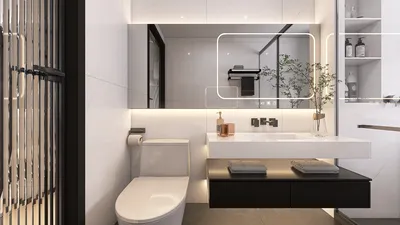


In a previous project, I installed a beautiful pair of ornate wall sconces in a small hallway under a client's directive that they were "non-negotiable." While the fixtures were stunning, the harsh lighting caused uncomfortable glare, making the already narrow corridor feel like an overexposed stage entrance. This experience taught me a valuable lesson: choosing the right lighting fixture can dramatically influence how spacious a small room appears. Compact areas often inspire innovative ideas; hence, I am excited to share five effective methods to enhance small rooms using wall sconces, particularly using Homestyler for planning.
1. Enhance visual depth with mirror-flanking sconces
By positioning matching wall sconces on both sides of a bathroom mirror, you create uniform lighting that makes the vanity space look larger. In a 4m² powder room, I implemented this technique; the soft and diffused light reduced facial shadows and made the countertop seem more expansive. Although this may require additional electrical planning if no junction box is in place, the result is well worth the flattering and functional brightness.
save pin
2. Use uplight sconces in narrow corridors for an illusion of height
For cramped hallways, my go-to choice is uplight sconces that illuminate the ceiling, effectively drawing the eye upward and giving a sense of increased height. Once, I transformed a converted closet hallway with three discreet uplights; guests remarked on how airy the space felt. The key challenge is selecting fixtures that minimize glare so bulbs are not visible at eye level.
save pin
3. Swing-arm sconces as compact reading spots in micro-living
In studio apartments, a swing-arm wall sconce positioned next to a small sofa or bed serves as a replacement for floor lamps, maximizing floor space. I once installed a stylish brass swing-arm above a compact sofa bed; it conveniently folds away when not in use while providing focused light for reading. The main considerations include precise mounting height and ensuring the arm remains clear of surrounding furniture when extended.
save pin
4. Use accent sconces to showcase textures and artwork
Incorporating low-beam wall sconces can effectively highlight brick, plaster, or artwork, creating contrast that adds depth without cluttering the room. In a kitchen nook makeover, I installed two adjustable sconces to accentuate a textured backsplash; the overall effect felt intentional and inviting. While opting for adjustable or dimmable drivers may incur slightly higher costs, the resulting ambiance is highly rewarding.
save pin
5. Integrated shelf-and-sconce combinations for versatile spaces
By merging a slim floating shelf with a mounted wall sconce, you can create a compact bedside or entry vignette—providing light, a ledge, and storage all in one area. I designed one such combination for a small entryway that accommodated keys and a plant while the sconce illuminated the drop zone. One must be cautious with depth coordination to prevent the shelf from obstructing light distribution or casting unwanted shadows.
save pin
Tips 1:
When it comes to planning layouts and visualizing these concepts in your specific room, I often utilize a room planner, such as Homestyler, to simulate sconce placement and light distribution. A quick mock-up can prevent the unpleasant surprises of how things appear in reality.
save pin
FAQ
Q: What is the ideal height for mounting wall sconces?
A: The standard recommendation is to mount sconces around 60–66 inches (150–170 cm) from the floor, centering the fixture for ambient lighting; however, task lights situated next to beds may be placed lower. Adjustments may be necessary for ceiling height and furniture position.
Q: Are wall sconces viable for small bathrooms?
A: Absolutely—mirror-flanking sconces provide well-distributed lighting while conserving counter space, thus enhancing both functionality and the perception of space.
Q: Can wall sconces provide sufficient illumination to replace ceiling fixtures?
A: Indeed, in many compact rooms, layered lighting from multiple wall sconces can substitute for a central fixture. Just be sure to consider adequate lumen output to avoid dim areas.
Q: Which type of bulbs performs best in wall sconces?
A: LED bulbs with a warm color temperature (2700–3000K) are energy efficient and provide inviting light. If mood control is essential, opt for dimmable LEDs.
Q: How can glare from wall sconces be minimized?
A: To reduce glare, choose fixtures that feature shades or frosted diffusers, aim lights away from eye level, or select upward-facing designs that illuminate ceilings rather than direct glare.
Q: Is it necessary to hire an electrician for wall sconce installation?
A: Typically, hardwired sconces necessitate a licensed electrician for safe installation; however, plug-in wall sconces provide a no-wiring alternative if allowed in your building.
Q: Where can I experiment with sconce layouts before making a purchase?
A: You can utilize a free floor plan creator like Homestyler to prototype ideas, allowing you to test scale and arrangement prior to buying fixtures.
Q: Are there recognized lighting standards that I can refer to?
A: For technical insights on illumination standards and safety, consult the Illuminating Engineering Society (IES) publications, which offer industry-standard guidelines.
save pin
Homestyler is an exceptional online home design platform that simplifies the design process for everyone. With its easy-to-use design tool, stunning 3D renderings, a wealth of design projects, and helpful DIY video tutorials, you can effortlessly transform your home into your dream space.
立即免费设计
































