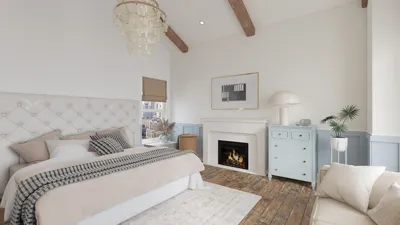


In one instance, I entered a client's compact galley kitchen and instantly noticed three mismatched lamps overhead, a chandelier suspended above the sink, and a neon sign perched above the refrigerator—a true story! I chuckled, devised a neat layout using a floor plan creator, and by the following week, the kitchen appeared to double in size. Small kitchens can be quite particular; the correct design of recessed lighting can either enhance their charm or cast them in shadows, akin to a cave.
Compact spaces spark creativity. In this article, I will share five effective recessed lighting strategies that I implement in real-life projects to illuminate work areas, facilitate movement, and add visual depth—all without exceeding the budget.
1. Begin with a straightforward grid that aligns with the ceiling height
I typically kick off with a clean grid: space recessed cans roughly half the ceiling height in inches (for a 9-foot ceiling, this translates to about 4.5 feet apart, following this rule of thumb). This approach ensures an even distribution of ambient light without any peculiar bright spots. It’s an uncomplicated, reliable plan that’s quick to set up, although some adjustments may be required near cabinets and soffits.
save pin
2. Incorporate task lighting where it's genuinely required
While ambient lighting from a grid is beneficial, a small kitchen thrives on task lighting positioned above prep areas, the sink, and the cooktop. Install dedicated fixtures or direct adjustable recessed trims to minimize shadows while you’re working. Although this might create a slightly busier ceiling, it also leads to fewer mishaps while chopping onions—a significant advantage.
save pin
3. Divide the kitchen into zones based on work areas and pathways
Think in terms of zones: prepping, cooking, washing, and movement. I opt to align recessed lights above each distinct zone rather than purely following geometric logic; this method feels intentional and is beneficial for setting dimmer settings. When working on tight remodels, I often design the layout in a kitchen layout planner, like Homestyler, to assess sightlines and fixture counts prior to making any cuts. This way, you may require an extra fixture compared to the theoretical minimum, but the outcome is a significantly more functional kitchen.
save pin
4. Utilize trims, beam angles, and placements to set the mood
Using narrow beam trims can accentuate surfaces and the textures of the backsplash, whereas wider trims offer a softening effect for the room. In one petite apartment, I implemented a combination: narrow trims above the prep area and wider trims for overall illumination. This blending enhances depth without needing additional fixtures, though it requires careful initial selection to ensure the light temperatures and Color Rendering Index (CRI) are harmonious.
save pin
5. Incorporate dimmers and smart scenes for added flexibility
One of my favorite techniques: divide the lights into two circuits—task and ambient—then implement dimmers or smart controls. Early morning coffee demands bright task lighting; however, evening dinners benefit from a softer ambient glow. This is a minor additional expense that greatly enhances functionality and gives the kitchen a personalized touch.
save pin
Tips 1:
Budget tip: opt for quality LED trims and steer clear of low-CRI downlights; high-quality LEDs have a longer lifespan and present colors (like those of food and cabinetry) more attractively. If you’re a visual thinker, conducting a quick 3D study can be beneficial; clients tend to feel more at ease when they visualize how the lighting interacts in a 3D render generated by tools like Homestyler. One of my clients invested in the render and insisted on keeping the design—definitely one of the best investments I’ve made.
save pin
FAQ
Q1: What spacing should I consider for recessed lights in a small kitchen?
A: A common guideline suggests spacing the recessed lights approximately half the ceiling height in feet (for example, 8 feet apart for a ceiling height of 16 feet), adjusting for any obstacles and designated zones. Always create a mock-up layout to tweak positions effectively.
Q2: How many recessed lights are necessary for a 10x10 kitchen?
A: The number of recessed lights needed can vary based on the height of the ceiling and the desired brightness. Typically, 6 to 8 recessed lights split into two circuits (ambient and task) provide even illumination with flexibility.
Q3: Is it possible to reliably dim recessed lights?
A: Absolutely. Use compatible LED fixtures and dimmers, ensuring to check the specifications for compatibility to prevent flickering. Smart dimming solutions enhance scene control and are perfect for small kitchens.
Q4: Are adjustable trims preferable to fixed trims?
A: Adjustable (gimbal) trims are excellent for directing light towards counters or art pieces, while fixed trims deliver cleaner general lighting. A combination often strikes the best balance in tighter kitchens.
Q5: How can I avoid shadowing caused by cabinets?
A: Position the recessed cans closer to the cabinet fronts, or use under-cabinet LED strips to provide genuine task lighting. Angling a few adjustable trims towards the counters can significantly reduce overhead shadows.
Q6: What color temperature is optimal for kitchens?
A: Commonly, a range of 2700K to 3500K is favored: warmer temperatures (2700K to 3000K) feel more inviting, while 3000K to 3500K provides a cleaner light ideal for task work. Maintaining uniform temperature across all fixtures prevents visual inconsistency.
Q7: Where can I access lighting guidelines?
A: For technical standards, refer to the Illuminating Engineering Society (IES) resources at https://www.ies.org/; their recommendations provide guidance on target lux levels and best practices.
Q8: Do recessed lights require insulation contact (IC) rated fixtures?
A: Yes, if the recessed cans come into contact with insulation (which is common in ceilings), ensure you utilize IC-rated housings to comply with safety regulations and protect insulation integrity. Always check your local electrical codes and consult a licensed electrician for detailed advice.
save pin
Discover your dream home with Homestyler! This user-friendly online design platform offers an intuitive design tool, stunning 3D renderings, and a wealth of design projects and video tutorials. Whether you're a beginner or a seasoned designer, bring your ideas to life effortlessly!
Design Now for FREE
































