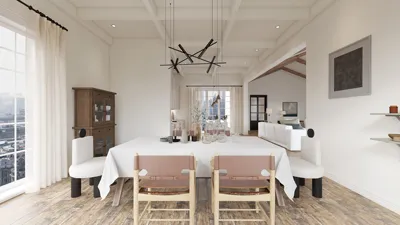


Direct Answer
Interior designers adhere to a fundamental guideline when selecting a dining room rug: the rug should extend at least 24 to 30 inches beyond all sides of the dining table to ensure that chairs remain fully on the rug when pulled out. Typically, for most homes, this translates to rug sizes ranging from 8×10 to 9×12 feet, depending on the table dimensions and room layout.
Quick Takeaways
Introduction
Throughout more than ten years of residential design experience, one of the most frequent errors I observe isn’t related to lighting, chairs, or table placement—it's choosing an incorrectly sized dining room rug. While homeowners often prioritize matching colors or patterns, professional interior designers focus primarily on how chairs interact with the rug.
A functional dining room rug must accommodate the actual usage of the space. If chairs consistently slip off the rug’s edge when pulled out, the room can feel unbalanced and incomplete. This is why experts trust established sizing standards rather than guesswork.
When designing layouts, I frequently utilize interactive room planning tools such as Homestyler to visualize dining furniture spacing and confirm clearances before selecting an appropriate rug.
This guide will explain the dining room rug dimensions most interior designers recommend, the exceptions to these rules, and subtle layout pitfalls that professionals intentionally avoid.
save pin
How Interior Designers Choose Dining Room Rug Sizes
Key Insight: Designers prioritize chair clearance to determine rug size, then fine-tune based on room size and furniture proportions.
Many homeowners mistakenly assume rug dimensions should match the table size directly. In contrast, the table is a secondary consideration; what truly matters is the distance a chair moves when someone sits down.
Through repeated experience, designers rely on a specific clearance range that reliably functions well in actual homes.
For instance, a 72-inch dining table paired with chairs typically necessitates approximately a 9×12 rug to ensure adequate movement space.
The American Society of Interior Designers underscores circulation planning as a critical part of dining room layouts, emphasizing that furniture movement flow must be evaluated before making final design decisions.
Professional Guidelines for Chair Clearance
Key Insight: The ultimate test for a dining room rug is whether chairs remain stable on it when fully extended.
If the chair’s rear legs leave the rug as someone sits down, it can cause two problems: instability and an awkward appearance.
Professional designers typically measure chair depth rather than relying solely on table measurements.
Common chair movement dimensions are used to determine adequate rug size.
This explains why rugs that look spacious in showrooms often feel undersized once positioned under a dining table.
save pin
Standard Rug Size Recommendations in Residential Design
Key Insight: Interior designers often select from a limited palette of rug sizes that consistently complement standard dining tables.
After many installations, designers prefer predictable rug sizes because most furniture manufacturers produce tables with similar dimensions.
The 8×10 rug has become a default choice because it balances furniture scale and room proportions in typical households.
Designers frequently use 3D floor planning software like Homestyler to simulate dining room proportions and test rug sizes before finalizing selections.
save pin
When 7x9 Rugs Are Appropriate
Key Insight: A 7×9 rug suits dining areas only when chairs remain on the rug during normal use.
This is where many online guides err by matching rug size solely to table length without accounting for chair depth.
Designers generally recommend a 7×9 rug only in specific cases: small four-person tables or breakfast nooks.
In open-concept homes, a smaller rug can subtly define the dining zone without overpowering neighboring living spaces.
However, for rectangular tables seating six or more people, designers rarely suggest 7×9 rugs.
Common Layout Strategies in Interior Design
Key Insight: Beyond size, rug placement helps define the dining area and anchors the overall furniture arrangement.
Designers rely on a handful of proven layout techniques to perfect dining room ambiance.
When handling complex open floor plans, many designers use realistic interior rendering workflows, such as those available in Homestyler, to preview and refine dining room arrangements.
save pin
Answer Box
The professional guideline for dining room rugs is straightforward: chairs must stay completely on the rug when pulled back. This typically results in choosing rugs that extend 24–30 inches beyond the table edge.
Common Mistakes Designers Avoid with Dining Room Rugs
Key Insight: The most significant error is selecting a rug that looks appropriate for the table but fails functionally by not accommodating chair movement.
Designers frequently observe repetitive issues in residential dining setups.
Another frequently overlooked factor is rug thickness. Professionals often recommend:
Low pile or flatweave materials that facilitate smooth chair movement and simplify cleaning.
Final Summary
FAQ
What size dining room rug do interior designers typically recommend?
Most professionals suggest rugs extending 24–30 inches beyond the dining table so chairs remain fully on the rug when pulled out.
Can a dining room rug be the exact size of the table?
No. Rugs that match the table size cause chairs to fall off the edges, resulting in discomfort and a cramped appearance.
Is 8×10 the standard size for dining room rugs?
Yes. The 8×10 rug is commonly used under six-person tables in average residential dining rooms.
Do round dining tables require round rugs?
Not necessarily. While round tables pair well with round rugs, square or rectangular rugs can also appropriately define the dining area.
How far should a dining rug extend beyond the table?
The general recommendation is 24–30 inches of extension on every side.
Which rug pile is best suited for dining rooms?
Low-pile or flatweave rugs are ideal because they allow chairs to slide easily and help prevent debris accumulation.
Can a 7×9 rug work under a dining table?
Yes, but primarily for smaller four-person tables or casual breakfast areas.
Should the dining rug be centered relative to the room or the table?
Interior designers almost always center the rug with the dining table, not the room itself.

Modern Minimalist White Walnut Round Side Table 3D Model


Minimalist White Plastic Metal Dining Chair 3D Model
Homestyler is an easy-to-use online platform that lets you design your home with powerful 3D rendering tools. Explore numerous interior projects and learn through helpful DIY video tutorials, making your home design process creative and enjoyable.
تصميم الآن مجانا
































