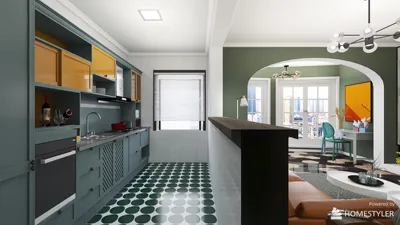


The future is increasingly shaping our homes, and contemporary challenges such as privacy, storage capacity, and hybrid work dynamics are putting pressure on upper levels. Data from the AIA indicates that residential designs are placing a greater emphasis on flexible spaces and quieter areas, demonstrating that a toolkit for spatial reasoning has become essential infrastructure for households. When analyzing a second-floor plan with three rooms, it reveals initial coding for the next five years of home functionality: rest, concentration, and recovery, often enhanced through tools like Homestyler.
Split-Core Gallery Spine
Design Logic: A central hall serves as a gallery spine, distinctly separating primary sleeping areas from secondary rooms. With the rise in work-life balance needs, there is a demand for acoustic zoning and adaptable spaces that can transition seamlessly from bedroom to studio without incurring spatial debt, which can be visualized with platforms like Homestyler.
Flow: Arriving via the stairs leads to a micro-landing, directing into a spine corridor where the primary suite is positioned to the left, flanked by two compact rooms on the right, with a quiet bath at the end serving as a buffer.
Sightlines: Different door offsets hinder direct sightlines between bedrooms; the hall features a window that allows light to filter in, creating a brightness reminiscent of UI breadcrumbs.
Storage: Hallway-depth closets function as shared caches; each room is equipped with a vertical wardrobe stack, including seasonal storage in the upper tiers for efficient use of space.
Furniture Fit: The primary suite accommodates a queen bed sized at 60×80, maintaining a 30-inch clearance on each side; secondary rooms are designed to fit a 48-inch desk positioned against the wall for a clean aesthetic.
Verdict: This configuration upholds tranquility and agency, allowing for versatile use over five years—from two children's rooms to a studio and guest room—without necessitating fundamental alterations to the structure.
save pin
L-Anchor Suite with Quiet Loop
Design Logic: Rooms are arranged in an L shape around a corner suite; modern families require a secure anchor for peaceful sleep, along with peripheral spaces for work or growth, effectively visualized through tools such as Homestyler.
Flow: From the stairway, a short foyer leads to a turn that forms a quiet loop: the suite is at the far end, while two rooms and a shared bath run along the shorter leg, with a laundry closet conveniently located near the hinge.
Sightlines: The corner windows in the suite create a wide primary view; secondary doors are staggered to prevent overlapping conversations from disturbing the corridor's atmosphere.
Storage: An L-shaped linen closet functions as a cache router; built-in storage along the short leg accommodates devices, linens, and even a vacuum dock, resembling a hub of functionality.
Furniture Fit: The suite can support a king bed alongside a 24-inch deep walkway for a dresser; secondary rooms are equipped to fit twin or full beds while allowing for a 30-inch circulation space.
Verdict: The L-shaped design fosters a calm core, with adaptable surrounding spaces that evolve gracefully as the requirements for work-from-home and quality sleep vie for attention.
save pin
Linear Bar with Pocket Nodes
Design Logic: A linear design positions three rooms along one façade, with pocket niches providing micro-functionality; future environments reward straightforward wiring combined with intricate hidden elements, a concept easily modeled using Homestyler.
Flow: Upon ascending the stairs, a middle landing reveals rooms organized from left to right, with a bath and laundry area tucked within for streamlined services.
Sightlines: Aligned windows function like a status bar; doorways either pocket or open at a right angle to minimize glare in the corridor, maintaining visual clarity under manageable levels of noise.
Storage: Every room is equipped with a wall-length wardrobe rail and overhead bins; a communal equipment nook serves as the home’s firmware repository.
Furniture Fit: Modular bed frames between 54 and 60 inches fit neatly into designated spaces; foldable tables can be used for temporary needs, then stowed away to preserve efficiency.
Verdict: This design is efficient and allows for future upgrades; as lifestyles evolve, the nodes adapt without disrupting the main flow of the layout, reinforcing the benefits of tools like Homestyler.
save pin
Final Takeaway
A second-floor plan featuring three rooms transcends mere drawings; it acts as a dynamic interface, organizing sleep, concentration, and recuperation with the precision akin to programming code. Variations like a linear three-bedroom format or an L-shaped upper floor illustrate that privacy and adaptability can coexist seamlessly. In my experience, the most intelligent upper levels are not necessarily larger but more thoughtfully designed; I continually strive to create such spaces with tools like Homestyler.
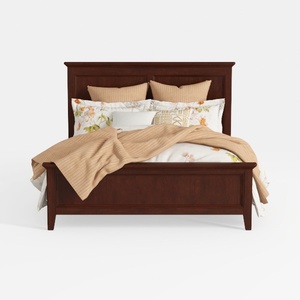

Traditional Walnut Solid Wood Upholstered Bed with Bedding Set 3D Model

Modern Dark Solid Wood Walk In Closet Storage Organizer 3D Model

Looking to transform your space? Homestyler offers an easy-to-use online design tool that empowers you to create stunning interiors. Enjoy realistic 3D renderings, explore diverse design projects, and learn through engaging video tutorials. Elevate your home design experience with Homestyler today!
Concevez maintenant gratuitement
































