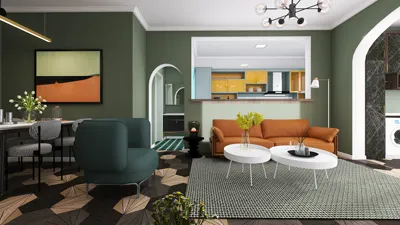


Creating a single room on a terrace requires a careful consideration of structural stability, thermal comfort, natural light management, acoustics, and efficient space utilization. Over the last decade, I have designed and enhanced terrace rooms intended to function as studios, guest accommodations, small offices, and versatile lounges. The best designs view the terrace as an active micro-environment rather than just an underutilized area. According to the WELL v2 standards, comfortable lighting levels need to be between 300–500 lux for most workspaces, emphasizing the importance of balanced daylight to reduce glare, particularly on sunlit terraces. Research from Steelcase indicates that employees dedicate nearly 54% of their day to individual work, underscoring the necessity for well-planned lighting and sound management even in compact spaces.
Exposure to the outdoors can increase heat gain and glare significantly. Following the IES recommendations for luminance ratios—ideally maintaining a 3:1 ratio between work areas and the surrounding space—can enhance visual comfort and decrease eye strain, which is often overlooked in limited terrace environments. Behaviorally, color selections can influence mood; for example, Verywell Mind highlights that shades of blue enhance focus, while greens promote relaxation—both valuable when a single room must transition between workspace, hobby area, and guest suite. These insights guide crucial design choices before any structural elements are installed. For comprehensive workplace insights, refer to both Steelcase studies and the WELL v2 guidelines.
Establishing the Room's Purpose
A terrace room shines when it accommodates two to three distinct functions without creating visual chaos. A typical configuration might include a quiet workspace during the day, a relaxation area in the evenings, and a guest suite over the weekends. I prioritize essential functions first, then designate key locations for elements such as a desk, convertible sofa, and wardrobe nook. Ensure the pathway remains clear from the entrance to the window, maintaining at least a 900–1000 mm minimum walkway width for effortless movement. If your terrace has an irregular layout, employing a modular strategy with movable partitions and collapsible elements will allow for flexibility as seasons change, while resources like Homestyler can help visualize space.
Layout Planning with Micro-Zones
Design your micro-zones using adjacency principles: position the desk near natural light while avoiding direct sunlight exposure; select the coolest corner for lounging; and place storage along common walls to enhance sound privacy. To optimize your configuration, utilizing a layout simulation tool, such as Homestyler, enables quick visualization and iteration of designs. I recommend a 60/30/10 distribution: 60% for the primary function, 30% for secondary use, and 10% reserved for circulation. Avoid placing tall storage near windows to keep daylight accessible and ensure a balanced luminance ratio.
Building Envelope, Support, and Moisture Management
Before applying finishes, validate load-bearing capacities, waterproofing measures, vapor barriers, and thermal breaks. A terrace room typically exists above heated or outdoor areas; thermal bridges can result in condensation and mold issues. Utilize high-performance membranes, ensure sloped flooring toward drains, and apply edge flashing beneath thresholds. When incorporating glazing, opt for reinforced frames and laminated glass in areas subject to strong winds. Combine an insulated lightweight wall system with a ventilated rainscreen to manage heat gain and accommodate service elements without imposing excessive structural loads.
Natural Light, Glare Management, and Electric Lighting
As seasons progress, the angle of sunlight affects strategies on terraces. Implement dual-layer window treatments—a solar screen with about 3–5% openness paired with blackout curtains for nighttime use. Keep task lighting between 300–500 lux for work purposes; introduce dimmable warm-white ambient lighting (2700–3000K) for relaxation hours and neutral-white (3500–4000K) during productive intervals. Follow the IES recommendation by maintaining luminance ratios near 3:1 to prevent eye discomfort. Direct downlights can create stark contrasts in small areas; consider options like wall grazing or indirect coves to diffuse light effectively.
Thermal Comfort and HVAC Solutions for Exposed Terraces
Solar gain presents unique comfort challenges. Incorporating insulated roof panels, low-e glazing, exterior shading (e.g., adjustable louvers or pergolas), and cross ventilation can help regulate peak temperatures. In compact settings, employing a ductless mini-split system with dehumidification capability is efficient; this should be coupled with a well-sealed envelope to manage thermal loads effectively. If noise intrusion is an issue, minimize vibrations by decoupling the compressor from the subfloor. In colder climates, radiant electric floor heating can prevent chilly floors without excessive airflow conditioning.
Sound Management and Privacy Measures
A terrace room that is adjacent to outdoor spaces will encounter challenges from wind, traffic, and neighboring noise. To counteract this, consider using a double-stud partition or resilient channels for shared walls, and ensure all penetrations are sealed. Soft furnishings, area rugs with substantial underlays, and acoustic panels behind seating can effectively absorb mid-to-high frequencies. Ensure that the bed or sofa is positioned away from the noisiest side of the building, and use storage to create sound barriers. For micro-offices, enhance speech privacy with soft finishes along with a solid door and perimeter seals.
Color Impact and Material Selection
The color scheme should complement the functionality of the room: greens for tranquil areas, subtle blues to foster concentration, and off-whites to enhance spatial perception. Matte surfaces help diminish glare. Select materials that can withstand moisture fluctuations, such as engineered wood, compact laminates, mineral-based finishes, and porcelain. In sustainability efforts, check for third-party certifications and recycled content; emphasize low-VOC adhesives and paints. Incorporate textures minimally, such as woven shades or ribbed upholstery, to avoid overwhelming visual stimulation.
Furniture Choices, Storage Solutions, and Adaptability
In single-room terrace constructions, adaptable furniture serves as a significant advantage: think wall beds that double as desks, folding couches, nesting tables, and ceiling tracks for sliding panels. Opt for vertical storage options: tall cabinets, shelves overhead of doorways, and drawers beneath sofas. Maintain clearance standards of at least 600 mm in front of storage, 750 mm at desk seating, and 900 mm for circulation. Additionally, install cable management systems and floor ports for organized power supply.
Safety, Compliance, and Accessibility
Verify egress requirements, guardrail heights, and appropriate fire-rated constructions. Doors leading to terraces should instead resist weather-related damage and maintain flashing with sufficient drainage. If the room opens to a roof deck, ensure safe sightlines and create non-slip transitions. Incorporate motion-sensor lighting at entrances and install emergency lighting with battery backups if the space also serves as guest accommodations.
Adapting to Seasons and Implementing Smart Controls
Utilizing automated shading, occupancy sensors, and adjustable white lighting can facilitate seamless transitions between work and relaxation modes. Develop preset scenes: “Focus” at temperature settings of 3500–4000K with light levels at 400 lux; “Evening” at 2700K and 150–200 lux; and “Guest” settings that activate blackout and privacy modes. Monitor air quality with micro air sensors to balance humidity levels between 40% and 60%, ensuring material integrity and overall comfort.
Examples of Small-Footprint Layouts
• 10–12 m² Micro-Office + Guest: A desk positioned beneath a large window, a convertible couch across, closet space near the entrance, and a sliding partition to create sleeping areas.
• 12–14 m² Creative Studio: An outer storage wall, a mobile work table, sound dampening rug, indirect ceiling lighting, and balcony door covered with dual-layer shades.
• 14–18 m² Hybrid Lounge: A corner lounge outfitted with scalloped acoustic panels, compact pantry, hidden wall bed, and adjustable ceiling fan paired with a mini-split for seasonal adjustments.
Lighting and Ergonomic Foundations
Position the desk height around 720–740 mm, ensuring that the chair allows knees to be at a right angle and forearms run parallel to the desktop. Position task lighting slightly off from the dominant side to minimize shadows. The top of the primary monitor should rest at eye level or slightly below, with a viewing distance of 500–700 mm. Align lighting strategies with the comfort goals outlined in WELL v2 and IES task specifications while preventing direct sight of exposed light sources from seating areas.
Terrace Room Success Checklist
• Confirm the structural integrity, waterproofing measures, and drainage system prior to finishing touches.
• Design the micro-zones following the 60/30/10 rule for functionality.
• Manage sunlight effectively through exterior shading solutions and dual-layer interior treatments.
• Target functional lighting levels of 300–500 lux, ensuring dimmability across varied modes.
• Implement acoustic measures: utilize resilient channels, carpets, acoustic panels, and storage as sound barriers.
• Prioritize durable, low-VOC materials while addressing thermal bridge concerns.
• Consider multifunctional furniture and maintain circulation space of at least 900 mm for convenience.
• Evaluate layouts by employing an interior planning tool like Homestyler to ensure usability and flow.
Frequently Asked Questions
Integrating exterior shading options (such as louvers or awnings), low-e glazing, upgraded insulated envelopes, and cross-ventilation strategies can effectively manage thermal comfort during peak daylight hours.
For focused activities, aim to maintain light levels between 300–500 lux and neutral-white color temperatures (3500–4000K), transitioning to warmer tones (2700–3000K) with lower intensities (150–200 lux) in the evening to create a lounge atmosphere. Maintain luminance ratios close to 3:1 to avoid glare and ensure comfort.
Recommended materials include engineered wood, compact laminates, porcelain tiles, mineral-based paints, and metal or powder-coated frames. Steer clear of untreated solid wood and ensure all edges are sealed with vapor barriers as needed.
Incorporate translucent sliding partitions and solar shades with a 3–5% openness factor, complemented by blackout curtains for nighttime privacy. Position storage or sound-absorbing panels strategically to minimize sightlines while keeping windows unobstructed.
Choose a light-duty mini-split system suited to the size of the terrace room. Secure the compressor with vibration dampeners and ensure proper sealing of penetrations; remember to maintain necessary clearance for service and fluid drainage.
Indeed—employ a wall bed or convertible sofa, blackout shades, compact wardrobe space, and sound-treated wall assemblies. Include task lighting and a night-light setting to promote safety.
Incorporate layered soft elements, including rugs with sturdy underlays, upholstered seating, and padded wall panels for comfort. Consider resilient channels on shared partitions and appropriately sealing around doors and windows for sound insulation.
Allocate 60% of space for the primary function, 30% for secondary uses, and 10% for circulation. Validate adjacency by ensuring the desk faces windows, the lounge is in a cooler spot, and storage acts as a sound buffer with the sleeping area away from noise sources.
Ensure the desk height falls between 720–740 mm, the chair supports good posture, and that the monitor sits at or slightly below eye level within a range of 500–700 mm viewing distance. Positioned task lights should be on the non-dominant side to reduce shadows while working.
Utilizing scene-based lighting (with modes such as Focus, Evening, and Guest), along with automated shades, occupancy sensors, and CO₂/RH monitoring systems, helps maintain comfort while conserving energy, particularly during fluctuating weather conditions.



Transform your home design dreams into reality with Homestyler! This user-friendly online platform features an intuitive design tool, stunning 3D renderings, and a wealth of DIY video tutorials. Whether you're a novice or a pro, Homestyler inspires creativity and allows you to experiment with endless design possibilities.
Concevez maintenant gratuitement
































