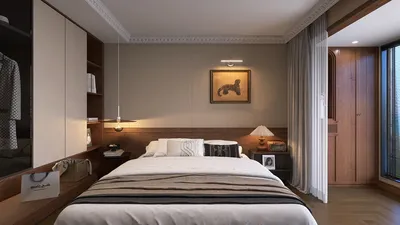


Currently, there is an increasing trend towards enhancing the utility of small urban homes, as I observe in weekly client briefs: individuals desire aesthetically pleasing spaces that convey a sense of spaciousness, even with limited square footage. Through my experience with various compact apartments, I’ve discovered that the art of decorating a long narrow bedroom focuses more on establishing a clear flow and incorporating thoughtful elements rather than merely cramming furniture into the area.
Small spaces ignite immense creativity—I recall one project where a room measuring only 9 by 12 feet transformed into a tranquil oasis by introducing innovative storage solutions and visibility techniques. In this article, I will present five design ideas, each enriched with my insights, advantages and disadvantages, as well as actionable suggestions you can implement this weekend. For those prioritizing storage, think about integrating robust built-in solutions from the start of your design process so that they inform the layout rather than being a last-minute consideration, facilitated by the use of tools like Homestyler.
1. Establish a Defined Circulation Path
My Perspective
I begin by outlining how individuals will navigate through the room. A cluttered passage in a long narrow bedroom can make the area seem even tighter. I once rearranged a bed and a dresser in a rental, and instantly, the entire room felt more spacious.
Advantages
Creating a clear circulation path makes small bedroom layout suggestions practical: you prevent obstruction of natural walking routes and delineate areas for sleeping, dressing, and relaxing. This method of optimizing long narrow bedroom storage leads to reduced visual clutter, simplifying cleaning routines.
Disadvantages
A potential drawback is that you might need to compromise on symmetry or forgo a bold centerpiece. Some clients have expressed dissatisfaction when moving the bed off-center, yet most later acknowledge the enhanced usability.
Tip
Consider adding a slender runner rug or varying the floor texture to define the path—this subtly indicates the intended use of the room without overwhelming it.
save pin
2. Opt for a Low-Profile Bed and Utilize Elevated Storage
My Perspective
Early in my profession, I grasped the significance of scale: a tall, bulky bed can make a narrow room appear cramped. Switching to a low-profile platform bed or raising a bed on a loft can create a sense of height and free up space beneath.
Advantages
A low bed combined with under-bed drawers exemplifies excellent long narrow bedroom storage ideas—this hidden storage keeps necessities handy and maintains a clean visual aesthetic. This strategy aligns with small bedroom layout tips that emphasize the use of multifunctional furniture.
Disadvantages
Low-profile beds might be perceived as overly casual by some, and lofting may not be feasible in older buildings with lower ceilings—once, in a sixth-floor apartment, we navigated these restrictions by using custom storage boxes.
Example
If you're working with a budget, consider repurposing a sturdy pallet as a base and adding storage bins. For a more upscale finish, investing in a custom platform with integrated drawers will be worth it for sustained organization.
save pin
3. Implement Vertical Storage and Reflective Elements
My Perspective
I enjoy leveraging vertical space to enhance the visual experience. Installing tall shelves, wall-mounted nightstands, and a mirror at the far end can create an illusion of depth. In one project, I created a floor-to-ceiling shelving unit for the headboard, which made the room feel twice as high.
Advantages
Vertical storage options are essential to long narrow bedroom storage concepts, as they maximize capacity while minimizing footprint. Mirrors and light-colored reflective surfaces expand the perceived space and align with widely accepted small bedroom layout strategies backed by design research.
Disadvantages
Excessive vertical furniture can feel overwhelming without balance; I have encountered rooms described as ‘book cliffs’ where the walls dominate the atmosphere. Additionally, installing tall units may necessitate stud-finding and secure anchoring.
Authoritative Note
Design organizations endorse the use of reflection and vertical emphasis to enhance spatial perception (see guidance from the American Society of Interior Designers for more insights).
Tip
Position a large mirror opposite a window to reflect light back down the length of the room. To visualize how these elements will play out in your space, consider using Homestyler to simulate room flow in 3D.
save pin
4. Zone with Color and Texture
My Perspective
Color blocking and texture transitions are my preferred non-construction tools. In a long narrow bedroom, I usually paint the wall behind the bed in a deeper shade while the remaining walls are kept soft. This anchors the bed visually and shortens the perceived length of the room.
Advantages
Utilizing an accent wall or a textured headboard is an effective design strategy for long narrow bedrooms that complements other small bedroom layout techniques. It establishes a visual focal point without imposing physical restrictions and works beautifully with integrated lighting to enhance depth.
Disadvantages
Vivid colors can seem permanent; a trendy hue may not age gracefully. Once, a client panicked over a dark teal wall—but we discovered that merely changing textiles could soften the overall look.
Tip
For flexibility, choose removable wallpaper or large fabric panels. Layered rugs can subtly delineate different zones—sleeping, dressing, and even a small reading nook.
save pin
5. Optimize Furniture Placement Using an L-Shaped Configuration
My Perspective
In confined spaces, an L-shaped arrangement often proves to be the most effective. By positioning the bed against the long wall and placing storage perpendicular, it creates a natural nook for a desk or vanity. In a previous narrow rental project, this layout allowed the client to enjoy a functional workspace right within their bedroom.
Advantages
An L-shaped configuration maximizes usable floor space in compact bedrooms and supports multifunctional living. It stands out as one of the most insightful small bedroom layout strategies since it organizes areas while enhancing circulation.
Disadvantages
The drawback may be a loss of wall space for art displays or larger dressers. Additionally, careful measurement is crucial—elements like radiators or vents can complicate furniture placement, requiring creative adjustments.
Budget Tip
There’s no need for custom carpentry to experiment with this arrangement; often, a simple dresser or shelving unit set perpendicular to the bed serves effectively. If you’d like assistance in testing layouts or visualizing how the L-shape will function, AI-driven planning tools such as Homestyler can greatly assist.
save pin
Summary
Decorating a long narrow bedroom hinges on making informed choices: prioritize flow, select appropriately sized furniture, utilize vertical storage, create zones with color, and if feasible, implement an L-shaped layout. Small spaces invite intentionality—every decision matters more than in a larger bedroom.
Design research and industry authorities such as the American Society of Interior Designers support these ideas, indicating that light, circulation paths, and multifunctional furniture significantly influence compact spaces (for further information, visit https://www.asid.org).
Which of these strategies piqued your interest? I'd love to hear—let me know your choices, and I’ll provide actionable next steps.
save pin
FAQ
Q1: What’s the first step when decorating a long narrow bedroom?
A1: Begin by mapping the circulation—identify entryways, windows, and heating elements, then position the bed to maintain a clear path. This straightforward strategy avoids layout errors and aligns with professional small bedroom layout tips.
Q2: How can I create an illusion of width in a long narrow bedroom?
A2: Employ light colors, place mirrors opposite windows, and choose low-profile furniture to improve sightlines. These are effective long narrow bedroom design strategies that augment perceived space.
Q3: Are built-in storage solutions essential?
A3: While not strictly necessary, built-ins are incredibly efficient in long narrow bedroom storage suggestions, as they conserve floor space and can be customized for awkward wall sections. Even cost-effective modular units can perform well when purposefully integrated.
Q4: Can I incorporate a desk into a long narrow bedroom?
A4: Absolutely—utilize an L-shaped configuration or a narrow floating desk to facilitate a compact workstation without impeding traffic flow. Position it near natural light for optimal comfort.
Q5: What kind of lighting is most effective in narrow bedrooms?
A5: A layered lighting approach—combining ambient ceiling lights, task lamps beside the bed or desk, and accent strip lighting on shelves—adds dimension and functionality. Avoid relying on a single overhead fixture, which may create flat illumination along the room’s length.
Q6: How should I determine the appropriate bed size?
A6: Choose the largest bed that allows for at least 24 inches of clear space on one side (or both, if feasible). In exceptionally narrow rooms, a full-size bed typically balances comfort and utility better than a queen.
Q7: Are there safety considerations for tall shelving in narrow rooms?
A7: Yes—it's important to secure tall units to the wall or use anti-tip brackets to avert accidents. Anchoring is recommended by interior design safety standards and is a simple precaution I always advise in client settings (see ASID resources at https://www.asid.org).
Q8: What budget should I allocate for a makeover of a long narrow bedroom?
A8: The budget varies based on the scope of work: simple paint and textile updates can be under $500, moderate furniture and lighting changes can range from $1,000 to $3,000, while custom built-ins could exceed that. Start with a clear priority list—focusing on storage, the bed, then lighting—and scale your budget accordingly.
save pin
Homestyler is your go-to online home design platform! With its user-friendly design tool, stunning 3D renderings, and a wealth of DIY video tutorials, you can effortlessly transform your living space. Explore endless design projects and unleash your creativity today!
지금 무료로 디자인하세요
































