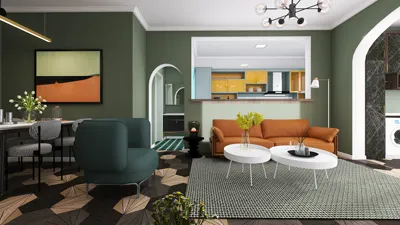


When designing meeting spaces, I adhere to a key principle: the quality of a meeting is not solely determined by square meters. Instead, factors like proportions, acoustics, lighting, and ergonomic design play crucial roles. Over the last few years, the way teams engage has evolved significantly, prompting a trend towards balancing smaller, technology-equipped meeting areas with a few larger, versatile rooms. According to Gensler’s U.S. Workplace Survey, a notable 73% of knowledge workers alternate between individual and collaborative settings, showcasing a rising demand for small-group collaboration spaces. Insights from Steelcase indicate that top-performing teams thrive in environments that facilitate hybrid interactions and enable swift transitions between varied tasks, while research from Herman Miller connects adjustable furnishings and ergonomic postures with substantial improvements in cognitive performance. Incorporating tools like Homestyler can enhance the visualization of these designs.
In planning meetings, two critical measurements guide every decision: the area allocated per person and the sightline to any displays present. WELL v2 guidelines suggest that collaboration areas maintain comfortable ambient light levels ranging from 300 to 500 lux, with the IES recommending a higher 500 lux for task-related work. Equally important are seating ergonomics; Herman Miller's studies reveal that without adjustable seating, users tend to experience significant discomfort and diminishing focus after just 45 to 60 minutes. These standards, complemented by clear circulation paths, create spaces that not only accommodate individuals but also align with their working styles—factors that can be effectively managed using Homestyler’s design software.
Meeting room dimensions should be tailored rather than standardized, as optimal sizes depend on occupancy, technology requirements, furniture choices, and acoustic strategies. A general guideline suggests planning for 1.8 to 2.4 m² per person in seated rooms equipped with tables, and 2.4 to 3.0 m² for hybrid rooms featuring cameras and larger displays. Prior to finalizing layouts, employing a room layout tool such as Homestyler permits the visualization of different arrangements for tables, camera placements, and flow patterns within the space.
Core Dimensions and Capacities
Recent trends in workplace utilization and human factors have led to my frequently specified size ranges:
- Typical clear area: 6–9 m² (for instance, dimensions of 2.4 m × 3.0–3.6 m).
- Table dimensions should be 700–800 mm in depth and between 1.2–1.6 m long; rounded edges facilitate better circulation.
- Ensure a minimum circulation space of 900–1,050 mm around seating arrangements.
- For displays, aim for sizes between 43 and 55 inches; cameras should be placed at eye level with a primary viewing distance of 1.6–2.2 m for best results.
- Clear area: 10–14 m² (for example, dimensions of 3.0 m × 3.6–4.2 m).
- Density planning: approximately 2.0–2.3 m² per person if video equipment is included.
- Tables should be between 800–900 mm deep and 1.8–2.0 m long; allow 600 mm for each seated person along the edge.
- Display sizes of 55 to 65 inches are preferable, with the first-row viewer’s distance being between 2.0 and 2.8 m for optimum legibility.
- Clear area: 16–24 m² (dimensions like 3.6–4.2 m × 4.8–5.4 m).
- Planning density should remain at 2.0–2.4 m² per person.
- Adopt boat-shaped tables measuring 2.4–3.0 m, with a depth of 900–1,000 mm; integrated cable management is beneficial.
- Dual displays, sizing between 55 and 65 inches, are recommended for hybrid meetings, with the camera positioned to cover the entire table width.
- Clear area: 28–40 m² (for example, dimensions of 5.4–6.0 m × 5.4–7.2 m).
- Planning density in tech-heavy setups should be 2.4–2.8 m² per person.
- Tables should measure 3.2–4.2 m with 600 mm per seat edge, and an overall depth of 1,100–1,200 mm contributes to improved access and laptop comfort.
- Include multiple camera angles and ceiling mics; the primary screen should vary between 75 and 98 inches, depending on sightlines.
Proportions, Sightlines, and Display Sizing
The proportions of a room significantly influence comfort levels. It is advisable to maintain an aspect ratio close to 1:1.3–1.5 to prevent restrictive sightlines and ensure all participants are visible on camera. Set the distance from the first-row eye to the screen to be approximately 1.2–1.6 times the diagonal screen size; for instance, a 65-inch display would necessitate a distance of 2.0–2.6 m. The bottom of the screen should ideally be positioned 900–1,050 mm above the floor, allowing seated users to view content comfortably without straining their necks. To minimize glare, avoid placing displays directly opposite windows.
Table Geometry and Human Factors
For hybrid meetings, tables with a boat shape or rounded rectangles are preferable as they maintain unobstructed central sightlines and draw distant seats closer to the microphones. Ensure each seat has a width of 600 mm and maintain a minimum table-to-wall clearance of 800 mm on active circulation sides. Ideally, aim for a clearance of 900–1,050 mm for people passing behind seated individuals. The designated table height should fall between 720–740 mm, complemented by chairs that can be adjusted between 420–520 mm in seat height. Finally, incorporate a 150–200 mm space beneath the tabletop for power outlets and hubs to avoid knee clashes.
Lighting: Illuminance, Color, and Glare Control
Effective lighting not only illuminates the room but serves as optimal video lighting. Aim for ambient lighting levels of 300–500 lux, supplemented by 30–50% vertical illumination on participants’ faces to provide clear visuals on cameras. Utilizing LED lighting with a color temperature between 3500–4000 K ensures natural skin tones are presented; maintaining a Unified Glare Rating (UGR) below 19 contributes to visual comfort. The WELL v2 guidelines endorse a balanced spectral quality and glare control essential for supporting cognitive function, while the IES offers guidance on task lighting to help retain 500 lux on work surfaces for writing tasks.
Acoustics: Isolation and Clarity
The shortcomings of a meeting space are often more related to noise than sheer size. Aim to create walls and doors with a composite Sound Transmission Class (STC) rating of 45–50 to ensure privacy, alongside a reverberation time (RT60) of 0.4–0.6 seconds for small rooms and 0.5–0.7 seconds for medium spaces. Combine soft finish materials with acoustically designed ceiling tiles (NRC 0.80+) and well-placed wall panels to diminish sound reverberation. Under-table acoustic treatments and carpet tiles can mitigate chair noise. Always seal door edges and consider automatic door bottoms to reduce sound leakage.
Hybrid Technology Integration
For the primary camera setup, position it along the display's centerline at a height of approximately 1,100–1,300 mm for seated arrangements; include a secondary camera on a whiteboard if analog brainstorming is implemented. Ensure there are at least two power/USB-C outlets available for every four individuals. Ceiling-mounted microphones are effective in larger meeting rooms; beamforming audio devices are ideal for small to medium settings. To maintain a tidy visual field, keep all cable runs brief and out of sight using grommets and raceways.
Ventilation, Thermal, and Wellbeing
To maintain alertness, it's crucial to manage CO₂ levels through sufficient ventilation. Rooms should ideally be kept at a temperature of 21–23°C with minimal fluctuations; localized temperature control enhances comfort. Opt for low-VOC materials to decrease lingering odors in confined areas. Incorporating biophilic design elements—like planters, natural textures, and warm neutral colors—can help alleviate fatigue during meetings.
Furniture and Material Choices
- Chairs should offer adjustable lumbar support, breathable mesh or performance fabrics, with soft casters suited for hard floors.
- Table surfaces need to have matte, low-glare laminates with a light reflectance value (LRV) of 40–60 to achieve the right balance for camera exposure.
- Wall finishes could incorporate acoustic fabric panels or micro-perforated wood on at least two opposing walls for maintaining sound quality.
- Sustainability should be prioritized with GREENGUARD-certified finishes and FSC-certified wood wherever possible.
Circulation and Accessibility
It's essential to maintain at least a 900 mm clear path from entrance to seating, ensuring that a 1,500 mm turning radius is available near doors or the end of tables for mobility aids. To avoid conflicts with door swings, utilize vision panels and door closers requiring 20–30 N of force to open. Additionally, keeping cable trays flush to the floor helps prevent tripping hazards.
Planning Scenarios and Example Layouts
- 2–4 seats: an area of 2.4 m × 3.0 m with a 1.4 m table and a single 55-inch display.
- 4–6 seats: dimensions of 3.0 m × 4.0 m with a 2.0 m boat-shaped table; a 65-inch display should be centered on the wall camera.
- 6–8 seats: dimensions of 3.6 m × 4.8 m with a 2.6 m table; dual 55-inch displays with a ceiling microphone array are recommended.
- 10–12 seats: dimensions of 4.8 m × 6.0 m with a 3.6 m table; integrating an 86-inch display along with dual cameras and a designated whiteboard camera should be considered.
To evaluate spatial options effectively, utilizing a room design visualization tool such as Homestyler can simulate seating arrangements, sightlines, and clearance.
Color Psychology and Visual Strategy
Adopting muted, low-saturation colors (soft grays, gentle blues, and desaturated greens) can minimize visual distractions and issues with camera exposure calibration. Accent walls behind displays should utilize mid-tone colors rather than dark tones to prevent visual fatigue. Apply color zoning to indicate different functions; for example, using warmer tones near collaborative tools to highlight focus while cooler shades around seating areas maintain tranquility.
Futureproofing: Flexibility Built In
Specify tables equipped with movable power modules, adaptable camera setups, and modular acoustic panels to allow for adjustments in line with future technology. Consider installing walls with blocking for potential display upgrades, along with ceiling grids that support new microphones or lighting solutions. An ideal meeting space flawlessly accommodates diverse activities—stand-up sessions, workshops, and video-centric meetings—without the need for constant furniture rearrangements.
References for Design Decisions
For comprehensive benchmarks regarding comfort and versatile use, I frequently refer to extensive workplace research conducted by Gensler, alongside ergonomic guidelines that align with WELL v2 lighting quality recommendations. Both sources resonate with client feedback that highlights a preference for smaller, well-appointed rooms, which consistently receive the highest utilization and satisfaction ratings.
FAQ
For meeting spaces, plan for around 8–10 m², such as dimensions of 3.0 m × 3.2 m, ensuring a circulation space of 900–1,050 mm around chairs, a table size of 1.6–1.8 m, and a 55-inch display positioned at a 2.0–2.4 m viewing distance.
In seated configurations with tables, an area of 1.8–2.4 m² per person is ideal. For hybrid setups involving cameras and larger displays, budget 2.4–3.0 m² per person to maintain good sightlines and effective cable management.
A height ranging from 2.7 to 3.0 m allows sufficient volume, optimal camera angles, and space for acoustic treatments. Avoid ceiling heights lower than 2.4 m in video-focused environments to eliminate cramped visuals and flutter echoes.
Utilize the 1.2–1.6× rule for determining the first-row viewing distance relative to diagonal display size. A 65-inch display works well with a viewing distance of 2.0–2.6 m; consider increasing to 75–86 inches for first rows exceeding approximately 3.0 m.
Aim for 300–500 lux ambient lighting, coupled with a color temperature between 3500 and 4000 K, and maintain a UGR below 19. Additionally, enhance vertical illumination on faces through wall washers or indirect lighting to ensure skin tones appear camera-friendly.
Combine STC ratings of 45–50 for partitions and doors, maintain a reverberation time of 0.4–0.6 seconds for small rooms, and employ high-NRC ceilings (0.80+) for sound management. Installing wall panels at initial reflection points, using carpet tiles, and ensuring door edges are sealed will improve acoustics.
Boat or rounded rectangle tables help maintain even camera angles and microphone accessibility, bringing edge seats closer to the central visual area compared to more angular, rectangular tables.
Indeed, analog boards still hold value in meetings. Incorporate a whiteboard camera or strategically position boards within the primary camera view to ensure content visibility for remote participants.
Ensure at least two power/charging outlets are available for every four seats, with edge access to tables to keep cables organized and allow for smooth circulation.
Select matte, low-gloss materials with a medium LRV (40–60) to avoid glare; avoid dark, high-contrast surfaces directly behind speakers that can lead to exposure fluctuations.
For rooms accommodating six or more people in hybrid formats, dual displays in the 55–65 inch range facilitate simultaneous content presentation and gallery view, enhancing meeting equality for every participant.
Employ flexible power modules, universal camera mounts, cable trays, and movable acoustic panels. Ensure wall blocking is implemented for accommodating larger displays and ceiling infrastructure for potential microphone upgrades.
A clear door width of 900 mm with a 1,500 mm turning radius inside or just outside the room is essential. Prevent conflicts caused by door swings with furniture placements and ensure safety features like vision panels are in place.
Using subdued, low-saturation colors helps enhance focus; warmer accent areas can foster collaborative energy. Steer clear of overly saturated shades that may tire the eye or distort video quality.
Homestyler's roots trace back to Autodesk, the global leader in design and engineering software. That heritage lives on in every feature we build. Today, with a community of more than 18 million users worldwide, Homestyler continues to make professional-quality interior design accessible to everyone — from first-time decorators to seasoned architects.


Modern Minimalist Green Velvet Fabric Large Sofa With Throw Pillows 3D Model
Minimalist Modern Fabric Sectional Sofa Living Room Set 3D Model
Concrete Potted Indoor Green Plant Decor 3D Model
Discover Homestyler, the ultimate online home design platform! With its easy-to-use design tool, stunning 3D renderings, and inspiring DIY video tutorials, you can effortlessly transform your space. Ideal for both beginners and seasoned designers, Homestyler makes home decoration a breeze!
Desain sekarang Gratis
































