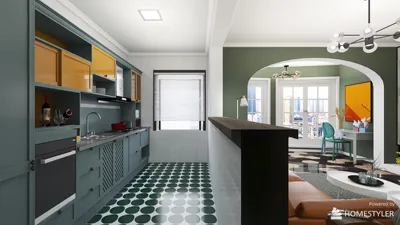


Designing a compact Indian kitchen requires meticulous attention to detail. Space is often limited, and appliances vie for every inch of available area. Cooking processes—such as pressure cooking, preparing tadka, and rolling chapati—demand efficient ventilation, heat resistance, and smart storage solutions. In my approach to designing small kitchens, I prioritize clear work zones and ergonomic heights while ensuring smooth circulation paths. This design philosophy guarantees that the cook can operate efficiently, even during peak meal preparation times, using tools like Homestyler to visualize the layout.
Research consistently shows the integral relationship between space and ergonomics. According to findings from Herman Miller, ergonomic reach ranges of 450–650 mm can significantly lessen the strain associated with frequent kitchen tasks. This guidance influences decisions regarding shelf depths and pull-out designs. Concurrently, the WELL v2 certification stresses the importance of adequate ventilation and air quality standards, prompting me to incorporate effective extraction and cross-ventilation systems capable of handling the high temperatures and spices typical in Indian cooking. Additionally, the IES suggests maintaining task illuminance levels around 300–500 lux during food preparation, which informs the creation of layered lighting plans featuring under-cabinet LEDs focused on countertops.
Color choice and behavioral dynamics also play a crucial role in kitchen design. Insights from Verywell Mind highlight the calming effects of warm neutrals and muted greens on reducing visual clutter and stress—an essential factor in constrained spaces. In collaborative cooking environments, I maintain a minimum aisle clearance of 900–1,000 mm to allow safe movement for two people without causing collisions from pan handles. Research from Steelcase on micro-mobility in confined spaces reinforces the necessity for efficient but open pathways; compact does not equate to cramped.
Planning the Work Triangle with a Compact Spine is essential.
I frequently modify the traditional sink–stove–fridge triangle into either a linear layout or an L-shape design, ensuring only 1-2 steps separate the work nodes. In narrow galley kitchens, I position opposing runs approximately 1,000–1,100 mm apart, facilitating simultaneous food preparation and transit. If the refrigerator is placed outside the central work area, I incorporate a landing counter close to the entrance for quick unloading. For clients looking to experiment with their layouts before final decisions, tools like Homestyler allow for simple room design simulations, covering clearances, swing arcs, and workflow optimizations.
Maximizing Storage Efficiency: Utilizing Vertical, Pull-Out, and Zoning Solutions
Indian kitchens must accommodate heavy cookware, various spices, and bulk ingredients. I recommend full-height cabinetry with shelves 225–250 mm deep, ideal for organizing spices and dry goods, alongside pull-out larders equipped with soft-close mechanisms for modules measuring 300–400 mm. For essentials like dal, rice, and atta, using stackable containers within a tall storage bay near the preparation zone enhances efficiency. It’s important to store pressure cookers and tawas in low drawers with 75–150 mm side clearances for safe handling. Reserve the overhead space for lighter items such as glasses and plates—with top shelves used only for occasional items to prevent strain.
Durable Countertops, Backsplashes, and Heat Resistance
Choosing materials that resist heat, oil, and discoloration is crucial. I often opt for engineered quartz featuring rounded edges, as it offers excellent durability against stains and chipping. For backsplashes, selecting large-format porcelain or vitrified tiles with minimal grout lines is advisable. Incorporating a compact utility counter beside the sink, ideally 450–600 mm wide, supports effective washing and preparation without cluttering the primary cooking area. The main countertop should typically be between 850–900 mm in height; however, for those who frequently roll chapatis, I recommend a lower inset board positioned at 820–840 mm to improve wrist comfort.
Effective Task Lighting to Eliminate Shadows
Achieving shadow-free prep areas begins with under-cabinet lighting positioned at the front rather than the back of the cabinets, directing light towards the countertop. Using 90+ CRI illumination ensures accurate color rendering when cooking, aiming for 300–500 lux at preparation surfaces, as recommended by the IES. A neutral color temperature range of 3,500–4,000 K strikes a balance between warmth and clarity. Avoid single overhead fixtures that cast shadows; instead, incorporate linear lighting over the sink along with focused downlights above the cooktop to minimize steam glare.
Effective Ventilation and Odor Management for Tadka and Frying
Cooking methods that involve high heat require robust extraction solutions and thoughtful ducting. I design ventilation systems with ample capture areas and straight duct runs to enhance efficiency. Implementing cross-ventilation through opposite openings further aids in dispersing indoor pollutants. The WELL v2 Air considerations prompt me to address air quality issues, such as PM2.5 and NO2 levels, by combining mechanical exhaust with fresh air intake, especially in confined urban kitchens. The installation height of the hood is crucial—it should be between 650–750 mm above the cooktop, following manufacturer specifications to ensure optimal performance while minimizing accidents.
Optimizing Appliance Layout for Space Efficiency
In tight floor plans, selecting slim, tall refrigeration units is preferable; also, consider the direction they open, orienting the handles towards the main room. Typically, a two or three-burner hob suffices for smaller households, allowing more counter space for food preparation. Placing a microwave on a shelf above the eye level is permissible if it is away from steam zones. If pressure cooking is a routine activity, designate a heat-resistant pad near the sink for safe cooling and to keep the main counter free of clutter.
Creative Layout Solutions: L-Shape, Galley, and Single-Wall Designs
L-shaped kitchens are beneficial in corner apartments equipped with windows, positioning the sink on the short side, the stove along the long side, and the fridge near the entry for accessibility. In galley layouts, I ensure preparation areas are close to the sink, with cooking appliances on the opposite side, minimizing cross-traffic. Single-wall kitchens can incorporate a mobile island on lockable casters, with a top depth of 600–700 mm, serving dual purposes of food preparation and serving. Utilizing tools such as interior layout planners allows me to evaluate turning radii, especially in spaces shared with laundry appliances.
Incorporating Color Psychology for Visual Calm
To foster a composed appearance in compact areas, I advocate for light neutrals with matte finishes to diminish glare. Insights from Verywell Mind support the use of softer hues to lessen cognitive load. I pair warm whites with accents of muted sage or dusty blue, steering clear of high-contrast patterns that could disrupt visual coherence. Consistent hardware finishes, such as brushed nickel or matte black, help streamline visual focus throughout the kitchen.
Enhancing Acoustic Comfort for Morning Activity
Small kitchens often amplify sound. To counter this, I incorporate soft-close mechanisms, felt pads beneath appliance bases, and cork or rubber liners within drawers to minimize noise during use. If the kitchen is adjacent to a living area, introducing a fabric runner or cork underlayment can diminish echoes during busy morning routines when cookware and dishes are actively in use.
Promoting Sustainability in Small Kitchens
Opting for low-VOC paints, sustainably sourced plywood, and LED lighting options is essential for eco-friendly kitchen design. A dual-bin waste system for wet and dry items fits conveniently under the sink, complemented by an additional container for recyclable materials. Water-efficient faucets equipped with aerators optimize flow and rinsing speed. To incorporate natural light, integrating glass or grille windows maintains privacy while enhancing brightness; patterned films can provide a softening effect on views.
Addressing Human Factors: Height, Reach, and Safety
Positioning upper cabinets between 1,350–1,450 mm from the floor strikes a balance for comfortable access. Heavier cookware should be stored in the first two drawer tiers, situated between 500–650 mm high. Pan handles need to be oriented inward, and allowing for a 50–75 mm clearance between the cooktop and sidewalls prevents accidental contact. Aisle widths of 900–1,000 mm enable safe passage for two individuals; implementing toe kicks at a depth of 75–100 mm reduces tripping hazards and promotes balance at the counter.
Micro-Organization: Achieving a One-Minute Reset
Efficiency shines in small kitchens when they can be reset quickly. I establish a designated drop zone near the entrance for grocery bags, as well as a slim rail above the countertop for storing ladles and spatulas. Magnetic strips for knives eliminate drawer crowding. Moisture-resistant bins in under-sink drawers help catch clutter accumulation. Labeling masala containers on the lid facilitates quick identification, especially when stacked.
Strategic Lighting and Electrical Planning
I recommend positioning outlets at 1,050–1,100 mm high along the backsplash for appliances, ensuring one 16A circuit is reserved for the chimney and another for the microwave. It’s best to separate task lighting from ambient lighting; prep lights should be switched near the sink, establishing a familiar routine. Dimming the ambient lighting enhances comfort during late-night cooking sessions.
Case Study: Transforming a 6.5 ft x 8 ft Kitchen into a Functional Space
In a compact apartment in Mumbai, I redesigned a 6.5 ft x 8 ft kitchen into a practical workspace for two. The single-wall layout featured a mobile cart, a 900 mm aisle, quartz countertops, and a deep single-bowl sink. Under-cabinet lighting yielded approximately 400 lux at prep areas, while a compact chimney with straight ducting effectively managed cooking odors. The outcome was improved meal preparation speed, reduced clutter, and enhanced safety, even when using a pressure cooker.
Frequently Asked Questions
Aim for an aisle width of 900–1,000 mm, which provides a good balance between space for passing through and workable counter depths, effectively supporting two-person cooking without interference.
A countertop height of 850–900 mm is suitable for most individuals. If wrist comfort is crucial, consider adding a low inset board between 820–840 mm specifically for rolling.
Target lighting levels of 300–500 lux at the countertop, in accordance with IES task lighting recommendations. Utilize under-cabinet LEDs with 90+ CRI for best results.
Materials such as engineered quartz and large-format porcelain or vitrified tiles are highly resilient. Opt for matte or satin finishes to reduce glare.
Implement a chimney with sufficient capture area, utilizing straight ducting where feasible, alongside cross-ventilation strategies. WELL v2 advocates combining mechanical exhaust with fresh air intake to enhance indoor air quality.
Select a slim, tall refrigerator with hinges that open towards the room. Include a landing counter located near the entryway for unloading groceries effectively.
Indeed, a mobile island on lockable casters can function as prep space and storage. Ensure the cooktop, sink, and primary prep areas remain within two steps of each other for efficient movement.
Incorporate warm whites, muted greens, or soft blues with matte finishes. According to Verywell Mind, softer hues can help minimize visual clutter.
Implementing soft-close mechanisms, using cork or rubber liners in drawers, and introducing a fabric runner are strategies to reduce noise during bustling cooking times.
Install outlets at 1,050–1,100 mm along the backsplash, ensuring dedicated circuits for both the chimney and microwave. Distinct controls for task and ambient lighting will enhance functionality.
Homestyler is an amazing online home design platform perfect for everyone! With its easy-to-use design tool, stunning 3D renderings, and a wealth of inspiring DIY video tutorials, you can effortlessly create your dream space. Unleash your creativity and transform your home today!
تصميم الآن مجانا
































