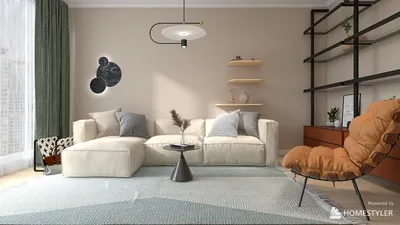


Throughout my decade-long career as an interior designer, I have observed a remarkable trend: large windows in living rooms. These expansive glass panes not only bathe the room in natural light but also serve as stunning focal points, and when well-designed, they can create an illusion of spaciousness. It's fascinating to see how even minor constraints, such as atypical shapes or light management challenges, can lead to innovative design solutions. In this article, I will present 10 creative window treatment suggestions for large living rooms, combining insights from my projects with expert advice you can implement immediately, including the benefits of using Homestyler for your designs.
1. Airy Sheer Linen Drapes
My Perspective: During a project in a high-rise, I chose sheer linen drapes as a top pick. This fabric allowed the gentle morning light to enter while softening its intensity, creating a peaceful atmosphere for enjoying coffee each day.
Advantages: Sheer linen is a classic choice, promoting airflow and beautifully filtering light. It's also lightweight, making maintenance a breeze, as confirmed by the Good Housekeeping Institute.
Disadvantages: Privacy can be an issue at night unless paired with blinds, and in extremely sunny locations, it may fade more quickly.
Tip: To enhance versatility, consider combining sheer drapes with minimal layered panels for better light control.
2. Dramatic Floor-to-Ceiling Velvet
My Perspective: In a heritage home, I utilized rich, jewel-toned velvet curtains. The result was genuinely theatrical, ideal for a dual-purpose space that hosted formal gatherings.
Advantages: Velvet instantly adds a touch of luxury, blocks cold drafts, and enhances sound insulation, making it a bold choice for any room.
Disadvantages: The weight of the fabric often results in higher costs and necessitates secure attachment; plus, it requires dry cleaning.
3. Automated Roller Shades
My Perspective: Clients with difficult-to-reach windows found that automated options eliminated the need to climb on furniture every day. The programmable settings ensured their furniture remained protected from sun exposure.
Advantages: Automated shades are perfect for tall or awkward windows, work smoothly with smart home systems, and can improve energy efficiency according to the Department of Energy.
Disadvantages: The initial setup can be pricier and may encounter occasional technical hiccups.
4. Layered Roman Shades with Curtains
My Perspective: In an oceanside project, I layered soft linen Roman shades beneath patterned drapes, achieving both elegance and effective light modulation for my clients.
Advantages: They come in a plethora of fabrics, allowing customization, while offering privacy without complete darkness, especially useful for bay or bow windows.
Disadvantages: In very narrow window recesses, they might appear bulky.
Example: In one of my beach house projects, layering significantly enhanced both functionality and style.
5. Bamboo or Woven Wood Shades
My Perspective: I adore woven wood options for introducing texture into minimalist designs; they provide that understated organic elegance.
Advantages: Eco-friendly, flexible, and filters light beautifully while being compatible with various color schemes.
Disadvantages: Minimal insulation properties and potential fraying in humid conditions with prolonged use.
6. Sheer Vertical Panels for Sliding Doors
My Perspective: In open-plan settings where sliding doors connect to large windows, sheer vertical panels create a harmonious look.
Advantages: These panels offer easy operation, light control, and a modern appeal, distancing from the dated appearance of traditional vertical blinds.
Disadvantages: They generally lack the variety of fabric options available for horizontal treatments.
7. Stylish Plantation Shutters
My Perspective: White wooden shutters brought both charm and practicality to a transitional home where I installed them—functional for years without losing appeal.
Advantages: Excellent for ensuring privacy, adjustable slats provide light control, and they are built to last.
Disadvantages: They can be pricey upfront and may not fit well with ultra-soft designs.
8. Frosted Window Film for Non-Bulky Privacy
My Perspective: In a loft with breathtaking skyline views, my client preferred to avoid curtains. We applied frosted window film, which was an ideal solution.
Advantages: Preserves the view while adding UV protection and typically costs less than many other treatments.
Disadvantages: It does not provide insulation and requires precise application to prevent air bubbles.
9. Cornice Boxes for a Finished Look
My Perspective: I've incorporated fabric-wrapped cornices to conceal hardware and create a seamless, tailored appearance for custom drapes—the effect is akin to bespoke clothing for windows.
Advantages: They visually complete the window's top, hide imperfections, and can introduce architectural flair.
Disadvantages: They can be unsuitable for more relaxed styles and can increase the overall cost and installation time.
Tip: Pair cornices with vibrant patterned drapes in open spaces to maintain design continuity.
10. Diverse Treatments on the Same Wall
My Perspective: In a contemporary farmhouse living area, I used Roman shades for smaller windows while opting for flowing curtains on the central glass, which created both functional and visual intrigue.
Advantages: This approach allows you to manage light and privacy per window, encourages creative design options, and can reduce costs by using luxury fabric on focal points only.
Disadvantages: This can increase design complexity and may give an inconsistent appearance if colors clash.
Summary
Large living room windows present an exceptional opportunity rather than a limitation. The right choice of window treatment can elevate your design, enhance comfort, and even contribute to energy efficiency. As highlighted by the American Society of Interior Designers, clever layering maximizes both aesthetics and function. Which of these 10 window treatment ideas will you consider applying in your home using Homestyler?
FAQ
1. What is the most suitable treatment for large living room windows?
Layering options, such as sheer panels paired with blackout curtains, provide both flexibility and style.
2. How do I cover large windows while ensuring light still comes through?
Sheer drapes or light-filtering shades are ideal for maintaining brightness throughout the day.
3. Can large windows contribute to energy efficiency?
Absolutely, particularly when enhanced with insulated curtains or cellular shades, as per the findings from the U.S. Department of Energy.
4. Are motorized blinds beneficial for oversized windows?
They certainly are, especially for tall or challenging to reach spaces, delivering both convenience and effective light management.
5. How do I select the right fabric for curtains on large windows?
Evaluate the weight, fall, and exposure to light to minimize fading and sagging over time.
6. What's the latest trend for large living room windows currently?
Minimalist sheer fabrics combined with natural textures are highly sought after in 2024.
7. Can I mix different window treatments within one room?
Certainly, coordination in colors and styles will help maintain a cohesive aesthetic.
8. How high should I mount curtains over large windows?
Typically 4 to 6 inches above the window frame, or even flush with the ceiling for a more spacious appearance.
Discover the magic of home design with Homestyler! This user-friendly online platform offers an intuitive design tool, stunning 3D renderings, and a wealth of inspiring design projects and video tutorials. Unleash your creativity and transform your space effortlessly!
Design Now for FREE
































