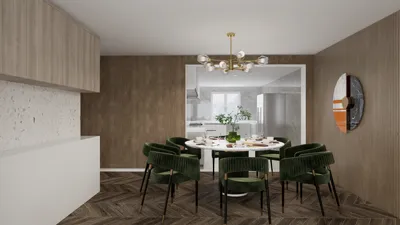


Once, I made the mistake of installing a chandelier three inches too low due to misreading the notes on a plan. When the couple had friends over, we all had to duck as if we were in a haunted house. This blunder was a valuable lesson on the importance of planning sightlines and circulation before adding any glamour. Small combined spaces compel you to make decisions, and often the constraints that come with them lead to my most creative solutions. To experiment swiftly, I frequently utilize a planning resource like Homestyler to assess scale before diving into demolition.
1. Delineate areas with rugs and layered lighting
I incorporate rugs and layered lighting to create invisible boundaries: a cozy rug beneath the sofa, a contrasting runner under the dining table, and pendant lights that serve as focal points. This method is cost-effective and reversible but requires careful attention to scale—rugs that are too diminutive can seem out of place, and improperly hung pendants can make the space feel cramped.
save pin
2. Choose a narrow console or floating sideboard
A slim console behind the sofa or a floating sideboard along the wall provides a dining surface and storage without taking up valuable floor space. I typically recommend slender units in oak or lacquer to introduce character; while they're stylish, they may offer less concealed storage than a complete cabinet.
save pin
3. Built-in banquette that serves as storage
When I redesigned a 420 sq ft flat, integrating a built-in banquette was a space-saver that created a cozy dining nook doubling as extra seating for movie nights. While it’s a significant investment upfront, the seamless look and built-in storage justify the expense — I usually sketch this out using a kitchen layout guide to ensure a smooth flow from preparation to dining.
save pin
4. Versatile furniture: extendable tables and swivel chairs
My principle is to select adaptable furniture. An extendable table accompanied by swivel chairs can significantly enhance daily living and facilitate hosting without requiring bulky items. However, keep in mind that mechanisms may wear out over the years; thus, I advocate for tried-and-true hardware and sensible weight limits.
save pin
5. Maintain a continuous sightline and manage clutter with smart storage
I appreciate an unbroken sightline — it visually expands the space. Incorporating low cabinetry, open shelves at eye level, and a tidy drop-zone near the entrance helps maintain that feeling. When uncertain, I create a 3D room mockup using Homestyler to evaluate proportions and sightlines prior to making any purchases.
save pin
FAQ
Q: What is the ideal rug size for a combined living-dining area?
A: Aim for a rug that accommodates at least the front legs of the primary seating; for the dining table, allow 60–90 cm beyond the chairs so they remain on the rug when pulled out.
Q: How do I decide between an open layout and a semi-divided one?
A: Choose an open layout for social interaction and continuous natural light; opt for a semi-divided design if noise control or distinct functional separation is necessary. Sliding panels or low dividers can provide a balanced compromise.
Q: Are built-ins a wise investment?
A: Built-ins enhance value and offer custom storage solutions, making them worthwhile if you intend to stay for several years. Although they involve a higher upfront cost, they often outperform freestanding furniture in smaller spaces.
Q: What clearance space is required between dining chairs and a sofa?
A: Maintain at least 75–90 cm from the table's edge to any fixed object to facilitate comfortable movement and seating; tighter spaces can feel cramped during regular use.
Q: Is it possible to combine modern and vintage styles in a small combined area?
A: Absolutely—blending different eras adds character. Ensure a cohesive color or material palette to prevent the room from appearing cluttered.
Q: What lighting layers are most effective in combined spaces?
A: Integrate ambient (ceiling), task (pendants over the dining area), and accent (floor or picture lights) lighting. Layering helps establish zones and allows for easy mood adjustments.
Q: Are there quick methods to test a layout before purchase?
A: Utilize a free online planner or simple hand sketches at a 1:50 scale to evaluate circulation and furniture placement; digital mockups can help avoid major headaches on delivery day.
Q: Where can authoritative kitchen and dining clearance guidelines be found?
A: The National Kitchen & Bath Association (NKBA) publishes clear professional guidelines regarding workspace clearances and ergonomic standards (source: https://nkba.org).
save pin
Homestyler is an exceptional online home design platform perfect for anyone looking to create stunning spaces. With an easy-to-use design tool, impressive 3D renderings, a wealth of design projects, and helpful video tutorials, transforming your home has never been easier or more fun!
立即免费设计
































