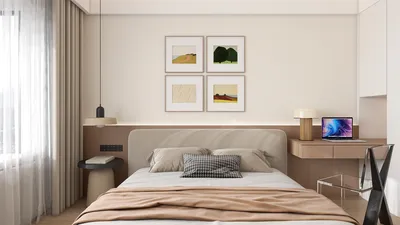


Once upon a time, I had a client who envisioned their living room walls resembling a vintage bakery — you can only imagine my reaction when they requested 'a hint of rustic charm' and presented an image of an aged plaster wall. This unexpected situation transformed into an opportunity, revealing how textured walls created with a paint roller can add dramatic flair without requiring any drastic renovations. To ease the concerns of anxious homeowners, I typically illustrate these textured wall techniques in 3D, demonstrating that the outcome will be far from a disaster.
1. Subtle Light-Reflecting Texture
In smaller spaces, I favor a barely-there texture that captures light — envision thin roller stippling finished with a satin sheen. This approach not only brings warmth and depth to walls on overcast days, but also demands meticulous preparation since any flaws may become noticeable.
save pin
2. Bold Roller Stripes
By using a wide nap roller and varying the direction of your strokes, you can craft vertical or horizontal stripes that visually extend the room. This economical technique alters proportions effectively; however, keep in mind that strong patterns can overpower the space, necessitating a calm selection of furniture and trimmings.
save pin
3. Faux Plaster with Roller Stippling
Craving the look of plaster without the associated costs? With a coarse roller, two glaze tones, and a gentle ragging technique, I create the illusion of age and texture. This method is forgiving on imperfect walls and ideal for accent walls, especially when I use a tool like Homestyler to test sightlines and arrange furniture effectively. Although slightly messy, it’s essential to apply a test patch first.
save pin
4. Half-Wall Textured Accent
Applying texture to the lower half of a wall while maintaining a sharp painted rail has become my go-to approach for creating cozy atmospheres. It introduces tactile interest without being overwhelming, protects high-contact zones, and offers a bespoke appearance. When executing this in a kitchen, consider how the texture functions within the space and create a workflow map to ensure that accents do not interfere with splashes or heat. The challenge lies in ensuring the textured area is sealed for durability.
save pin
5. Textured Backdrops for Open Shelving
Textured back walls provide a beautiful setting for open shelves — a rolled stipple in a slightly darker hue makes ceramics stand out while also disguising minor scuffs. This is one of my favorite cost-effective upgrades: it brings a lot of personality at a low budget. Be cautious, however, as matching colors in images can be tricky; I always test it under the space's lighting conditions.
save pin
FAQ
Q1: Are paint roller textures hard to apply?
A1: Not really. With the appropriate roller nap and a test patch, many homeowners can manage simple textures on their own. For more intricate finishes, I recommend engaging a professional to save time and material.
Q2: What rollers are best for textured walls?
A2: The ideal nap length depends on the desired texture depth — 3/8" to 1/2" works for subtle textures, while 3/4" or thicker is great for heavy stipple. Always try it out on a scrap board initially.
Q3: Can textured walls be easily repainted?
A3: Yes, though sanding or priming may be necessary to provide a uniform base. Thick textures can reveal lap marks if repainted too quickly.
Q4: Is textured paint appropriate for kitchens and bathrooms?
A4: Textured finishes can be used in these areas as long as they are sealed with a washable topcoat. In high-moisture regions, select moisture-resistant paints and consider minimizing texture near direct water exposure.
Q5: Do textures conceal wall imperfections?
A5: Absolutely — a moderate texture acts as a great camouflage for small flaws. However, significantly uneven surfaces may necessitate patching to avoid highlighting shadows.
Q6: How do I select colors for textured finishes?
A6: Mid-tones work perfectly as they enhance texture without revealing every bump. Always test color and texture samples under the room’s lighting before making final choices.
Q7: Are there health or safety concerns?
A7: Certainly! If your home was built before 1978, it’s crucial to check for lead-based paint prior to sanding (U.S. EPA guidance: https://www.epa.gov/lead). Ensure adequate ventilation and wear respirators during application.
Q8: Can I visualize textured walls prior to starting?
A8: Definitely! I often prepare simple mockups or 3D visualizations using tools like Homestyler to observe how texture interacts with light and furniture placement — proper visual planning saves time and prevents regrets.
save pin
Discover your dream home with Homestyler! This user-friendly online design platform offers an intuitive design tool, stunning 3D renderings, inspiring design projects, and helpful video tutorials. Whether you're a novice or a pro, bring your ideas to life effortlessly and transform your space today!
Zaprojektuj teraz za darmo
































