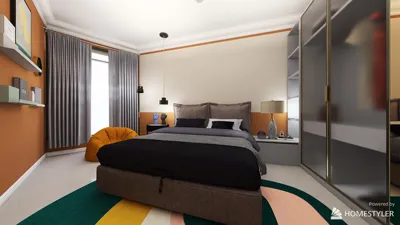


I once assisted a couple seeking a stylish, Instagram-worthy environment in their 28 sqm studio apartment. They combined the living room and kitchen area and insisted on fitting in a large leather sofa, which ultimately didn't work. This experience taught me a valuable lesson: in small living spaces, creativity triumphs over pride. Hence, I began brainstorming space-saving strategies and testing various layouts to validate my ideas before any purchases were made — a method that frequently includes tools like Homestyler for visual representation.
1. Use rugs and lighting to define zones
In treating a combined living-kitchen area akin to a tiny loft, I focus on creating distinct zones without the use of walls. Strategically placed rugs and a pendant light above the dining area create the illusion of separate spaces, while a slim console and sofa delineate the living area.
This method is cost-effective and can easily be reversed, but it's crucial to be mindful of scale; small rugs or excessive lighting may create a cluttered appearance. My recommendation is to choose one standout light fixture and coordinate rug patterns to maintain visual harmony.
save pin
2. Opt for multi-functional furniture
I am a strong advocate for furniture that serves multiple purposes, such as benches with storage inside, drop-leaf tables, or ottomans that can double as coffee tables and additional seating. In one project, I replaced bulky armchairs with stackable stools that neatly tuck beneath a slender table—providing flexibility.
However, caution is warranted to avoid over-optimizing; purchasing too many ingenious pieces can make the room feel overly staged. Focus on the features you use daily.
save pin
3. Implement vertical storage and open shelving
In tight living setups where floor space is limited, I often look upwards. Adding open shelves above the kitchen counter and erecting tall cabinets beside the fridge convert otherwise wasted vertical space into practical storage solutions. During the early stages, drafting a quick floor plan enables me to assess shelf heights and sightlines before committing to any drilling.
While open shelving promotes an airy feel and personal expression, it demands a level of discipline for styling and upkeep. A cost-effective strategy is to combine closed cabinets for daily essentials with open shelves for displaying dishes and a few plants.
save pin
4. Enhance visual continuity with flooring and color
Employing a consistent flooring material throughout the living and kitchen areas creates a sense of spaciousness. Subtle shifts in color, like using a warmer tone in the kitchen, can imply separation without physical barriers. In one instance, I used plank flooring arranged lengthwise to give a slender apartment the illusion of added length.
Monochromatic schemes can seem both safe and dull; I break this up with texture (like woven throws or matte tiles) alongside a single accent color to unify the space. This approach helps in maintaining a cohesive look while averting sterility.
save pin
5. Streamline the layout of a compact kitchen
In coalesced areas, kitchen efficiency is paramount: ensure ample countertop space adjacent to the stove, designate a prep area, and allow for unobstructed movement between appliances. I often create a miniature mock-up of the counter layout to ascertain a comfortable working distance, and utilizing a good planner can aid in visualizing this process—much like how Homestyler works for kitchen planning.
Tightly designed kitchens can be remarkably functional but often come with compromises, such as opting for a narrower sink or a two-burner cooktop. Emphasize your most common cooking tasks and organize storage around those needs, ensuring the kitchen remains genuinely functional rather than merely aesthetic.
save pin
FAQ
Q1: Is it possible to have a dining table in a small combined living and kitchen area?
A1: Absolutely—consider a foldable table or a drop-leaf design, or even a bench that can be tucked away. These alternatives help free up floor space when a full dining setup isn’t needed.
Q2: How can I avoid kitchen odors permeating the living space?
A2: Effective ventilation is vital: install a good range hood vented to the outside, and consider a small extractor fan or operable windows. Incorporating houseplants and activated charcoal can also aid in combating residual smells.
Q3: Are open shelves sanitary for kitchen use?
A3: Open shelving is suitable for frequently used dishes and decorative items, but it's best to store food items and anything greasy in closed cabinets. Regular cleaning and sensible placements can minimize grime buildup.
Q4: What's the best flooring choice for combined areas?
A4: Durable, moisture-resistant planks or tiles that create an uninterrupted aesthetic across spaces work effectively. Click-lock vinyl planks are budget-friendly and can withstand kitchen spills while maintaining a cohesive appearance.
Q5: How can I create a sense of spaciousness in a combined area without renovation?
A5: Light colors, uniform flooring, mirrors for depth, and minimal furnishings can all help reduce visual clutter. Smart lighting and clear sightlines make the space feel more open and intentional.
Q6: How much storage is truly necessary in a compact combined area?
A6: Assess the frequency of use for your items; keep the items you need weekly within easy reach and store those used infrequently in higher cabinets or closets. Strive for adaptability—baskets and drawer dividers are affordable and useful aids.
Q7: Are there safety precautions needed for combined kitchen layouts?
A7: Maintain clear pathways (ideally 80-90 cm for walkways), make sure the stove isn’t positioned adjacent to fabric from sofas, and provide sufficient light for cooking tasks. For in-depth safety and layout tips, refer to recommendations from the National Kitchen & Bath Association (NKBA) (https://nkba.org).
Q8: Is it necessary to hire a designer for a small combined space?
A8: Not necessarily—many solutions are straightforward and can be tackled by DIY enthusiasts. However, engaging a professional can save time and prevent costly errors, especially if plumbing or significant appliances are involved. I often start with rough draft plans to evaluate concepts before committing to any purchases or alterations.
save pin
Homestyler's roots trace back to Autodesk, the global leader in design and engineering software. That heritage lives on in every feature we build. Today, with a community of more than 18 million users worldwide, Homestyler continues to make professional-quality interior design accessible to everyone — from first-time decorators to seasoned architects.
Discover the power of design with Homestyler! This user-friendly online platform offers an intuitive design tool, stunning 3D renderings, and a wealth of DIY video tutorials. Perfect for transforming your home ideas into reality, it’s never been easier to create your dream space!
Design Now for FREE
































