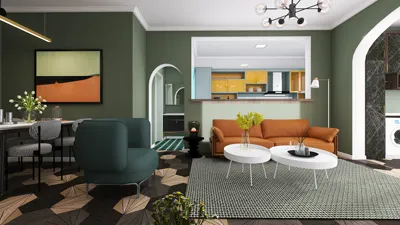


Once, I had a client who wanted a dining table that could transform into a bookshelf and conceal a cat bed—true story! This quirky request challenged my creativity. Working with small spaces encourages innovative solutions that might never be considered in a larger home, and that's part of the charm: limitations foster creativity. For those looking for visual inspiration, the exciting Homestyler designs showcase how even a 6 sqm corner can become the most cherished area of a home.
1. Foldable wall-mounted table with slim chairs
I adore drop-leaf, wall-mounted tables, especially for cramped dining areas—when they’re folded, they virtually vanish, and when expanded, they can seat between 2 and 4 people. The benefits include reclaiming significant floor space; however, one downside can be limited seating comfort for extended meals. To address this, I often pair them with stackable padded chairs for occasional use.
save pin
2. Expandable round table that can be tucked away
Round tables tend to appear smaller and are more accommodating in narrow walkways. An expandable round table offers compact daily use with the flexibility of additional seating for guests. A budget tip: opt for a simple extension leaf and straightforward legs that are sturdy yet affordable, and be aware of potential small gaps where the leaves meet.
save pin
3. Bench seating with a narrow table
Benches can conveniently slide under the table, concealing cushions, and they provide more seating in a compact visual space. I incorporated this idea in a renovation where we maximized seating in an otherwise unused corridor—resulting in a tidy look that’s cost-effective. However, benches may lack comfort for older guests unless back cushions are added. For layout inspiration, explore practical kitchen designs that influenced this bench configuration.
save pin
4. Counter-height bistro set adjacent to a window
If there’s a deep windowsill or a low wall, configuring a slim counter-height table with two stools can evoke café vibes while maintaining a spacious floor feel. It’s perfect for enjoying morning coffee or working on a laptop; however, it may not suit formal dining occasions. I suggest keeping a folding tray close by for extra surface space on festive nights.
save pin
5. Multi-functional storage table
Tables featuring built-in drawers or open shelving tackle two challenges simultaneously: they provide a dining surface while also offering storage. In one project, the table held linens, placemats, and board games—an excellent solution for families. However, heavier items may pose difficulties during thorough cleaning. To gauge scale and finish, check out this 3D render from a favorite small dining project of mine.
save pin
Tips 1:
Maintain a light color palette while layering textures—use light wood or painted bases alongside a darker tabletop to disguise wear and tear. Always measure twice: allow for at least 80–90 cm behind chairs when possible, and consider armless seating to save width. If you’re renting, focus on modular pieces that can be adapted for future spaces.
save pin
FAQ
Q1: What size dining set is appropriate for a very small space?
A1: For a compact nook, a round table measuring 70–90 cm or a drop-leaf table around 60–80 cm wide typically works best. Always measure the clearance needed for chairs and pathways before making purchases.
Q2: Are benches superior to chairs in small dining areas?
A2: Benches conserve visual space and can be tucked away, making them ideal for families and tight arrangements. They can be less comfortable for long durations, so adding cushions or backrests when feasible is advisable.
Q3: Which materials are durable for everyday small-space dining sets?
A3: Solid wood or engineered wood with durable finishes, powder-coated metal bases, and water-resistant seating are practical choices. They provide a good balance of durability and cost for daily use.
Q4: How much clearance is necessary around a dining table?
A4: The National Kitchen & Bath Association (NKBA) recommends a clearance of at least 36 inches (around 91 cm) behind chairs for comfortable movement. In smaller spaces, this can be reduced, but expect more constrained circulation (source: NKBA guidelines).
Q5: Can a compact dining set serve as a workspace?
A5: Definitely—opt for a stable table height and comfortable seating. Utilize slender desktop organizers and a task lamp to keep the area neat and conducive to work.
Q6: What’s a cost-effective strategy for furnishing a tiny dining area?
A6: Combine secondhand tables with new, affordable chairs or cushions, and emphasize functionality (folding, stacking, and storage). Refreshing a thrifted table through painting or re-staining can give it a chic designer look without breaking the bank.
Q7: How should I choose lighting for a compact dining area?
A7: A single pendant or wall sconce positioned above the table draws attention without overcrowding the ceiling. Use warm light bulbs and consider adding a dimmer switch to adjust the ambiance for meals versus workspace.
Q8: Any stylistic tips for making a small dining space appear larger?
A8: Stick to light color palettes, incorporate mirrors or reflective surfaces, and select furniture with visible legs to maintain an airy atmosphere. Vertical storage solutions draw the eye upward, optimizing floor space.
save pin
Homestyler is your go-to online home design platform! With its user-friendly design tool, stunning 3D renderings, and a wealth of DIY video tutorials, creating your dream space has never been easier. Unleash your creativity and transform your home effortlessly!
Desain sekarang Gratis
































