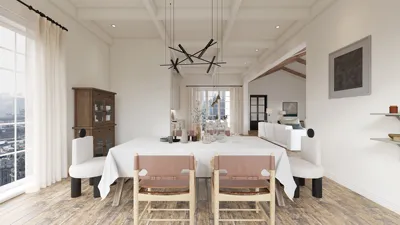


Once, a client requested that I fit a six-drawer dresser into an 8' x 9' bedroom devoid of a wardrobe — I almost joked about needing a magician. After a brief moment of panic and some sketches on a pizza box, I realized that small spaces encourage smarter decisions rather than compromises. If you're attempting to integrate storage in a compact area, a dash of creative thinking and some room layout inspiration can truly make a difference, especially with tools like Homestyler to visualize your options.
1. Slim vertical dresser: reach upwards, not outwards
I am a huge fan of tall, narrow dressers as they offer ample drawer space while leaving floor space for movement. They fit best against a wall or tucked away in a closet nook, allowing for extra storage without creating a cramped feel. However, one must ensure stability: anchoring it to the wall is advisable and be cautious about placing heavy items on top.
save pin
2. Dresser + bench combination: multifunctional seating and storage
Combining a low dresser with a cushioned bench transforms a storage area into a charming dressing zone. You can sit down to slip on your shoes, store linens in the drawers, and finish off the look with a slim mirror above. Just keep in mind that you will need approximately 18–20" of depth for comfort, making it ideal for slightly broader walkways.
save pin
3. Built-in recess dresser: custom solutions for tricky spaces
Upon discovering a 2' deep alcove in a client's bedroom, I crafted shallow built-in drawers, converting what was once unused space into significant storage. Built-ins blend seamlessly into the room design and can be customized to accommodate trims and heaters, although they typically cost more than freestanding options and often require a carpenter's expertise. To visualize how such a feature can enhance your space, utilize Homestyler to check out some 3D floor plans.
save pin
4. Floating dresser: contemporary, spacious, and easy to maintain
Attaching a dresser to the wall can free up floor area and create an airy illusion, making it an excellent choice for studio apartments. This design also simplifies cleaning and minimizes dust collection under the drawers. However, it’s crucial to ensure that the dresser is properly secured with studs or appropriate anchors; you may also sacrifice some under-drawer storage for footwear.
save pin
5. Multi-zone dresser: combine with shelving or closet rods
Often, I link a low dresser with open shelves or a rail above to create a capsule wardrobe setup — one section for folded clothes and another for hanging garments. This approach works exceptionally well in smaller bedrooms where a full closet isn’t feasible, ensuring everyday outfits are easily accessible. As this arrangement can be visually demanding, I advise balanced styling to prevent clutter. For similar compact design principles in kitchens, referencing a kitchen layout guide can be quite enlightening and applicable to bedroom setups as well.
save pin
FAQ
Q1: What depth should a dresser have for a small space?
For narrow environments, aiming for a depth of 12–16 inches is ideal to leave room for doors and walking paths. Anything deeper might overwhelm the area unless ample movement space is available.
Q2: Can a dresser serve as a TV stand in a compact room?
Definitely, a low dresser can be an excellent TV stand providing storage underneath; just make sure the top is sturdy enough for the television and distribute the weight evenly.
Q3: How can I securely anchor a tall dresser?
Utilizing the manufacturer’s anti-tip kit or securing brackets directly to wall studs is recommended; if you're uncertain, consider hiring a handyman. Proper anchoring is crucial for safety, especially in homes with children, to prevent accidents during regular use.
Q4: Are floating dressers reliable?
Floating dressers can be quite durable when properly installed on wall studs or with rated anchors and robust materials. They enhance airflow and ease of cleaning, but care must be taken with heavier loads requiring solid support.
Q5: How can I create an illusion of spaciousness with a small dresser?
Keep the color scheme light, opt for slender hardware, and place a mirror above to reflect light. Minimalistic decor on top, along with coordinated drawer organizers inside, will help maintain a neat look.
Q6: Is it worthwhile to custom-build a narrow dresser?
Customizing narrow dressers can optimize fit and function for awkward spaces, although they tend to be pricier than standard options; I suggest considering custom designs only when typical choices won’t suffice.
Q7: Where can I find effective strategies for compact storage?
Reliable retailers like IKEA offer guides on small-space living that highlight modular storage solutions and multifunctional furniture — check out IKEA’s small-space living resources at ikea.com. These insights align well with design-centric solutions, including applications like Homestyler for planning.
Q8: How do I decide between built-in and freestanding dressers?
Opt for built-ins if you're looking for long-lasting value and seamless design integration; choose freestanding units for more budget flexibility and easier relocation. Consider future resale options, timeframes, and how permanent you want your furniture choices to be.
save pin
Homestyler is the ultimate online home design platform for anyone looking to transform their space. With its user-friendly design tool, stunning 3D renderings, and a wealth of design projects and DIY video tutorials, you can effortlessly create your dream home—no experience necessary!
تصميم الآن مجانا
































