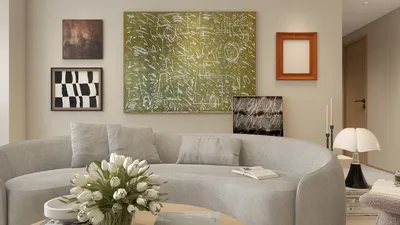


As an interior designer boasting over ten years of experience, I've observed a significant resurgence of round rugs in living rooms. These rugs not only add beauty but also serve as an intelligent solution to break up rigid lines, thereby infusing a softer ambiance into your space. Particularly, small living rooms can truly benefit from a round rug—demonstrating that compact areas can inspire considerable creativity. In this article, I will showcase 10 innovative ideas for round rugs in living rooms, combining my personal insights with expert advice, including how tools like Homestyler can aid in visualizing these concepts.
1. Minimalist Round Rug in a Neutral Palette
My Perspective: In one project, I designed a downtown studio where the client was initially apprehensive about rugs. A light beige round rug emerged as the focal point, rejuvenating the entire atmosphere.
Advantages: A neutral round rug enhances the illusion of space in your living room by seamlessly integrating with the flooring, making it an ideal choice for minimalist design trends. The American Society of Interior Designers indicates that lighter flooring elements can make a room feel up to 30% larger.
Disadvantages: Light-colored rugs tend to show stains easily—if you're a coffee enthusiast like me, handle that mug with care!
2. Layered Rugs for Added Depth
My Perspective: In one of my preferred eclectic designs, I layered a small round jute rug atop a large rectangular wool rug. This textural contrast imparts a deliberate feel to the space.
Advantages: Layering a round rug can effectively delineate a conversation area while introducing visual interest without creating clutter. This technique works exceptionally well in minimalist kitchens or adjoining spaces where zoning is key.
Disadvantages: If not carefully scaled, layering can lead to a chaotic appearance—measure twice, lay once.
3. Bold Color Accents
My Perspective: I assisted a young artist in selecting a deep teal round rug for their otherwise monochromatic living space. The rug became a captivating centerpiece during gatherings.
Advantages: A vividly colored round rug can infuse character into a bland living room and accentuate your art pieces without overwhelming the overall decor.
Disadvantages: Color preferences evolve—what feels fresh today may appear dated in a few years unless you absolutely adore it.
4. Round Patterned Rugs to Disrupt Symmetry
My Perspective: In a suburban family room, a geometric round rug cleverly redirected attention from an unevenly positioned fireplace, fostering a sense of balance.
Advantages: Patterns can divert attention from architectural discrepancies and guide the eye to desired focal points.
Disadvantages: Bold patterns can restrict future furniture and textile pairings.
5. Monochrome Aesthetic
My Perspective: A black-and-white round rug combined with modern art transformed my client’s compact space into a cozy, gallery-like setting.
Advantages: Monochrome rugs are timeless; they adapt to changing decor styles gracefully over time.
Disadvantages: High-contrast options can highlight dirt and lint more than mid-toned alternatives.
6. Natural Fiber Warmth
My Perspective: Incorporating a round jute rug in a seaside cottage project introduced a grounded, organic texture, making rainy days feel warmer inside.
Advantages: Natural fiber rugs, such as jute or sisal, offer durability and eco-friendliness while enhancing tactile appeal in high-traffic living rooms.
Disadvantages: They can feel coarse underfoot, which may not be ideal for lounging directly on the floor.
7. Rug Under the Coffee Table
My Perspective: I frequently place a round rug slightly larger than the coffee table to frame the seating arrangement, subtly enhancing the intentionality of the layout.
Advantages: This is perfect for open-plan living and works wonderfully with L-shaped configurations, maximizing surfaces and visually uniting pieces.
Disadvantages: A small rug can make the arrangement feel cramped.
8. Oversized Round Rug as a Statement Piece
My Perspective: In one loft design, an oversized round rug covered much of the floor while also softening the acoustics in an otherwise echo-prone environment.
Advantages: Large rugs create cohesion in sprawling living areas while also reducing noise levels.
Disadvantages: Custom sizes can come with a hefty price tag, so be prepared to invest more than for standard dimensions.
9. Round Rug in a Cozy Reading Nook
My Perspective: A round sheepskin rug in a bay window nook turned a neglected corner into the client’s favorite reading sanctuary.
Advantages: Soft, smaller round rugs help create inviting spaces in multifunctional living rooms, making optimal use of the area.
Disadvantages: Sheepskin requires careful maintenance and can be prone to spills.
10. Layering with Wood Accents
My Perspective: In a Scandinavian-inspired design, I placed a muted gray round rug over warm oak flooring to harmonize cool and warm tones.
Advantages: The blend of wood and fabric offers textural contrast, working beautifully alongside wood accents for a cozy ambiance.
Disadvantages: Light-colored rugs may fade if exposed to direct sunlight for extended periods.
Conclusion
A compact living room doesn't necessitate a compromise on your design vision—it simply calls for smarter style choices. Round rugs hold the power to transform the atmosphere of a space, whether you opt for vibrant colors or subtle textures. As highlighted by the National Association of Home Builders, strategic focal points can enhance the welcoming nature of compact environments. Which of these round rug ideas will you explore first with the help of tools like Homestyler?
FAQ
1. Why opt for a round rug in a living room?
Round rugs soften the appearance of rooms that feature straight lines and can make smaller spaces feel more inviting.
2. What size round rug is ideal under a coffee table?
Select one that extends at least 6 to 8 inches beyond the edges of the coffee table for balanced aesthetics.
3. Are round rugs suitable for larger living rooms?
Absolutely, especially when paired with oversized furniture or layered with additional rugs to create defined areas.
4. Which materials offer the best durability for round rugs?
Wool and natural fibers, such as jute, are recognized by the Carpet and Rug Institute as long-lasting options.
5. How can I keep a light-colored round rug clean?
Utilize a rug pad, maintain regular vacuuming, and perform spot cleaning to manage stains effectively.
6. Is it possible to combine a round rug with a rectangular rug?
Yes, layering different shapes adds visual interest—just ensure that the color palette harmonizes.
7. Are patterned round rugs challenging to synchronize with furniture?
Not necessarily; select patterns that incorporate tones from your existing color scheme for cohesion.
8. Where can I discover more layout ideas?
Feel free to explore diverse layouts through our AI-powered home design solutions, which allow you to visualize various rug placements effectively.
Discover the ease of home design with Homestyler! This user-friendly platform offers a powerful online design tool, stunning 3D renderings, and a wealth of design projects and DIY video tutorials. Transform your ideas into reality effortlessly and inspire your creativity today!
Design Now for FREE
































