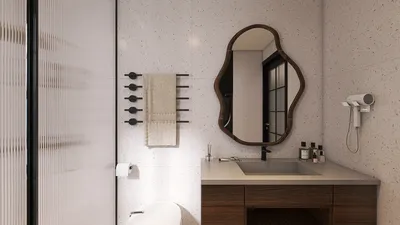


Recently, mirrors have evolved into more than just reflective surfaces for outfit checking; they’ve become pivotal elements in interior design. Based on my practical experiences, I’ve discovered that even small living areas can inspire tremendous creativity when one creatively utilizes reflections and light. In this piece, I’ll explore 10 mirror concepts I've personally implemented in various homes, merging my design insights with trends identified in recent reports.
1. Large Wall Mirror for Instant Space Enhancement
My Experience: In a small apartment I renovated, I positioned a large wall mirror along the primary wall which dramatically changed the area’s perception, making it feel nearly twice as spacious while retaining its cozy appeal.
Advantages: It creates the illusion of expanded space, improves lighting, and perfectly aligns with contemporary minimalist living spaces, as highlighted in Elle Decor's 2023 trends.
Disadvantages: It requires a robust wall and may be costly depending on the frame design chosen.
Advice: Opt for a slender frame in either black or brass for a classic aesthetic. Consider a case study of an industrial loft that successfully utilized an oversized mirror to enhance its social area.
2. Mirrored Panels as Feature Walls
My Experience: I once incorporated floor-to-ceiling mirrored panels behind a sofa in a small condo. My client was astonished at how it infused a boutique hotel atmosphere into the living space.
Advantages: It visually enlarges the room, imparts a sleek elegance, and reflects natural light beautifully throughout the day.
Disadvantages: They can easily show fingerprints requiring regular maintenance; installation may also be more complex than traditional mirrors.
3. Antique Venetian Mirrors as Statement Art
My Experience: In a project with classic style, I sourced an antique Venetian mirror from a flea market. Its intricate designs became a centerpiece of conversation during every gathering.
Advantages: It merges function and artistry, brings history and texture into the space, and pairs wonderfully with vintage furnishings.
Disadvantages: Often heavy and delicate; genuine pieces can be quite pricey.
4. Round Mirrors as Focal Points above Fireplaces
My Experience: In a modern home with a stark mantle, a large round mirror softened the space’s sharp contours and made it feel more welcoming.
Advantages: It balances proportions, serves as a focal point, and works seamlessly with various décor styles including Scandinavian designs.
Disadvantages: It may not be ideal for every fireplace height; reflections can produce glare if it’s placed opposite a bright window.
5. Grouping Small Mirrors for an Eclectic Look
My Experience: For a bohemian-themed living room, I curated a collection of mismatched mirrors from thrift shops. The multi-layered reflections invited a cozy ambiance rich with stories.
Advantages: These are budget-friendly, personalized, and can be easily rearranged; they create a lively play of light.
Disadvantages: It may appear cluttered if not carefully curated or if sizes are too uniform.
6. Mirrored Furniture as Design Elements
My Experience: In designing a narrow living space, I created a mirrored coffee table that lightened the visual intensity of the room.
Advantages: It doubles as storage/display and a light reflector while subtly making the room appear larger.
Disadvantages: It can be susceptible to scratches and smudges, needing gentle cleaning.
Advice: Pair it with soft fabrics to counterbalance a cold or austere feel—much like how one modern apartment used mirrored side tables to enhance the flow of light.
7. Window-style Mirrors for Added Architectural Flair
My Experience: In a dimly lit living room, I opted for a grid-pattern mirror resembling a factory window, instantly infusing the space with loft-like charm without any renovations.
Advantages: It adds architectural interest, suits industrial or rustic designs, and can create an illusion of a window.
Disadvantages: Large frames can overwhelm smaller spaces if not proportioned correctly.
8. Backlit Mirrors for Evening Vibes
My Experience: I placed a backlit rectangular mirror in a client’s living area to function as both a light source and decorative piece—ideal for intimate movie nights.
Advantages: It provides gentle indirect lighting, sets a mood, and serves as a piece of art.
Disadvantages: Requires electrical setup; the choice between warm and cool lighting can significantly alter room ambiance.
9. Leaning Floor Mirrors for Easy Elegance
My Experience: In my apartment, a large frameless floor mirror leaning against the wall contributed a stylish studio vibe effortlessly.
Advantages: It's portable, requires no wall mounting, and offers a full-body reflection.
Disadvantages: Can pose a tipping risk if not secured; takes up floor space.
10. Mirrored Sliding Doors to Optimize Functionality
My Experience: For a small urban living-dining area, mirrored cabinet doors not only provided storage but also visually expanded the space—my client said it felt like "living inside a Pinterest board."
Advantages: Saves space, conceals clutter, and reflects light—perfect for multifunctional rooms as suggested by Architectural Digest.
Disadvantages: Requires smooth sliding mechanisms; fingerprints can be easily seen.
Advice: Similar to a featured open-plan loft that effectively used mirrored closet doors to visually expand the kitchen-living area.
Conclusion
A compact living room does not limit your design possibilities; it merely invites more strategic mirror positioning. From standout oversized designs to subtle mirrored furniture options, each idea can dramatically alter the feel of a space. As House Beautiful aptly puts it, well-placed mirrors are akin to "moveable windows." Which of these mirror concepts would you consider for your own living room?
Frequently Asked Questions
1. What’s the ideal way to utilize mirrors in a small living area?
Position them across from windows to reflect natural light, and opt for larger designs to enhance the illusion of depth.
2. Are round mirrors superior to rectangular ones?
It varies by personal style—round mirrors can soften sharp angles, while rectangular ones deliver a more structured, clean appearance.
3. Can mirrors take the place of artwork?
Definitely, particularly large decorative mirrors—they add flair and functionality.
4. How can I prevent glare from mirrors?
Steer clear of placing them directly opposite strong light sources or consider using tinted or antique glass.
5. Are mirrored walls out of style?
Not necessarily—utilizing segmented panels or vintage finishes keeps them looking fresh and chic, according to Architectural Digest.
6. Are mirrors safe in homes with children?
Yes, as long as they are properly secured to the wall or made from shatter-resistant glass.
7. Do mirrors brighten dark rooms?
Absolutely—especially when strategically placed near windows or light sources.
8. What’s an economical way to incorporate mirrors?
Thrift store treasures or DIY-framed mirrors are budget-friendly, and mirrored furniture can also boost light reflection like in some of the living room makeovers we’ve showcased.
Discover your dream home design with Homestyler! This user-friendly online platform offers an intuitive design tool, stunning 3D renderings, and a wealth of inspiring design projects. Plus, with engaging video tutorials, you'll easily turn your creative ideas into reality. Get started today!
Progetta ora GRATIS
































