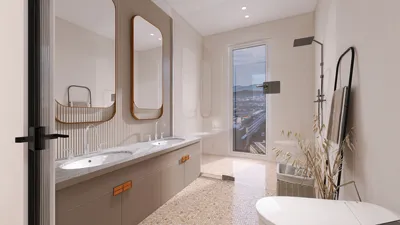


A client once challenged me to fit a gym, a home office, and a piano into their compact 2-bedroom apartment — I jokingly thought about how to suspend the piano from the ceiling. This humorous request sparked one of my key insights about living in small spaces: limitations can ignite creativity. Living in a smaller apartment doesn't equate to having limited ideas; rather, it prompts smarter solutions. In this article, I'll share five layout inspirations that I've utilized in real-life projects to enhance the sense of space, brightness, and overall livability in 2-bedroom apartments, while also integrating tools like Homestyler.
1. Open-plan Living with a Visual Divider
One traditional approach is to remove a non-structural wall between the kitchen and living room, which effectively opens up both light and sightlines. I prefer adding a visual divider, such as a low cabinet, glass shelving, or a bench, which allows different zones to be recognizable yet keeps the space open. This design promotes better flow and social interaction; however, you'll need to be strategic with storage solutions to manage the kitchen's visibility.
save pin
2. Flexible Guest Bedroom / Office
Allocating an entire room solely for guests is often impractical in many 2-bedroom apartments. I often reimagine the second bedroom as a versatile space equipped with a wall bed or a Murphy desk-bed combination. This setup provides a peaceful office environment during the day and a cozy guest room at night. It’s a cost-effective and functional solution, although ensuring proper installation of the wall bed mechanism is crucial to avoid future issues.
save pin
3. Walk-through Closet as a Connector
If space allows, consider transforming part of a large wardrobe into a walk-through closet that connects the bedroom to the bathroom or hallway. I implemented this strategy in a recent renovation, creating a luxurious, yet modest dressing flow. The benefits include improved circulation and storage, but careful planning is necessary to maximize usable bedroom space.
save pin
4. Zoned Studio Strategy for Living + Dining
Approach your main room as a zoned studio: position a sofa to define the living area and back it with a console table to delineate the dining or workspace. Techniques like utilizing rugs, varying lighting, and adjusting furniture heights all contribute to effective zoning. This method is affordable and highly adaptable, but you must understand that true privacy in these zones may be limited.
save pin
5. Built-in Storage and Vertical Solutions
In situations where floor space is at a premium, think vertically. Implementing tall cabinets, lofted shelves, and under-bed storage can rejuvenate a cramped 2-bedroom into an orderly, serene home. Custom-built solutions offer a seamless look and maximize every square inch, although they typically require a more significant initial investment alongside meticulous measurements.
To quickly visualize these concepts, I often sketch layout plans and utilize an online planner like Homestyler, which assists clients in grasping scale before making any commitments.
save pin
Tips 1:
Budget Tip: Begin with high-impact, low-cost changes such as fresh paint, updated lighting, and rearranging furniture. For structural modifications, always confirm load-bearing walls and consult a structural engineer. Small adjustments — like choosing a slightly smaller bed or a more compact sofa — can make a significant difference in how the space feels.
save pin
FAQ
Q1: What’s the optimal layout for a 2-bedroom apartment that maximizes light? A1: The best approach includes an open-plan living/kitchen setup with minimal partitioning and light-colored palettes; strategically placed seating and mirrors can help reflect light into darker areas.
Q2: How can I incorporate storage without overwhelming the apartment's feel? A2: Utilize built-ins, vertical shelving, and multifunctional furniture such as ottomans that offer storage. Keep larger pieces low to maintain visual clarity.
Q3: Is converting a bedroom into an office worthwhile? A3: Absolutely, especially if you often work from home. A flexible room that features a wall bed or a foldable desk retains guest options while meeting everyday work requirements.
Q4: How can I test a layout prior to renovations? A4: I suggest creating a scaled drawing or using a 3D planner to visualize furniture positions and flow. Such planning tools greatly enhance decision-making processes.
Q5: Is it feasible to make a small 2-bedroom apartment feel more like a one-bedroom without sacrificing functionality? A5: Yes — this can be achieved by opening up the living/kitchen areas and transforming one bedroom into a dual-purpose office/guest room. Use furniture and lighting to distinctly define zones while maintaining functionality.
Q6: What’s a frequent mistake in 2-bedroom layouts? A6: Many people overcrowd rooms with furniture; they often select pieces that are disproportionately large for the space. Always take careful measurements and opt for multifunctional items.
Q7: Where can I source layout inspiration and case studies? A7: Search for real-life examples that demonstrate scale and proportions; project galleries can be extremely useful resources. Homestyler offers such tools as well.
Q8: Are there reliable sources for small-space design principles? A8: Indeed — the American Institute of Architects (AIA) provides guidelines concerning residential design that are invaluable for effective planning and safety considerations (consult AIA publications for details).
save pin
Discover Homestyler, the ultimate online home design platform! With its user-friendly design tool, stunning 3D renderings, and a wealth of DIY video tutorials, you can effortlessly create your dream space. Perfect for both beginners and seasoned designers looking to explore new ideas!
立即免费设计
































