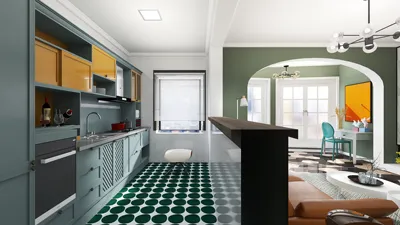


I once had a client who desired their new kitchen to remain discreet from the dining area, leading me to spend an entire week attempting to conceal a fridge behind a curtain. This experience highlighted that even minor adjustments can ignite significant creativity and that an intelligently organized connection between the kitchen and dining spaces can produce an enchanting ambiance. If you wish to visualize the setup before making any commitments, utilizing a platform like Homestyler can help you save both time and expenses.
1. Smooth Breakfast Bar Integration
I genuinely appreciate breakfast bars as they symbolize a friendly connection between the kitchen and the dining zone — casual yet purposeful. A narrow countertop with overhang stools consumes less visual space compared to a larger island, establishing an informal dining area while also serving as a preparation space.
Advantages: ideal for compact residences, maintains open sightlines. Disadvantages: offers limited seating and storage compared to a complete island, so you'll need to arrange cabinets in other areas. Budget-friendly tip: using the same material for both the bar and dining bench countertop creates a cohesive look without incurring expensive cabinet work.
save pin
2. Built-in Banquette with Concealed Storage
Many years ago, I designed a small eat-in kitchen featuring a banquette that concealed seasonal dishware — the homeowner was in tears from joy when they saw how much clutter was eliminated. Built-in seating not only frames the dining space but also recaptures floor space for easier movement.
This design is perfect for children and casual meals; however, cushions and upholstery require maintenance. Opting for removable covers will simplify washing, and keeping hidden drawers for items that are accessed infrequently can help avoid chaotic searches.
save pin
3. Open Shelves and Vertical Elements
Open shelving positioned above the dining rail or a tall, slim pantry visually elevates the room. By incorporating vertical features, you can draw the eye upwards, making compact zones appear taller and more spacious. I frequently recommend that clients experiment with various furniture layouts in 3D applications like Homestyler to see how shelving influences flow before purchasing bulky items.
This strategy reflects personal style while allowing you to showcase favored items, although it requires regular dusting. Keep heavier items lower and curate displays to maintain an organized look.
save pin
4. Cohesive Flooring and Lighting Zones
Utilizing the same flooring material in both the kitchen and dining area removes visual interruptions and creates a sense of expansiveness. Additionally, layering lighting — pendant lamps above the dining table and task lights within the kitchen — establishes functional zones without the need for walls.
This budget-friendly approach means a uniform floor is generally easier and often less expensive to install than transitions. The key challenge is ensuring that the flooring material is resilient enough to withstand kitchen spills while remaining comfortable for dining, so selecting finishes with both durability and warmth is crucial.
save pin
5. Adaptable Tables and Tech-Friendly Spaces
I’ve outfitted apartments with foldable tables that expand for gatherings — these adaptable tables allow you to modify the same footprint for everyday usage and special events. Enhance the space with a compact tech corner featuring charging options and a location for recipes to transform your dining area into a multifunctional hub.
This design is ideal for contemporary living, and if you appreciate data-driven solutions, consider utilizing tools like Homestyler that provide AI-based design recommendations to ensure both aesthetic appeal and ergonomic comfort. Potential drawbacks include the quality of folding hardware and the need to plan tech spaces to prevent cord clutter.
save pin
FAQ
Q: What’s the optimal layout for small kitchen and dining spaces?
A: For compact environments, an L-shaped or galley-style kitchen combined with a slim dining table or banquette maximizes movement. Maintain clear work triangles and ensure at least 90 cm (36 inches) of space between counters and seating for comfort.
Q: How do I select flooring that fits both kitchen and dining areas?
A: Choose durable materials like porcelain tile or premium vinyl that replicates wood for a warm feel. Properly sealing and finishing the kitchen zones will protect against moisture and stains.
Q: Is open shelving sanitary for a kitchen-dining space?
A: Yes, provided you limit open shelves to sturdy, frequently used items and clean them weekly. Save fragile glassware and delicate items for enclosed cabinets to minimize breakage and dust accumulation.
Q: How should I approach lighting design in combined areas?
A: Layer your lighting: ambient sources for overall brightness, task lights for work surfaces, and accent pendant lights above the dining table. Dimmers are an inexpensive upgrade that enhance atmosphere and adaptability.
Q: Are islands practical in smaller spaces?
A: Islands can be fantastic but require sufficient clearance — generally 90–120 cm (36–48 inches) on all sides. If space is limited, consider a narrower peninsula or a mobile island on wheels.
Q: Which storage strategies are most effective in kitchen-dining combinations?
A: Implement vertical pull-out pantries, toe-kick drawers, and banquette storage to reclaim hidden storage. Standardizing container sizes will help maintain organization and visual calmness.
Q: How can I ensure that my dining area complements the kitchen's style?
A: Unify two or three material elements — for instance, match the finish of the dining table to kitchen cabinet accents or repeat a metal tone in lighting and hardware. Consistency effectively ties both areas together without appearing overly coordinated.
Q: Where can I find reliable standards for kitchen layouts?
A: The National Kitchen & Bath Association (NKBA) releases layout guidelines and industry standards; check their website at https://www.nkba.org for recommended clearances and ergonomic guidance.
save pin
Homestyler's roots trace back to Autodesk, the global leader in design and engineering software. That heritage lives on in every feature we build. Today, with a community of more than 18 million users worldwide, Homestyler continues to make professional-quality interior design accessible to everyone — from first-time decorators to seasoned architects.
Discover the transformative power of Homestyler, your go-to online home design platform! With an easy-to-use design tool, stunning 3D renderings, and inspiring DIY video tutorials, you can effortlessly create and visualize your dream space. Dive into a world of design possibilities today!
Desain sekarang Gratis
































