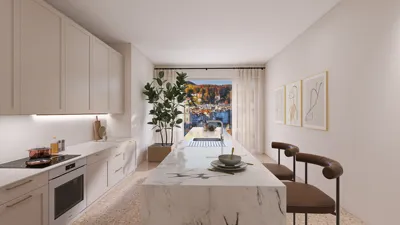


In one memorable instance, a client wanted a breakfast table that could fold into a toaster oven—a true challenge that had me brainstorming increasingly outlandish designs for a week. Ultimately, we decided on a straightforward fold-down bench. This experience highlighted the importance of innovative yet practical design in compact spaces and reinforced my habit of starting with a strategic plan. To efficiently explore layouts, I frequently use a space-saving room planner like Homestyler, which streamlines the design process and saves valuable time when working with clients.
Small kitchens often ignite immense creativity. In this article, I will present five ideas for eat-in kitchen tables that are well-suited for compact homes, along with practical tips and real-world advantages to consider.
1. The Versatile Drop-Leaf Table
Drop-leaf tables are fantastic due to their adaptability—small most of the time yet surprisingly spacious when needed. They are budget-friendly, easy to set up, and fit well against a wall or island. However, it's important to note that some less expensive versions may have leg placements that obstruct movement, so I always verify the clearances prior to making a purchase.
Budget-friendly advice: select solid wood for the hinge area to prevent sagging over time; you can often find sturdy vintage options at a lower cost than custom designs.
save pin
2. Built-In Banquette with Storage Solutions
Installing a built-in bench truly maximizes space—offering seating, storage, and a cozy corner all-in-one. I once designed a banquette in a studio apartment that cleverly concealed recycling bins and board games, elevating the entire area’s appeal. While ideal for families, it is worth noting that built-ins can be less adaptable if you decide to relocate, and they typically require a higher initial investment for carpentry materials.
Useful tip: ensure cushions are 16 to 18 inches deep to promote comfortable dining posture; I always create a plywood mockup for testing beforehand.
save pin
3. Slim Rectangular Table Alongside the Counter
For narrower spaces, placing a slim table parallel to the countertop allows for both preparation areas and seating without disrupting the kitchen flow. I like to combine this setup with stools that neatly tuck under the table, providing visual lightness. However, this arrangement may not be suitable for larger gatherings.
For complicated layouts, I utilize intelligent kitchen layout ideas like Homestyler to ensure ample clearance around appliances and doorways before making any furniture purchases.
save pin
4. Round Pedestal Table for Enhanced Movement
Round tables tend to function well in limited spaces, as their absence of corners reduces the chances of bumping into furniture and fosters conversation. Pedestal bases also allow for more legroom—something I consider particularly for older clients. However, the downside is that a 36-inch round table accommodates up to four people, which may feel cramped during frequent gatherings.
Styling advice: opt for a darker tabletop or a patterned runner to discreetly mask daily wear and tear.
save pin
5. Convertible Console Table
A sleek console table that transitions into a dining surface is my go-to solution for extremely compact kitchens. I had a client whose layout required a workspace during the day and a dining area at night, and this design perfectly blended functionality and aesthetics. Be prepared for some initial unpacking and setup during each transformation, and always check weight limits since some convertible designs may not support heavy dishes.
To help clients visualize the fit, I frequently create quick mock-ups using tools like Homestyler, allowing them to experience the layout before commitment.
save pin
Tips for Success:
Measure twice and mock up once. Using cardboard or painter's tape on the floor can prevent costly returns. Consider daily habits—whether it be sipping coffee, working on a laptop, or kids tackling homework—and design the space around these regular activities rather than focusing solely on rare events like dinner parties.
save pin
FAQs
Q: What size table is most suitable for a compact eat-in kitchen?
A: For two people, a round table measuring 30 to 36 inches or a narrow rectangular table around 24 to 30 inches in width usually fits best. Be mindful of clearance, aiming for at least 30 inches behind chairs for smooth mobility.
Q: Are drop-leaf tables sturdy enough for daily use?
A: Absolutely, provided they are well-constructed. Look for reinforced hinges and solid wood around the joints; inexpensive particle board options may sag after repeated usage.
Q: How do I select seating for a banquette?
A: Opt for cushions made with medium-firm foam and removable covers for easy cleaning. Slim backrests are acceptable, but banquettes are most comfortable with a seat depth of approximately 16 to 18 inches.
Q: Can a round table fit in a galley kitchen?
A: A compact round table can work well if positioned against one wall or if utilizing a pedestal base to maximize legroom. It generally accommodates two to four people based on its diameter.
Q: How much space should be left around a dining table?
A: Ideally, there should be 36 inches from the table edge to nearby walls or cabinets; 30 inches is acceptable for tight setups. This allows chairs to be moved, and for people to navigate comfortably behind seated diners.
Q: Is investing in a built-in banquette worth it?
A: If you plan to stay in your home long-term, then yes—banquettes provide storage, enhance comfort, and can increase perceived property value. For renters, modular benches can be a practical alternative.
Q: Where can I find reliable tools for layout planning?
A: Reputable professional websites and case studies often showcase dependable layout planners; industry associations like the National Kitchen & Bath Association (NKBA) offer guidelines and recommendations for kitchen layouts that designers often utilize.
Q: What maintenance does a convertible console table require?
A: Regularly clean and lubricate moving parts, inspect fasteners, and avoid exceeding the surface's weight capacity. Performing routine maintenance can significantly extend the item's lifespan.
save pin
Homestyler is an exceptional online home design platform perfect for all your decorating needs. With its user-friendly design tool, stunning 3D renderings, and a wealth of inspiring design projects and video tutorials, you can effortlessly create your dream space and enhance your interior design skills.
Design Now for FREE
































