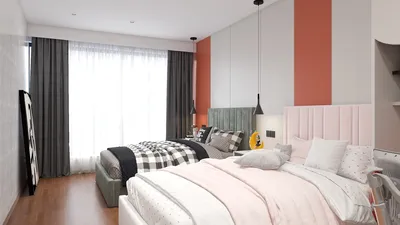


In a previous project, a client firmly believed their master bedroom required a slide instead of stairs to access a mezzanine reading nook. Although I convinced them otherwise, this eccentricity highlighted how three-bedroom homes can exhibit vastly different personalities. Subtle design choices, like the positioning of windows or the pivot of doors, can significantly influence a space's layout, which is why I have a passion for designing three-bedroom houses: minor limitations often ignite substantial creativity. In this piece, I will discuss five practical inspirations I've implemented in real projects to enhance the perception of size, efficiency, and livability in three-bedroom homes, leveraging tools like Homestyler for visualization.
1. Integrating open-plan living with designated zones
I commonly merge living, dining, and kitchen spaces into an open-plan foundation, creating cozy nooks — such as a reading corner, children's homework station, or a snug alcove for watching TV. The benefit of this arrangement is abundant natural light and social interaction; however, noise can be a drawback. To mitigate this, I incorporate rugs, low bookshelves, and partial screens that absorb sound and establish distinct areas. With a moderate budget, a simple repositioning of the sofa and adding built-in shelving can yield significant advantages.
save pin
2. A split-bedroom design enhances privacy
When clients emphasize the need for privacy, I opt for a layout that separates the master bedroom from the secondary ones with the living area in between. This arrangement is ideal for parents or roommates as it provides quieter, more private spaces for everyone. Although this may result in slightly longer pathways, I often counteract wasted hallway space by integrating storage solutions or a small study area into the circulation.
save pin
3. A versatile guest or office bedroom
It's essential for one bedroom to serve multiple purposes: a guest room at night and a home office during the day. I typically suggest a pull-down bed or a daybed with substantial storage underneath. This keeps the area compact yet functional; the challenge often lies in cable management and lighting, which I address with discreet outlets and layered lighting to ensure the space is conducive for both sleeping and working.
save pin
4. Intelligent kitchen layout in a compact space
In a three-bedroom house, the kitchen doesn't have to be large — it just needs to be well-designed. I prefer an L-shaped configuration with an island if space allows, or a galley layout that opens to the dining area. This setup optimizes work triangles and provides sufficient prep space. For those wishing to visualize their options quickly, utilizing an online room planner like Homestyler can help in imagining different island sizes and circulation paths before finalizing cabinetry choices.
save pin
5. Expanding outdoor areas into functional space
A small patio or balcony that extends from the living room can function as an additional ‘room’ when furnished appropriately: with foldable tables, weather-resistant cushions, and planters. This approach increases usable space and allows natural light to penetrate deeper into the home. Weather and privacy can pose challenges — a simple pergola or screen can offer effective solutions without overspending.
save pin
Tips 1:
Lighting and storage are often overlooked yet vital elements: incorporate layers of ceiling, task, and accent lighting, and aim for shallow built-ins where feasible. Consider vertical storage solutions near entrances and in bedrooms; well-placed cabinets can diminish clutter and create the illusion of a more spacious three-bedroom layout.
save pin
FAQ
Q: What is the ideal square footage for a comfortable three-bedroom house?
A: A comfortable three-bedroom home typically ranges from 900 to 1,400 square feet (85–130 m2), depending on the family's size and desired features. Smaller spaces necessitate more multi-functional design approaches.
Q: How can I create a sense of space in a small three-bedroom house?
A: Incorporate an open-plan living area, uniform flooring, larger windows, and built-in storage to minimize visual clutter. Opting for light, neutral shades and mirrored surfaces can also help to reflect light, enhancing an illusion of spaciousness.
Q: Is an open-plan layout suitable for families with young children?
A: Not necessarily — it can enhance supervision and let in more natural light. To manage noise, consider incorporating soft zoning techniques with rugs, furniture, or a low partition. Durable finishes are advisable in high-traffic areas.
Q: What budget should I allocate for a kitchen in a three-bedroom home?
A: Kitchen expenditures vary widely; plan to allocate around 8–12% of the total project budget for a modest yet functional kitchen, with higher costs for appliances and custom cabinetry. Prioritizing layout and workflow over luxury finishes can yield the best value.
Q: Can I incorporate a home office without reducing bedroom sizes?
A: Absolutely — repurpose closets, include a built-in desk in a spare corner, or utilize a flexible third bedroom with multi-functional furnishings. Pocket doors can help maintain efficiency in circulation.
Q: What common mistakes do people make in three-bedroom layouts?
A: Oversized corridors, poor window orientation, and a lack of storage frequently lead the list. I recommend planning for storage and daylight paths early to avoid costly revisions later on.
Q: How do I decide between an island and a breakfast bar?
A: Opt for an island if you require extra prep space and storage, allowing at least 1.2–1.3 meters of clearance around it; choose a breakfast bar when space is limited and you prefer casual seating without obstructing flow.
Q: Where can I quickly experiment with different floor layouts online?
A: You can use an online floor planner such as Homestyler to test various room sizes and furniture arrangements before finalizing your designs; many tools offer 3D visualization and easy adjustments for planning efficiency. For authoritative guidance on efficient layout designs, refer to the National Association of Home Builders at https://www.nahb.org.
save pin
Looking to revamp your space? Homestyler is your go-to online home design platform! With its user-friendly design tool, stunning 3D renderings, and a wealth of DIY video tutorials, you can effortlessly create and visualize your dream home. Start designing today!
تصميم الآن مجانا
































