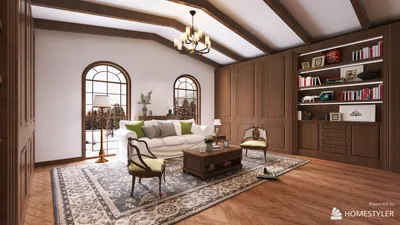


As a designer with over ten years of experience in optimizing small and unique spaces, I've observed an evolving trend in the design of rectangular living rooms. A thoughtfully planned layout can actually inspire greater creativity than a perfectly square area. In this article, I will provide ten design ideas for rectangular living rooms, combining personal insights with expert advice, to help you turn your space into a functional and aesthetically pleasing setting with the assistive tool Homestyler.
1. Embrace Floating Furniture Arrangements
My Observation: Recently, I rearranged a sofa to create a snug nook in the middle of the room. This approach can be extremely effective in elongated rectangular spaces, as it visually reduces length.
Advantages: Promotes better flow, allows for various distinct zones, and complements minimalist living room designs beautifully. According to research from Houzz, floating arrangements can significantly enhance the openness of narrow areas.
Drawbacks: Requires a moderately sized floor space; smaller rooms may become cramped if bulky furniture is used.
Suggestion: Incorporate a rug to visually anchor the floating arrangement.
2. Opt for Dual-Purpose Furniture
My Insight: In my apartment, I have a coffee table that also serves as hidden storage. It’s an invaluable solution for a narrow area.
Benefits: Maximizes storage, keeps clutter at bay, and fits the trend for multifunctional living. A survey by the National Association of Home Builders indicates that storage ranks high on homeowners' design priorities.
Limitations: Often, multifunctional pieces sacrifice aesthetic appeal for practicality; achieving the right balance is essential.
Advice: Seek out items with clean, minimalist lines to prevent overwhelming the space.
3. Enhance Zoning with Area Rugs
My Experience: In one of my client’s rectangular lofts, contrasting rugs successfully defined a dining and lounging area without the need for walls.
Advantages: Provides visual indicators that differentiate uses of a single space; particularly useful for open-concept designs.
Disadvantages: If colors and patterns clash, the area may feel chaotic.
Tip: Maintain a consistent color scheme for visual harmony.
4. Create Built-in Storage Walls
My Design: I created a full-height bookshelf along one of the long walls in a narrow living room, which became a practical storage solution and a design highlight.
Advantages: Utilizes vertical space effectively, adds architectural character, and leaves the floor space free.
Disadvantages: Permanent installations can restrict future design alterations.
Suggestion: Combine open and closed storage options for added versatility.
5. Maintain Symmetrical Layouts for Balance
My Perspective: Implementing mirrored furniture on both sides creates harmony in rectangular spaces, making the room feel calm and facilitating movement.
Pros: Establishes a sense of balance, lending a formal and organized feel; particularly effective when meticulously arranged.
Cons: This arrangement may appear overly rigid for those who prefer a more eclectic or relaxed decor style.
Tip: Incorporate soft elements like cushions and plants to soften the look.
6. Focus on Vertical Decor
My Choice: To divert attention from a room's length, I frequently use tall shelving units, eye-catching lamps, or vertical wall panels.
Advantages: Directs the eye upward, enhancing the perception of height; great for small rectangular living spaces.
Cons: Overdoing vertical elements might create a sense of narrowness.
Tip: Balance verticals with horizontal pieces, such as long coffee tables.
7. Implement Layered Lighting
My Strategy: In a project with a windowless end wall, I used layered lighting—ceiling fixtures, sconces, and a floor lamp—to transform the ambiance.
Benefits: Helps control mood, emphasizes focal points, and increases functionality. The IES Lighting Handbook suggests that layered lighting can boost spatial perception significantly.
Drawbacks: More lighting fixtures can lead to increased costs and maintenance responsibilities.
Tip: Consider investing in dimmable lights for added flexibility.
8. Utilize Narrow Console Tables
My Solution: In a client’s studio-like living room, a slim console table behind the sofa provided essential storage without encroaching on valuable walking space.
Pros: Provides surface area for decorations, lamps, or necessary items without causing clutter; ideal for subtle enhancements.
Cons: Offers limited storage compared to larger pieces.
9. Arrange L-shaped Sofas
My Experience: An L-shaped sofa is perfect for establishing a conversation area in a long living room. I once positioned it to create two functional zones simultaneously.
Pros: Optimizes seating, fosters a cozy nook, and as demonstrated by this L-shaped configuration, offers additional surface area for versatility.
Cons: Can complicate movement through the space; might dominate smaller areas.
10. Accent the Short End Wall
My Approach: A vibrant color or textured wallpaper on one of the short walls visually mitigates the tunnel effect often associated with rectangular rooms.
Pros: Infuses personality and interest; offers a budget-friendly way to make an impact.
Cons: If overpowered, such accents might visually shorten the area excessively.
Tip: Counterbalance with lighter colors on the longer walls.
Conclusion
A rectangular living room shouldn't be viewed as a limitation but rather as a blank canvas for innovative design strategies. By floating furniture, choosing built-ins, or using rugs to zone areas, you can transform a long, narrow room into a balanced and welcoming space. As noted by Architectural Digest, thoughtful layouts can dramatically alter the perception of awkward dimensions. Which of these ten design ideas will you try with your own space using Homestyler?
FAQ
1. What's the optimal furniture arrangement for a rectangular living room?
Floating furniture layouts or L-shaped sofas are often the most effective, depending on room usage.
2. How can I visually widen a narrow rectangular living room?
Incorporate horizontal patterns, low-profile furniture, and strategic mirror placements to enhance visual space.
3. Is it feasible to include a dining area in a rectangular living room?
Certainly! Zoning through rugs or furniture placement works excellently for blending spaces.
4. What color schemes are best for a rectangular living room?
Using lighter shades on longer walls, complemented by a bold accent on a short wall, helps create visual balance.
5. Is built-in storage advisable for rectangular rooms?
Yes, particularly along long walls—this approach frees up floor space and creates functional focal points.
6. How crucial is lighting in a rectangular living room?
Layered lighting significantly influences both mood and perceived proportions, according to the IES Lighting Handbook.
7. What rug shapes are most suitable?
Rectangular rugs generally align well with the space, while layering can effectively delineate different areas.
8. Can small rectangular living rooms maintain a stylish appearance?
Absolutely! Utilizing multifunctional furniture and mindful design principles ensures both style and functionality.
Looking to transform your home? Homestyler is your go-to online design platform! With its user-friendly design tool, stunning 3D rendering, and a wealth of DIY video tutorials, you can easily create and visualize your dream spaces. Get inspired and start designing today!
立即免费设计
































