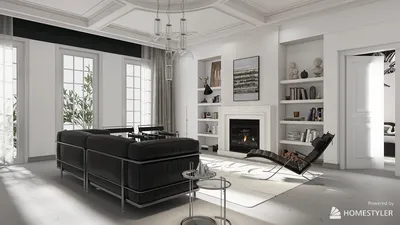


As an interior designer over the past ten years, I've observed an exciting trend toward personalization in home decor. This is particularly evident in small spaces, where creativity knows no bounds, especially in the living room, which serves as an ideal canvas for artistic expression. In this article, I'll present 10 canvas painting ideas that I've successfully implemented for my clients' living rooms, integrating personal insights with decor tips supported by research. Plus, I’ll showcase how using a tool like Homestyler can enhance your design projects.
1. Minimalist Black and White Abstracts
My Experience: In a previous project for a tiny apartment, I introduced a large black-and-white abstract canvas that established an air of sophistication without overwhelming the space.
Benefits: This style beautifully complements modern and Scandinavian interior designs, pairs well with a variety of color schemes, and creates an airy feeling in the room. Architectural Digest notes that high-contrast artworks can significantly enhance a room's visual character.
Drawbacks: This approach may feel too stark for those who favor warm, colorful environments. Thoughtful lighting is essential to prevent the piece from appearing flat.
Suggestion: Combine the artwork with minimalist furniture arrangements to amplify its impact.
2. Large-Scale Nature Photography Prints
My Experience: I enjoy featuring oversized prints of natural landscapes, such as forests or oceans, which can create a tranquil atmosphere in the living space — they effectively serve as a visual escape.
Benefits: Nature prints add depth, promote serenity, and connect your living room to the outdoors, particularly in spaces without natural views.
Drawbacks: Some prints might overpower the room if their colors clash with the existing decor.
Suggestion: Opt for muted tones to maintain versatility throughout the year.
3. Gallery Wall of Mini Canvases
My Experience: I crafted a gallery wall featuring 12 small canvases, each representing a different travel destination. Visitors enjoyed following the journey visually.
Benefits: This approach is highly personal, can be progressively expanded, and is ideal for renters. It encourages storytelling and interaction.
Drawbacks: It can appear cluttered in very small spaces; careful planning is required to ensure balance.
Suggestion: Use painter’s tape to outline the layout before attaching anything to the walls.
4. Bold Geometric Color Blocks
My Experience: In a mid-century modern renovation, I incorporated striking teal and gold color-block canvases. The client remarked that it made the space 'Instagram-ready'.
Benefits: This style injects vibrancy, complements retro furniture beautifully, and harmonizes color schemes with ease.
Drawbacks: Bright colors can become tiresome if overused; moderation is key for effectiveness.
Suggestion: Use this technique to echo accents found in cushions or rugs for a unified theme.
5. Monochrome Cityscape Silhouettes
My Experience: One standout piece is a simple grey London skyline silhouette that integrates seamlessly with industrial chic aesthetics.
Benefits: This artwork introduces sophistication without diverting attention, while also fitting a variety of color palettes and blending well with both modern and vintage decor.
Drawbacks: The design can feel generic unless the selected city holds personal significance.
Suggestion: Consider commissioning an artist to depict a skyline that resonates with you emotionally.
6. Oversized Floral Close-Ups
My Experience: I once added a sizable close-up of a peony in a minimalist setting, which instantly warmed the room's overall appearance.
Benefits: Floral abstracts infuse warmth, romantic charm, and color; they work particularly well in spaces with hard surfaces.
Drawbacks: Including numerous floral elements can result in an overly busy atmosphere.
Suggestion: Limit the floral variety to one main type for better clarity and impact.
7. Hand-Painted Typography or Quotes
My Experience: In a loft renovation, I designed a canvas featuring a cherished poem in soft brush lettering—this personal touch made the owner feel at home every time they entered.
Benefits: These pieces are deeply personal, motivating, and can adapt to any font or color scheme.
Drawbacks: Relying on overly popular quotes can feel cliché; authenticity is vital.
Suggestion: Use your handwriting or collaborate with a calligrapher for a unique touch.
8. Metallic Accented Abstracts
My Experience: Incorporating gold leaf in abstracts can catch light exquisitely, providing a sense of subtle luxury, as I demonstrated in a penthouse living room.
Benefits: Metallics reflect light beautifully, add dimension, and elevate even simple pieces into luxurious focal points.
Drawbacks: Maintaining metallic elements can be challenging if the surface peels; direct sunlight exposure should be avoided.
Suggestion: This style thrives in spaces with layered lighting to enhance its sheen.
9. Split-Canvas Panorama
My Experience: I enjoy segmenting panoramic images into three canvases; once, a triptych of a sunset beach escape transformed the room's feel of spaciousness.
Benefits: This layout effectively expands perceived room width, introduces rhythm, and adds a gallery-like ambiance. Houzz notes that triptych formats can balance asymmetrical walls.
Drawbacks: Attention to precise spacing is required; uneven walls can disrupt the desired effect.
Suggestion: This method works particularly well in open-plan layouts that require visual anchors.
10. DIY Texture Art
My Experience: Often, the most unforgettable artworks are those created at home. I’ve guided clients through crafting textured canvases using joint compound and neutral paints.
Benefits: Cost-effective, unique, and tactile; adds depth without overwhelming colors.
Drawbacks: The creation process can be messy, and pieces may require sealing to last longer.
Suggestion: Try experimenting with smaller canvases before proceeding to larger ones.
Conclusion
From my experience, modest living spaces should be viewed as an opportunity rather than a limitation. The right canvas painting can dramatically transform scale, atmosphere, and character in your living environment. Studies in the Journal of Environmental Psychology highlight this impact on design psychology. Which of these 10 canvas painting concepts would you love to explore for your living room with the help of Homestyler?
FAQ
1. What size canvas is ideal for a small living room? Aim for a canvas that occupies 40–60% of the wall width above furniture to create a cohesive feel instead of a cluttered one.
2. Are canvas paintings still a fashionable choice for living rooms? Absolutely, especially personalized or textured designs according to Elle Decor’s 2024 trend insights.
3. How do I select a suitable color palette for my canvas art? Draw hues from existing decor items like rugs or cushions for visual harmony.
4. Is it possible to mix various canvas styles within one room? Certainly, just ensure they are unified by a common color scheme or framing style.
5. How should I light canvas art in my living room? Use adjustable spotlights or track lighting to enhance the textures and details of the pieces.
6. Are DIY canvas projects a viable option? Definitely — they are budget-friendly and enhance personal connection to the space. Be sure to select quality materials for durability.
7. Where is the best location to hang a large canvas in the living room? Hang it centrally above the main seating area or the fireplace to draw the viewer's eye naturally.
8. Can canvas art enhance the overall ambiance of the room? Absolutely, as artworks can significantly influence mood and spatial perception as suggested by research published in the Journal of Environmental Psychology.
Discover your dream space with Homestyler! This user-friendly online design platform features a powerful design tool, stunning 3D renderings, and a wealth of inspiring design projects and DIY video tutorials. Transform your home effortlessly and unleash your creativity today!
تصميم الآن مجانا
































