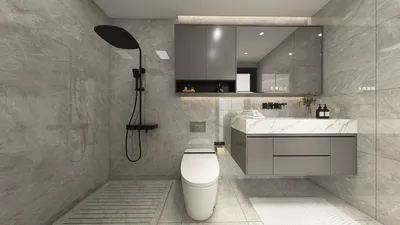


Once, a client envisioned a space with oceanic vibes minus the kitsch, leading me to nearly cover an entire bathroom in mosaic fish. This near-miss impressed upon me two important lessons: the dramatic effect of blue tiles and the craftsmanship found in subtlety. Especially in smaller bathrooms, allowing blue hues to guide the design can create astonishing outcomes without overwhelming the area.
1. Gentle Sky Blue Subway Tiles for a Peaceful Ambiance
I enjoy incorporating soft sky-blue subway tiles on the lower half of walls, complemented by crisp white grout and paint above. This combination reads as clean, enhances vertical space, and remains budget-friendly. Its timeless appeal and effortless maintenance are significant advantages; however, care must be taken to avoid an overly clinical appearance, which can be mitigated by integrating warm wooden elements or brass fixtures to infuse warmth.
2. Bold Indigo Accent Wall for Dramatic Impact
For clients seeking personality, I often select a deep indigo tile for a single accent wall, commonly behind the vanity. This choice introduces depth and a lavish feel without necessitating a comprehensive renovation. Darker tones can lend a cozy ambiance rather than a cramped one, especially when balanced with suitable lighting and reflective features like sizable mirrors.
3. Decorative Blue Ceramics for Vintage Appeal
When a client desires character, I gravitate towards patterned blue ceramic tiles or encaustic-style designs. These tiles are frequently used on floors or as a shower feature to anchor the design. They do an excellent job of hiding dirt while providing an immediate infusion of personality; however, proper alignment and grout choice are critical and can be a time-consuming trade-off.
4. Gradient or Ombre Tile Arrangement for Fluidity
Ombre blue tiles transitioning from pale at the top to rich at the bottom create a serene, wave-like design. I once applied this technique in a compact bathroom, which visually elongated the space, giving an impression of higher ceilings. Although installation requires more effort, the outcome is both playful and contemporary.
5. Mixed Elements: Blue Tiles and Natural Stone
Combining blue tiles with a strip of natural stone or marble effectively merges opulence and earthy elements. In a recent project, I paired matte blue wall tiles with a marble countertop, much to my clients' delight due to the striking contrast. While cost and coordination can be challenges, even a small stone detail can significantly elevate the design.
For those looking to quickly sketch ideas, I often utilize an online 3D floor planner, such as Homestyler, allowing clients to ‘walk through’ various options before selecting tile samples.
Tip 1:
Budget Consideration: Subway tiles and basic ceramics are the most economical options. In smaller spaces, larger tiles can minimize grout lines and deliver a more contemporary feel. Always order additional tiles (10–15%) for cuts and future repairs.
Practical Advice: Take care when choosing grout color—white enhances brightness but shows stains, while gray camouflages dirt but may alter the perceived shade of the tiles. I typically test a 10x10 sample on-site to ensure satisfaction before making final decisions.
If you're exploring design options for different tile patterns, utilizing a floor planner can be incredibly helpful in visualizing scales and pattern repeats based on your actual bathroom dimensions.
I've discovered that blue tiles spark creativity—especially in small bathrooms that benefit from thoughtful selections. Whether your desired atmosphere is serene, dramatic, or whimsical, there's a shade of blue that complements your vision.
FAQ
Q: Which blue shade is ideal for compact bathrooms?
A: Lighter blues like sky or aqua can visually enlarge the space, while deeper blues work well on accent walls; opt for lighter shades to enhance perceived dimensions.
Q: Are blue tiles difficult to maintain?
A: Not at all—glazed ceramic and porcelain tiles are simple to clean. Selecting the right grout is key to minimizing visible stains.
Q: Can blue tiles create a cold ambiance in bathrooms?
A: They can appear cold if only paired with cool metals. Offset this by incorporating warm wood, brass, or soft textiles for a balanced aesthetic.
Q: Is patterned blue tile suitable for flooring?
A: Definitely—patterned tiles effectively conceal dirt and introduce character. Just ensure they are slip-resistant (verify PEI and R-rating for wet environments).
Q: How many extra tiles should I purchase?
A: I suggest ordering an additional 10–15% to account for cuts, upkeep, and any accidental breakages.
Q: Which grout color is most adaptable?
A: Mid-tone gray is quite versatile and maintains a consistent appearance across different tile colors.
Q: Where can I find authoritative information on bathroom tile slip resistance?
A: Yes—consult manufacturers’ ratings and standards like the ADA guidelines; for detailed protocols, the American National Standards Institute (ANSI) is a great resource.
Q: Can I visualize tile layouts prior to purchase?
A: Certainly—many online tools facilitate easy mockups. I frequently use a 3D render as part of the planning process to ensure clarity and avoid surprises.
Homestyler is your go-to online home design platform! With its intuitive design tool, stunning 3D renderings, and a wealth of design projects and DIY video tutorials, you can effortlessly create and visualize your dream spaces. Perfect for both beginners and seasoned designers!
Design jetzt kostenlos
































