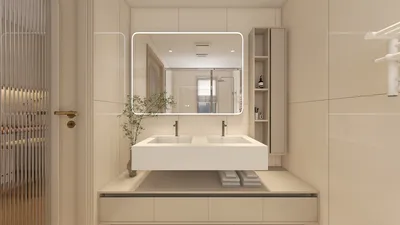


I recall a time when I mistakenly installed a sconce upside down due to misreading the design sketch. It was a humorous moment, and it reinforced the importance of double-checking fixture orientation. Ultimately, we were both delighted with the outcome. This experience is commonplace in small bathrooms, where a minor error can lead to inventive solutions. Engaging with compact spaces often encourages more creativity compared to larger homes, and details like bathroom wall lights can significantly enhance both functionality and ambiance.
1. Tall and Slim Vertical Sconces for Tight Walls
Slim vertical wall lights are fantastic because they create the illusion of elongated walls and minimize shadows on your reflection when positioned next to the mirror. These fixtures conserve counter space and can compliment various mirror designs. However, it's crucial to mount them at the correct height to prevent glare—aim for the center of the fixture around 150 cm (60 in) off the finished floor for optimal results for most users.
save pin
2. Versatile Swing-Arm Lights Near the Vanity
In a compact bathroom where more focused lighting may be required for grooming tasks, a swing-arm sconce can be a brilliant choice. It conveniently folds away when not in use and swings out to provide directed light during tasks. These fixtures need a bit more space compared to fixed sconces, so ensure you check cabinet and door movements before installation—yet, clients usually appreciate the added flexibility they offer.
save pin
3. LED Light Strips Integrated into Mirrors
Mirrors that come with integrated LED wall lights deliver a sleek, modern aesthetic and eliminate the necessity for separate fixtures, making them perfect for minimalist small bathrooms. The light produced is consistent and flattering, although these built-in options can be on the pricier side and should be selected based on their IP rating suitable for damp areas.
save pin
4. Compact Dome or Globe Sconces for Gentle Ambient Lighting
If your bathroom lacks ample overhead illumination, a small dome or frosted globe fixture on the wall can provide a warm and diffused light. They are flexible in terms of bulb use and can efficiently utilize LEDs. The drawback is that they offer generalized lighting, so it's advisable to pair them with task lighting for focused grooming needs.
save pin
5. Waterproof Accent Lights Designed for Shower Walls
Installing recessed or slim waterproof wall lights within the shower area can create a calming spa-like atmosphere and illuminate tiled nooks. These fixtures must have appropriate IP65 ratings or higher and should be wired professionally in wet environments, but thoughtfully placed lights can provide a significant upgrade while remaining budget-friendly.
save pin
Tips 1:
Practical advice: Always select fixtures that meet the necessary IP ratings for their locations, opt for warm color temperatures (2700K–3000K) to flatter skin tones, and include dimmers for mood control. To plan layouts and visualize where light will be positioned, I frequently utilize a 3D floor planner like Homestyler, which assists clients in grasping scale and light distribution before any installation begins.
save pin
FAQ
Q: What is the optimal height for bathroom wall lights next to a mirror?
A: Install the center of the sconce approximately 150 cm (60 in) above the finished floor or at eye level for the user. This positioning helps reduce shadows; for double vanities, position two lights evenly on each side of the mirror.
Q: What is the required IP rating for wall lights in a bathroom?
A: For general bathroom areas outside the shower, an IP44 rating is usually adequate. For fixtures located within the shower zone, opt for IP65 or greater to protect against water exposure.
Q: Are LED wall lights suitable for bathroom use?
A: Absolutely! LEDs are energy-efficient, long-lasting, and available in warm color temperatures that are fitting for bathrooms. Aim for a CRI of 90+ for true color representation.
Q: How can I mitigate glare coming from wall sconces?
A: Ensure sconces are positioned in a way that shields or diffuses the light source, directing the main beam away from eye level. Using frosted glass or shades can help soften any potential glare.
Q: Is it safe for me to install wall lights by myself?
A: Basic fixtures can be installed by DIY enthusiasts comfortable with electrical work; however, installations in wet areas or connecting hardwired switches should be completed by a licensed electrician to ensure safety and compliance with regulations. For reliable reference, consult the UK Wiring Regulations (BS 7671) or your local electrical codes.
Q: What color temperature is ideal for bathroom lighting?
A: A color temperature range of 2700K to 3000K provides a warm and inviting glow, while temperatures between 3000K and 3500K are more neutral and suitable for makeup application. Avoid overly cool temperatures above 4000K, as they can appear sterile.
Q: How can I make my small bathroom appear brighter without adding more fixtures?
A: Utilizing reflective surfaces such as mirrors and light-colored tiles, selecting frosted fixtures for a wider light dispersion, and incorporating a dimmer switch can all enhance the perceived brightness as needed.
Q: Where can I experiment with visualizing light placement in my bathroom prior to purchasing fixtures?
A: I suggest using an online room planner like Homestyler to plan your fixture layout and visualize them in real scale; this can help avoid potential disasters in a tight renovation where every inch counts.
save pin
Looking to transform your home? Homestyler is your go-to online design platform! With its user-friendly design tool, stunning 3D renderings, inspiring design projects, and helpful video tutorials, you can easily create your dream space—no expertise needed!
Diseño ahora GRATIS
































