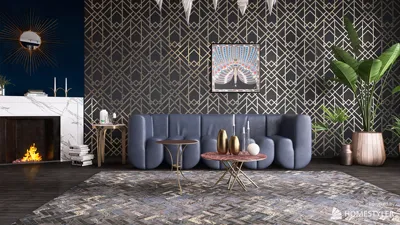


Throughout my ten years as an interior designer, I have discovered that compact spaces can often lead to the most innovative design solutions. Recently, the move towards flexible furniture and multifunctional arrangements has completely transformed our approach to living room design. I will share 10 creative layout ideas for small living rooms that I have personally tested, combining my experiences with expert insights, so you can fashion a space that seamlessly blends style and functionality using tools like Homestyler.
1. Floating Sectional for an Open Feel
My Experience: In a small urban apartment I had a few years back, I positioned the sectional away from the wall and placed a slender console table behind it. This arrangement fostered a cozy lounge atmosphere while maintaining an open visual flow throughout the room.
Advantages: This layout enhances traffic flow and creates a sense of spaciousness — a technique acknowledged in Architectural Digest's principles for small spaces. Additionally, the back of the sectional can serve as a surface for display or storage solutions.
Disadvantages: This setup may not work well in extremely narrow spaces, as floating furniture can encroach on walking areas.
Advice: Opt for light, low-profile sectionals to prevent them from overwhelming the space.
2. Corner L-Shaped Sectional
My Experience: In one client's 9x12 ft living area, placing the sectional into the corner immediately liberated space for a coffee table and a quaint reading nook.
Advantages: This design maximizes floor space and is ideal for social gatherings, ensuring sufficient seating for guests.
Disadvantages: Having a window in the corner might restrict natural light.
For more ideas on L-shaped layouts that optimize floor space, check out curated designs on Homestyler.
3. Chaise-End Sectional to Create Distinct Areas
My Experience: In open-concept designs, I’ve employed a chaise-end sectional to subtly define the living area from dining or kitchen zones without the need for physical partitions.
Advantages: This layout elegantly separates different areas, which is crucial in studio or loft designs. It also provides an excellent lounging spot.
Disadvantages: Improper measurements can obstruct pathways.
Case Study: Maintaining at least 30 inches of clearance around the chaise ensures good flow throughout the room.
4. Modular Sectional for Adaptive Configurations
My Experience: In a compact family home, we chose a modular sectional that could be rearranged for cozy movie nights or separated into individual seats for gatherings.
Advantages: Highly versatile, modular sectionals can be reconfigured to suit various occasions. They are fantastic for renters who frequently relocate.
Disadvantages: They may not possess the sleek look of fixed designs.
5. Sectional with Integrated Storage
My Experience: I collaborated with a couple living in a 500 sq ft apartment; we selected a sectional featuring concealed storage beneath the seats to keep blankets and games out of sight.
Advantages: It doubles as an organization space — invaluable in compact areas.
Disadvantages: Storage compartments can make cushions firmer compared to standard designs.
To learn how built-in storage can revolutionize small living areas, view actual layout cases showcased in Homestyler’s gallery.
6. Rounded-Edge Sectional for Soft Aesthetics
My Experience: For a tight space, I once opted for a rounded sectional, and the lack of sharp edges made the area feel safer and more inviting.
Advantages: Soft shapes visually broaden corners and enhance movement flow.
Disadvantages: There are fewer options in comparison to rectangular designs.
7. Slim-Profile Sectional with Elevated Legs
My Experience: A client's modern loft featured a slim sectional with visible legs, creating an airy ambiance by allowing light to flow beneath it.
Advantages: It gives the illusion of increased space, and makes cleaning a breeze.
Disadvantages: Limited under-seat storage options.
8. Sectional Surrounding a Coffee Table
My Experience: This is my preferred choice for clients who enjoy socializing over drinks and snacks — the sectional encircles a central coffee table, promoting effortless conversation.
Advantages: It fosters interaction and can accommodate both round and square coffee tables.
Disadvantages: Precise measurements are necessary to avoid overcrowding the area.
Study real instances where furniture arrangements enhance everyday comfort and experiences.
9. Sectional Matching Wall Color
My Experience: I once painted a client's walls the same hue as their sectional; it nearly made the sofa disappear, creating an illusion of a more expansive area.
Advantages: This monochrome technique visually enlarges the room and is a well-known strategy cited in Elle Decor’s guidelines for small living spaces.
Disadvantages: Should you tire of the color, both the walls and the sectional may seem outdated simultaneously.
10. Compact U-Shaped Sectional
My Experience: For a small family den, selecting a petite U-shaped sectional allowed us to maximize seating while keeping the room feeling open.
Advantages: Perfect for accommodating large gatherings in small areas, ensuring everyone has a space to sit.
Disadvantages: Can appear visually overwhelming if the upholstery is dark or too bulky.
Conclusion
Compact living rooms don’t have to restrict your design creativity — in fact, they encourage more thoughtful and strategic arrangements. As highlighted by the American Society of Interior Designers, effective zoning and tailored furniture are crucial for comfort and style. Which of these 10 sectional layout concepts would you love to implement in your space?
FAQ
Q1: What is the ideal sectional layout for a very small living room?
A1: An L-shaped sectional nestled in the corner tends to be the most space-efficient, providing abundant seating without obstructing sight lines.
Q2: Can I fit a sectional in a narrow room?
A2: Absolutely, just choose a slim-profile design with tall legs to maintain a light appearance and avoid crowding.
Q3: How do I select the right size sectional?
A3: Measure your area precisely, ensuring at least 30 inches of clearance for walking space around the sectional.
Q4: Are modular sectionals a good investment?
A4: If you enjoy updating layouts frequently or relocate regularly, modular sectionals provide remarkable flexibility without compromising on comfort.
Q5: What color sectional makes a room appear larger?
A5: Neutral shades like beige or light gray, especially when coordinated with wall color, can create the illusion of a more spacious environment.
Q6: Can sectionals incorporate hidden storage features?
A6: Yes, many designs come with lift-up seats or side compartments — particularly beneficial in smaller apartments.
Q7: How can I make my sectional the centerpiece of the room?
A7: Position it strategically to frame a coffee table or orient it toward a fireplace or TV wall, adding bold throws or cushions for layering.
Q8: Where can I discover more small living room layout examples?
A8: You can explore curated small-space solutions and case studies via our AI-powered design gallery, showcasing real apartments with designs created using Homestyler.
Discover your dream space with Homestyler, the ultimate online home design platform! Its user-friendly design tool allows you to create stunning interiors, while the 3D rendering feature brings your ideas to life. Plus, with a wealth of design projects and helpful video tutorials, transforming your home has never been easier!
Desain sekarang Gratis
































