

When designing sewing worktables, my approach mirrors that of planning kitchens and studios: it all begins with considerations of body mechanics, lighting, and storage solutions, followed by constructing a surface that maintains its integrity even under heavy use. A well-crafted cutting table minimizes mistakes, safeguards your fabric, and protects your back. Research from Herman Miller indicates that working at improper heights can elevate musculoskeletal strain and diminish task efficiency by as much as 15%, serving as a strong reminder to ensure the right dimensions for prolonged cutting tasks. Similarly, studies by Steelcase emphasize that keeping frequently used tools within a 20–25" range limits distractions and enhances workflow, which is crucial when working to align selvages or match plaids across fabric panels.
In terms of lighting, the Illuminating Engineering Society (IES) advises a range of 500–1000 lux for detailed tasks; cutting intricate patterns or color-matching threads falls well within this spectrum. To accurately perceive colors without distortion, choose high CRI (90+) lighting coupled with a neutral color temperature around 4000K. When balancing ergonomics with prolonged use, WELL v2 recommendations for glare management can be very helpful; diffuse overhead lighting, introduce task lighting at a 30–45° angle, and avoid bright spots on glossy rulers.
Determine Your Dimensions and Height
For an effective cutting surface, you need ample width to accommodate 45" quilting cotton and sufficient length for larger garment pieces. I typically recommend dimensions of 36–40" for width and 60–72" for length for home sewing enthusiasts. The height should ideally align with your elbow height while standing in flat shoes, which generally ranges between 34–38" for most individuals. If you plan to alternate between sitting and standing, consider an adjustable base that spans a range of 30–40". Ensure at least 24" of knee clearance and 18" of depth on any side intended for sitting. If space is tight, utilizing a room layout tool can help visualize circulation patterns and optimal placements for fabric rolls and natural light.
Structure and Materials
Maintaining a flat surface is crucial. Use a torsion box top made from a lightweight internal grid (composed of 1x2 pine or birch ply strips) secured between two sheets of 1/2" birch plywood. This design ensures the surface remains flat over time. Finish it with a replaceable 1/8" hardboard or high-pressure laminate (with a matte finish to reduce glare). If you frequently use rotary tools, consider adding a removable self-healing mat (available in sizes like 24x36" or 36x60"). Edge banding with hardwood will help protect the corners. For eco-friendliness, opt for FSC-certified plywood and low-VOC finishes; sealed surfaces also resist fabric chalk and starch overspray without showing stains.
Bases, Legs, and Mobility
Select a stable base, such as 4"x4" wooden legs with cross members, a cabinet base, or a sturdy metal frame. If the table is used in a shared space, incorporating lockable casters (rated for ≥150 lb each) enhances mobility. Cross-bracing will prevent instability when pushing against long rulers. If you decide to implement sit-stand options, verify that the lift capacity exceeds the weight of the table plus any stored materials.
Ergonomics: Reach, Posture, and Fatigue
Position your essential tools (like rotary cutters, rulers, and scissors) within a 20–25" reach zone; heavier items should be stored below waist level to avoid straining your wrists. It is important to keep shoulders relaxed—if you find they rise during cutting, the table height may need adjusting. A shallow anti-fatigue mat can alleviate foot strain during sessions lasting over 30 minutes. Round the edges of the table to reduce pressure on your elbows while cutting. For those who cut with either hand, ensure that task lighting is oriented to reduce blade shadows.
Integrated Storage and Workflow
Incorporating under-table drawers for notions, a rack for rulers, and a side bay for fabric bolts keeps the cutting surface organized. Opt for full-extension slides to prevent long rulers from snagging. Create a workflow divided into two zones: one for fabric intake (including pressing and aligning grain) and another for cutting (measuring, aligning, and slicing). Store steel rulers vertically to prevent warping, and position a bin for offcuts on your non-dominant side to keep your dominant hand free.
Surface Markings and Measurement
Utilize a grid pattern on the replaceable top: include 1" increments, heavy markers at 5" and 10", and diagonal 45° guides for bias cutting. If flexibility is key for you, consider using cutting mats for markings while keeping the table surface plain and matte to minimize visual clutter. Additionally, a flush-mounted tape measure along the accessible edge allows for quick assessments.
Lighting: Task + Ambient
Combine overhead ambient light (targeting 500–700 lux at the working level) with task lighting providing an additional 300–500 lux focused on cutting lines. Choose fixtures with a CRI of 90 or higher to accurately assess fabric and thread. Use indirect uplighting or diffusers to lessen harsh shadows; avoid bare bulbs above the table to prevent glare from interfering with acrylic rulers.
Acoustics and Comfort
Sewing spaces can often become quite loud—hard floors and laminate surfaces tend to amplify sound. To mitigate this, place a soft rug beneath the table, utilize felt drawer liners, and incorporate fabric-wrapped pinboards to absorb sound reflections. Direct HVAC vents away from the cutting area to prevent drafts, which can lift tissue patterns and disrupt fabric placement.
Modular Add-Ons
Think about integrating a clip-on pressing pad, a built-in area for a serger, or a slide-out tray for pattern weights. A magnetic strip can be mounted along the side to hold pins. If quilting is your passion, a removable cork panel along one edge makes setting layouts easier.
Safety and Maintenance
Always store blades with the retractable feature engaged and keep a small first-aid kit accessible. Wipe surfaces using lint-free cloths and refrain from silicone polishes that may reduce friction excessively and lead to ruler slippage. Regularly rotate cutting mats to distribute wear evenly, and check for flatness each year using a straightedge; shim legs or replace the top layer when necessary.
Simple Build Steps
1) Cut internal grid strips and create a torsion box frame using glue and brad nails. 2) Attach the top and bottom layers and clamp them flat. 3) Edge band the table with hardwood strips. 4) Construct the base—either legs or cabinets—with cross-bracing. 5) Secure the top to the base with figure-8 fasteners or brackets that allow for seasonal movement. 6) Finish the surface, add a cutting mat, rack for rulers, and casters as needed. 7) Adjust the height and lighting before testing with a complete fabric layout.
FAQ
Ensure your table height corresponds to your standing elbow height, typically between 34–38" for most adults. If the space will be used by multiple people, consider an adjustable base that allows for a height range of approximately 30–40".
Aim for a total of 500–1000 lux through combined ambient and task lighting, using fixtures with a CRI of 90 or above and a temperature near 4000K to maintain color integrity. This aligns perfectly with IES guidelines for detailed visual work.
A torsion box design provides superior flatness over time and is lighter than solid wood, which can warp seasonally and result in uneven surfaces that hinder precise cuts.
Utilizing a replaceable self-healing mat over a matte laminate or hardboard surface helps protect blades while ensuring consistent friction during use.
Dimensions of 36–40" in width accommodate most 45" wide fabrics. Quilters or those working on home décor projects may benefit from a width of up to 48" for larger layouts.
Select a matte laminate finish, use diffused overhead lighting, and position task lights at 30–45° angles. Avoid high-gloss surfaces directly above the cutting area.
Yes, as long as there is adequate knee clearance. Low-profile drawers for notions and vertically mounted racks for rulers can keep the workspace uncluttered and optimize reach.
Incorporate lockable casters with sufficient load ratings and add cross-bracing to the base for stability. Lock the casters when cutting to prevent unwanted movement.
Consider using an adjustable height base or implementing modular risers. Set up versatile lighting with independent dimming options to accommodate varied users.
To maintain optimal performance, check flatness annually using a straightedge, replace the top layer if grooves are present, and ensure the torsion box is well-sealed on all sides to minimize moisture absorption.
Utilize a fold-down leaf or a split top design, ensuring bolts are stored vertically. Make use of layout planners to evaluate circulation paths and avoid congestion in the workspace.
Install rounded hardwood edge banding to protect fabrics while minimizing pressure on forearms; avoid using sharp metal edges that could cause discomfort.

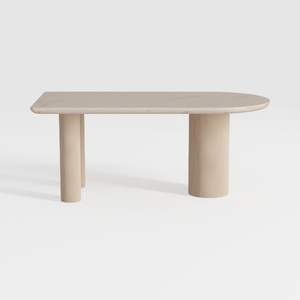

Allan 45 in. Oak Oval Wood Coffee Table with Pedes
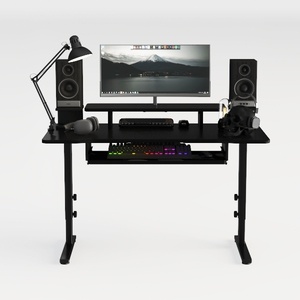
SIAGO Electric Standing Desk Adjustable - 48 x 24
Looking to design your dream home? Homestyler is your go-to online platform! With its user-friendly design tool, stunning 3D renderings, and a wealth of inspiring design projects and helpful video tutorials, transforming your space has never been easier or more enjoyable.
Progetta ora GRATIS
































