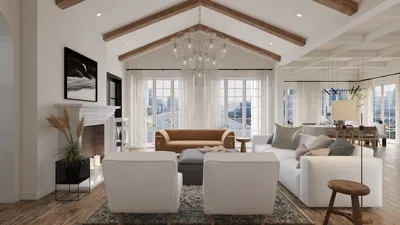


In an interesting experience, a client once requested their home office to be entirely decorated in what they termed "true gray"—covering everything from the walls to the desk and even the rug. When I discovered a bright sticky note on the monitor, it prompted a chuckle and a valuable lesson: gray truly shines when it embraces its uniqueness. Limited spaces can inspire vast creativity, and gray serves as an ideal neutral backdrop for that. Here, I’ll share five innovative gray office concepts I've implemented in real projects, along with actionable advice, budget considerations, and some candid trade-offs. For swift layout ideas, be sure to check out these Homestyler layout inspirations.
1. Combine a Warm Gray Palette with Wooden Elements
My approach begins with selecting two to three shades of gray—one warm for the walls, a cooler tone for textiles, and a darker hue for trims. Incorporating wooden accents like oak or walnut immediately adds warmth to the room, preventing it from feeling sterile. Although sourcing quality wood finishes may require additional investment, the result is a timeless, inviting workspace that ages gracefully.
save pin
2. Implement High-Contrast Accents to Avoid a Monochrome Effect
A space dominated by mid-gray can appear visually flat. To combat this, I introduce intentional contrasts: matte black drawer handles, a white desk lamp, or a striking piece of artwork. These elements are cost-effective yet reinforce the message that your choice of gray is a deliberate design decision. The key is to maintain balance; too many dark features can disrupt the tranquility, so I limit these accents to odd numbers.
save pin
3. Incorporate Diverse Textures: Concrete, Fabric, and Metal
Using various textures, such as concrete finishes, boucle fabrics, and brushed metals, is my secret for adding richness to gray. In one compact office, I utilized a raw concrete desktop along with a cozy boucle chair and a sleek brass lamp, creating a luxurious feel without exceeding the budget. I often utilize Homestyler’s 3D visualization features before finalizing materials, allowing clients to see how various textures translate into the natural light.
save pin
4. Optimize Natural Light and Reflective Surfaces
Gray thrives in natural light. By including reflective elements—such as a slender mirror, glass shelving, or a light-colored lacquered cabinet—you can enhance brightness while preventing the color scheme from becoming oppressive. However, glare on screens can be an issue, so I strategically position work areas away from direct light reflections and recommend adjustable blinds. This method is budget-friendly and typically involves just updating finishes instead of larger renovations.
save pin
5. Define Areas with Subdued Accent Colors
In my designs, I often use gray as the cohesive background, integrating muted accent colors like sage, dusty blue, or terracotta to delineate specific zones—for instance, a reading nook, storage area, or backdrop for video calls. This strategy allows for functional differentiation without vibrant colors overwhelming the space. For practical inspiration and case studies, check out these relevant layout examples.
save pin
Helpful Tips from My Studio
Select one primary gray and let the others play supportive roles—like lighting options, textures, and a single accent shade. It's beneficial to invest in adjustable lighting for the gray to appear warm in the evenings and neutral during daylight hours. For those on a tight budget, a fresh coat of paint is an excellent quick fix—providing high impact at a low cost, and it's reversible.
save pin
Frequently Asked Questions
Q1: What gray shades are best for small offices?
A1: Light warm grays can create an illusion of spaciousness and coziness; cool grays tend to feel more formal. I always test multiple swatches in various lighting conditions before making a final choice.
Q2: Can a gray office feel gloomy?
A2: It needn’t be gloomy if you incorporate various textures, wooden elements, and warm accents. With careful contrast and warmth, gray can create a serene and focused environment rather than a drab one.
Q3: How do I choose the right accent color with gray?
A3: Begin with the undertones of your primary gray—warmer undertones work well with earthy colors, while cooler ones pair nicely with blues and greens. I suggest holding fabric samples against the wall at different times of day to see how they complement the gray.
Q4: Is gray suitable for video call backgrounds?
A4: Certainly. A mid-gray backdrop offers a neutral appearance on camera, keeping the focus on you. Just be cautious of reflective surfaces behind you to avoid glare.
Q5: Can I mix different metals with a gray theme?
A5: Definitely. Combining brushed brass with matte black or chrome introduces depth to the design. It’s best to maintain one dominant metal family to keep clutter to a minimum.
Q6: How significant is lighting in a gray office?
A6: Extremely important. Incorporating ambient, task, and accent lighting allows gray to adapt in appearance depending on the activity. Dimmable fixtures provide the greatest versatility.
Q7: How can I create an ergonomic gray workspace?
A7: Adhere to fundamental ergonomic guidelines: place the monitor at eye level, keep feet flat on the ground, and use an adjustable chair. For comprehensive guidelines, refer to OSHA’s resources on ergonomics: https://www.osha.gov/ergonomics.
Q8: Is it possible to achieve these looks on a budget?
A8: Yes, indeed! Utilizing paint, peel-and-stick wallpaper, thrift store finds, and smart lighting alternatives can dramatically transform a space. Often, I refresh client offices for under a few hundred dollars by prioritizing paint and lighting upgrades.
save pin
Homestyler is your go-to online home design platform! With its user-friendly design tool, stunning 3D renderings, and an extensive collection of DIY video tutorials, you can easily create and visualize your dream spaces. Transform your home design journey today!
Zaprojektuj teraz za darmo
































