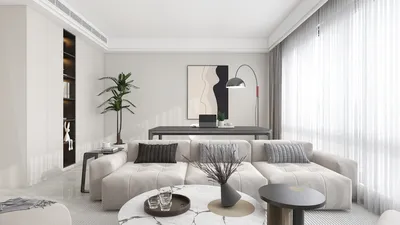


My approach to immersive room design involves a careful choreography of light, color, sound, and movement. These elements work in harmony to influence behavior and mood subtly, creating environments that are engaging without being overwhelming. When these components come together effectively, a living room transforms into a sanctuary, a workspace achieves a state of flow, and hospitality areas encourage effortless navigation. The focus is not on grandeur; rather, it aims for a cohesive experience. Utilizing tools like Homestyler can greatly assist in achieving this balance.
There are two essential truths that ground my design philosophy. The first is that the quality of light significantly affects comfort and health: According to WELL v2 standards, maintaining ambient light levels of 215–300 lux in most spaces and increasing task lighting to 300–500 lux can help alleviate visual strain. The second truth relates to spatial planning; Gensler’s Workplace Survey reveals that individuals who enjoy varied work environments report higher satisfaction and productivity compared to those confined to uniform layouts, highlighting the importance of thoughtfully zoned, multi-functional spaces.
Color serves as a powerful influencer of emotion. An overview of color psychology by Verywell Mind indicates that shades of blue can foster calm and concentration, whereas warmer tones like coral and terracotta exude energy and sociability—making them perfect for living and dining areas. I adjust saturation and value depending on the amount of natural light available and the color temperature at night, ensuring that skin tones appear flattering and materials look true in relaxation spaces (2700–3000K) and task-oriented environments (3500–4000K). For optimum acoustic comfort, my goal for living and work areas is to maintain reverberation times around 0.4–0.6 seconds by employing high NRC textiles and strategic acoustical diffusion techniques that preserve speech clarity without echo.
**Principles of Immersion**
Immersion occurs when the intent of the space aligns with how users interact with it. I categorize this into five layers: visual rhythm (proportions, sightlines), luminance hierarchy (ambient, task, accent), color narrative (base, bridge, accent), material character (texture, thermal properties, sustainability), and acoustic envelope (absorption vs. reflection). Each layer’s role answers the question: What do I want people to experience in this space?
**Lighting That Guides Without Glare**
Ambient lighting creates the foundational brightness; task lighting clarifies work areas; accent lighting adds depth. I adhere to IES recommendations, ensuring that the luminance contrast ratio stays below 10:1 between task and surrounding spaces, thereby controlling glare through shielded optics and matte finishes. In living areas, 2700K LEDs combined with adjustable lighting foster a warm, intimate atmosphere in the evening, while wall washing techniques can enhance the perceived dimensions of a room. For kitchen islands, I prefer pendants in the 3000–3500K range with focused beams to maintain visual sightlines and define social gathering spots. In dedicated workspace nooks, a mix of 3500–4000K lighting at 300–500 lux supports reading and screen tasks without creating unwanted glare on shiny surfaces.
For more insights on daylight and circadian alignment, the WELL Building Standard (v2) provides practical guidelines and strategies for managing light exposure throughout the day, ensuring that comfort and health are in sync.
**Color Psychology With Purpose**
I intentionally use color to cue specific behaviors. Cool neutrals and subtle blues help elongate spaces visually while promoting a sustained focus; in contrast, warm neutrals like oat and clay cultivate conversation and soften harsh angles. In smaller areas, a low-saturation color scheme complemented by a singular high-chroma element can direct attention without overcrowding the space. The choice of trim and ceiling colors is vital; a slightly warmer ceiling hue than the walls can create a more intimate feel in tall rooms, while a cooler ceiling shade can make lower ceilings feel more open. Balancing undertones with flooring choices, such as pairing warm woods with cool walls, often results in a refreshed visual appearance, while cool stone juxtaposed with warm walls can provide a grounded aesthetics.
**Acoustics: The Invisible Comfort**
Controlling reverberation can significantly impact the feel of a room. In living areas, the strategic use of area rugs, upholstered furniture, and bookcases provides a blend of absorption and diffusion. In bedrooms, heavy drapes and upholstered headboards help mitigate early sound reflections. For shared home offices, incorporating soft dividers, ceiling baffles, and fabric pin-boards can maintain reverberation times between 0.4 and 0.6 seconds while ensuring speech privacy is adequate. Utilizing materials with a high NRC rating of 0.70 or more on high-traffic surfaces—such as panels, rugs, and felt—can yield noticeable improvements.
**Human Factors and Flow**
Ergonomics plays a critical role in how our bodies interact with furniture. I take care to respect essential clearances: 30–36 inches for walkways, 42–48 inches around dining tables, and a minimum of 24 inches for knee space at desks. Screens should ideally be positioned at eye level, promoting a 15–20° downward gaze to minimize neck strain. Task surfaces benefit from neutral colors and low gloss finishes to reduce visual fatigue. In multi-functional spaces, creating distinct zones—such as quiet focus areas, social seating arrangements, and adaptable floor space—is essential. To model layouts effectively, I utilize a room design visualization tool to pre-visualize sightlines, circulation patterns, and focal points before any tangible changes are made.
**Material Selection and Sustainability**
The selection of materials establishes the overall tone, influencing tactile experiences and ambient sound. I focus on sourcing low-VOC finishes, FSC-certified woods, and durable textiles with high rub counts to ensure longevity. In wet areas or kitchens, choosing non-porous surfaces simplifies cleaning; in living spaces, textured weavings and matte ceramics provide a sense of quiet. Opting for colorfast, easy-to-clean fabrics ensures resilience for family life. Incorporating recycled-content carpets and modular rugs encourages sustainability, while lime-based plasters improve acoustic damping and soften reflectance.
**Spatial Ratios and Visual Balance**
A well-thought-out proportion scheme is crucial for comfort. I may apply the 60–30–10 color palette guideline sparingly, mostly as an initial reference. Sightlines should direct focus purposefully towards a framed view, a textured surface, or a group of pendant lights. Anchor pieces, such as sofas or dining tables, set the rhythm, while secondary elements should complement rather than compete. In narrower spaces, vertical storage solutions can be more effective, and keeping larger items closer to the ground can enhance visual openness. Floating furniture allows for a breathing space; maintaining a gap of 10–18 inches behind sofas against walls can prevent dead zones and improve cable routing.
**2024–2025 Trends That Actually Age Well**
Trends that center around human-centric lighting, biophilic elements, and soft-tech integration are emerging quietly but significantly. Dim-to-warm LED lights help maintain circadian harmony; the incorporation of plants and natural materials moves beyond mere trends to become essential for stress relief. Low-profile acoustic panels and flexible dividers transform rooms from single-purpose to multi-functional. Subdued color palettes—think muted blues, soft greens, and rich browns—pair beautifully with textured plaster and aged metals, providing depth that endures beyond fleeting seasonal changes.
**Room-by-Room Strategies**
Create layers in each room by implementing wall washers for spatial width, table lamps for intimacy, and a principal light fixture to anchor identity. Arrange conversational seating within an 8-10 foot radius to encourage natural dialogue. Using warm neutrals with a single vibrant piece of artwork can draw attention and establish a hierarchy within the space.
Prioritize dark tones and sound absorption. Utilize 2700K bedside lamps that cast light forward to avoid glare. Consider a palette skewed toward cool, low-saturation colors to promote relaxation. A rug that covers 70-80% of the bed footprint can help stabilize both sound and movement.
Focus on task lighting set around 3500–4000K at 300–500 lux intensity, utilize matte monitors, and incorporate adjustable seating. A lower contrast background can ease screen glare. Adding plants can offer visual breaks and act as minimal acoustic dampers.
Clearly distinguish between work and social areas. Install high CRI task lighting over prep zones and position pendants at a height of 28–34 inches above islands to mitigate glare. Warm accents such as wood stools or terracotta glazes harmonize well with stainless steel and stone surfaces.
**Execution: From Concept to Reality**
Begin with clarity—consider the specific moments this room is meant to host. Identify behavior zones, establish a light hierarchy, curate a three-part color narrative, and select materials that complement the desired acoustic environment. Utilize a room design visualization tool to prototype layouts, ensuring clearances and focal balance are met prior to implementation. Lastly, install lighting after verifying the reflective qualities of other finishes, and adjust dimming functions and color temperatures to adapt to the time of day, ensuring the area remains calming and flexible.
**FAQ**
Q1: What level of light is suitable for reading and using a computer?
A: Aim to maintain 300–500 lux at the task surface with a color temperature of 3500–4000K. Ambient lighting should remain at 200–300 lux to prevent harsh contrasts.
Q2: What color scheme offers relaxation without appearing dull?
A: Combine cool, low-saturation hues (like muted blues/greens) with warm accents (such as oak or brass) to create a calm atmosphere enriched with tactile warmth. Limit bright colors to a single focal piece.
Q3: How can I minimize echo in a small living room?
A: Incorporate soft finishes: a large area rug, upholstered furniture, curtains, and a bookshelf can help. Target a reverberation time around 0.4–0.6 seconds with materials rated NRC 0.70+ on key surfaces.
Q4: What is the optimal clearance for walkways around furniture?
A: Aim for clearances of 30–36 inches for general movement and 42–48 inches around dining tables for easy accessibility.
Q5: Which color temperature is most effective for evening relaxation?
A: Dimmable lighting in the range of 2700–3000K retains warmth and aids in winding down while complementing skin tones.
Q6: What can I do to make a narrow room seem larger?
A: Use wall washing techniques to illuminate vertical surfaces, keep oversized pieces lower to the ground, and float furniture to create negative space along edges. Opt for lighter wall colors with a darker floor for a sense of stability.
Q7: How does proper ergonomics improve comfort in a home office?
A: Position screens at eye level with a downward tilt of 15–20°, choose a neutral desk surface, use an adjustable chair that offers lumbar support, and direct task lighting away from reflective surfaces.
Q8: How can I designate zones within a multi-purpose room?
A: Clearly define areas for quiet focus, social seating, and versatile floor space. Utilize lighting temperature variations and acoustic treatments to signal transitions. Prototyping layouts with a visualization tool can help confirm clearances and sightlines.
Q9: Are dim-to-warm LED lights a worthwhile investment?
A: Absolutely. They provide cooler light for daytime activities and warmer tones in the evening, aligning with circadian rhythms while enhancing the visual atmosphere.
Q10: What materials contribute positively to sustainability without compromising style?
A: Prioritize low-VOC finishes, FSC-certified timber, recycled-content carpets, and durable textiles with substantial rub counts. Matte ceramics and lime-based plasters add both texture and assistance in sound dampening.

If you're looking to transform your home effortlessly, Homestyler is the ideal online design platform. With an easy-to-use design tool, stunning 3D renderings, and a wealth of inspiring design projects and video tutorials, you can unlock your creativity and bring your vision to life in no time!
Progetta ora GRATIS
































