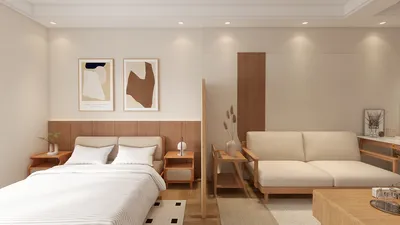


A space doesn't have to be large to exude a sense of sanctity. Whether in a cozy apartment or a petite home, a thoughtfully designed prayer corner can offer the same spiritual resonance as a dedicated room. By concentrating on elements like proportion, sightlines, lighting, and materials, one can ensure that the ritual experience is seamless and the mind remains tranquil. Evidence-based insights are crucial; for instance, the WELL v2 standard suggests maintaining ambient light levels between 300–500 lux for general activities to promote circadian rhythm stability. Similarly, reading areas benefit from task lighting that can reach 500 lux, provided it avoids glare. Research by Steelcase indicates that maintaining visual order and uncluttered surfaces can lower cognitive load, helping individuals achieve a focused state quicker. These foundational principles are well-suited for designing compact prayer spaces, making tools like Homestyler invaluable for visualizing layouts.
Acoustic quality and ergonomic design are equally critical considerations. The Illuminating Engineering Society (IES) emphasizes the importance of managing luminance contrast and glare to minimize visual fatigue, particularly during early morning or late evening prayers. Studies from Gensler demonstrate that decreased noise distractions correspond with enhanced focus; in smaller living spaces, soft finishes and door seals can significantly diminish reverberation and mask unwanted household noises. This harmonious blend of illumination, silence, and tactile comfort transforms compact spaces into personal sanctuaries that accommodate daily prayer practices seamlessly.
Establishing Intent and Movement
Every prayer space should embody a clear purpose, allowing for transitions such as wudu, alignment to the qibla, and designated spots for the Quran and prayer beads, along with storage for prayer mats. I prioritize a straightforward circulation pathway: entering, storing, preparing, praying, and reflecting. Even within a mere 1 to 2 square meters, a clean route from the entry point to the prayer mat eliminates micro-frictions—free from visual distractions or tripping hazards within the main sightline.
Qibla Orientation and Spatial Ratios
Commence by accurately identifying the qibla using a reliable compass app or a wall marker. For smaller rooms, I recommend a mat-to-wall ratio of 2:3, where the mat serves as the focal point while the margins provide sufficient space for movement during prayer. Ensure a clearance of at least 600–800 mm in front for sujood to avoid any contact with walls. If the area also functions as a reading nook, consider storing a low stool or floor cushion off-axis to maintain an unobstructed sacred sightline.
Illumination to Enhance Rituals
During dawn prayers, when ambient lighting is minimal, using a warm-neutral lamp set to 300–400 lux helps soften the stark contrast with darkness, enhancing scripture readability. I prefer color temperatures between 2700-3000K for evening serenity and 3000-3500K for daytime clarity. It's essential to shield the light source from direct glare—utilizing diffusers, shades, and wall-washing techniques can be particularly effective. Keep luminance ratios gentle and avoid overly bright features that create harsh hotspots, distracting from the mihrab or focal areas.
Understanding Color Psychology and Material Tranquility
Color choices profoundly affect psychological states. According to insights from Verywell Mind, cool greens and soft blues can evoke tranquility and balance, while subtle neutral tones help minimize arousal and visual chaos. I typically anchor my color palette with natural fiber rugs (such as jute or wool) and breathable cotton fabrics. Incorporating low-VOC finishes and wood with matte textures provides an authentic and grounded feel to the space. Should you elect to add a niche for scripture storage, consider textured plaster or wooden slat accents to maintain rhythm without overcrowding the visual space.
Prioritizing Acoustic Comfort in Compact Spaces
Silence acts as a powerful amplifier for spirituality. I implement various sound-absorption techniques, including a thick rug, a fabric wall panel behind the prayer area, and heavy curtains if the musalla shares its space. Utilizing door sweeps and weatherstripping can effectively reduce corridor noise. In multifunctional rooms, a compact white-noise generator placed outside the prayer zone can obscure sporadic sounds without interfering with recitation.
Discreet Storage Solutions
Incorporating a lid-top bench or a floating shelf allows for easy access to prayer mats, Qurans, and prayer beads while keeping them hidden from sight. I aim to design storage that is flush with the wall, avoiding shiny hardware. Open shelves can feature a slight lip to secure books, with the total visible items limited to three—mat, book, and beads—to uphold visual harmony. Utilizing concealed wiring also maintains a tidy appearance.
Considering Human Factors and Ergonomics
Respecting joint mobility during sujood and tashahhud is vital. Ensure a lateral clearance of 250–300 mm around the mat for unimpeded movement of knees and elbows. When seated for reading, a seat height between 420–450 mm is suitable for most adults, while a floor cushion with lumbar support is effective in limited spaces. The surface for the Quran should be positioned at 650–700 mm when standing or 350–400 mm when seated, angled to lessen neck strain.
Effective Small Space Layouts
Two ideal micro-layouts include: the Linear Niche (with the mat centered beneath storage options, illuminated by a wall lamp) and the Corner Embrace (with the mat angled toward the qibla in a corner, complemented by a floating shelf and soft drapery). If you wish to visualize proportions before finalizing your design, utilizing a room layout simulation tool like Homestyler can help accurately assess clearances around the mat and optimize storage arrangements effortlessly.
Incorporating Personal Touches and Minimal Decor
A single piece of calligraphy, a small tasbih bowl, or a subtle geometric pattern on the rug suffices for decoration. I avoid lustrous frames and overly ornate motifs, as they can draw unnecessary attention. Ensure decorations stay below eye level when seated, allowing the vision to remain calm during dhikr.
Managing Daylight, Privacy, and Glare
If the musalla is near a window, opt for sheer curtains to diffuse light, complemented by a blackout layer for privacy during evening prayers. Position the mat to evade direct sunlight, as shifting light can interrupt concentration. For apartments facing bustling streets, consider a translucent film to maintain privacy while allowing natural light to enter.
Emphasizing Sustainability in Sacred Spaces
Select durable rugs, responsibly sourced wood (FSC-certified), and low-VOC paints for a healthier environment. Utilizing dimmable LED lighting with a warm spectrum conserves energy while enhancing evening rituals. Reuse existing furnishings whenever feasible; such restraint contributes to sustainability and supports spiritual consistency.
Establishing a Maintenance Routine
It’s much easier to maintain serenity than to restore it. I schedule a weekly cleaning routine that includes dusting shelves and niches, airing out the mat, checking the lamp shade for dust accumulation, and decluttering any stray items. A compact linen box for misbaha and tissues helps keep things tidy and purposeful.
• The WELL v2 lighting guidelines focus on optimal illuminance levels and glare management to protect both vision and circadian health.
• Guidance from IES on luminance balance informs my choices to prioritize diffused, shielded lighting over glare from point sources.
• Insights from Steelcase link visual organization with reduced cognitive load; limiting visible objects in one’s prayer sightline enhances focus.
Frequently Asked Questions
Q1: What is the recommended illuminance for a compact prayer space?
A1: Target ambient lighting at 300–400 lux, paired with task lighting of 400–500 lux for reading, using diffused and glare-controlled fixtures to enhance visual comfort.
Q2: Which color temperatures create a calming atmosphere for evening prayers?
A2: Color temperatures between 2700–3000K promote relaxation and reduce alertness close to bedtime, while 3000–3500K caters to daytime focus without appearing overly clinical.
Q3: How should I align the qibla in an unusual room layout?
A3: Employ a reliable compass app, subtly mark the axis on the wall or floor, and angle the mat accordingly; keep wall decor aligned to reinforce orientation.
Q4: What small-space layout is ideal for a studio apartment?
A4: The Corner Embrace layout is effective—position the mat at an angle toward the qibla in a low-traffic corner, with a floating shelf for storage, and a wall-washing lamp for gentle illumination.
Q5: How can I reduce noise without undergoing construction?
A5: Layer soft materials such as a thick rug, a fabric wall panel, and heavy curtains. Adding door sweeps and considering a subtle white-noise machine outside the prayer area can help mask intermittent sounds.
Q6: What materials best suit a compact musalla for health considerations?
A6: Selecting low-VOC paints, natural fiber rugs, solid wood with matte finishes, and breathable fabrics enhances air quality and comfort.
Q7: What is the necessary clearance around the prayer mat?
A7: Maintain at least a 250–300 mm lateral clearance and 600–800 mm front clearance to accommodate sujood and seated positions without obstruction from walls or furniture.
Q8: How can I minimize glare while reading?
A8: Opt for fixtures that diffuse light, steer clear of bare bulbs, and use wall-washing or shaded lamps; ensure a soothing luminance ratio and avoid shiny surfaces near your reading area.
Q9: Is it possible to include storage without creating a sense of visual clutter?
A9: Absolutely—incorporate options such as a lid-top bench, recessed niche, or floating shelves with minimal hardware. Limiting visible items to three within the prayer sightline helps maintain calmness.
Q10: What if the only suitable location is close to a window?
A10: Utilize sheer curtains to diffuse incoming light and add a blackout layer for privacy. Position the mat to avoid direct sunlight and reflective glare on reading surfaces.
Q11: Are brightly lit feature lights appropriate in prayer areas?
A11: It's best to avoid high-contrast feature lighting; such sources create distracting hotspots. Instead, opt for layered, adjustable lighting with shielded elements.
Q12: How can I maintain the space for prolonged serenity?
A12: Establish a weekly maintenance routine: dust surfaces, air the mat, organize storage, and eliminate unnecessary items. Consistent, small upkeep keeps your prayer area clear and purposeful.

Oak Nursery Shelves, Natural Wood Nursery Floating

TREATLIFE HOME Solid Wood Computer Desk with Drawe
Homestyler is your go-to online home design platform! With its user-friendly design tool, stunning 3D rendering, and a wealth of inspiring design projects and video tutorials, you can effortlessly turn your home design dreams into reality. Start creating today!
Projete agora para LIVRE
































