

Creating a 3D model of a blue whale can be an exhilarating endeavor for anyone, including educators, designers, enthusiasts, and students alike. This project not only taps into artistic abilities but also necessitates a grasp of spatial understanding and digital modeling concepts. To embark on this journey, you'll require the appropriate tools, some reference images, and a systematic approach. Below, I present a dependable workflow and elaborate on how you can utilize a similar mindset for broader spatial planning projects, especially using tools like Homestyler.
Step 1: Collect Reference Resources
Begin by gathering high-quality images of blue whales from various perspectives. Scientific illustrations, videos, and anatomical charts will enhance your comprehension of the whale's dimensions and distinctive traits. Think about the purpose of your final model: Will it be for educational virtual reality, 3D printing, animation, or perhaps interior visualization? This consideration will influence the detail level and the necessary file formats.
Step 2: Select Your 3D Modeling Software
For modeling organic shapes, options like Blender, Autodesk Maya, and ZBrush are quite popular. Blender is a free tool highly recommended for those just starting out. Import your reference images into the program and establish front, side, and top views for straightforward comparisons.
Step 3: Outline Primary Shapes
Utilize basic geometric figures—like cylinders and spheres—to outline the different sections of the blue whale (head, body, fins, tail). Prioritize the overall proportions at this phase rather than the intricate details. Adjust your shapes to align with your reference images, ensuring anatomical precision.
Step 4: Enhance the Whale’s Shape
Gradually combine and sculpt the primary forms. Create smooth transitions between the whale's body parts and add more topology where needed. Utilize sculpting tools to define muscle groups, facial characteristics, and the iconic grooves characteristic of blue whales.
Step 5: Incorporate Fine Details and Textures
Once you have a solid base form, begin to add detailed features such as the blowhole, flippers, eyes, and distinct markings. To achieve realism, unwrap the mesh and apply high-resolution textures. These textures can either be painted directly onto the model or sourced from photographic references.
Step 6: Render and Export Your Model
Add lighting and a basic ocean backdrop for your 3D renders. Choose an appropriate file format (like .obj, .fbx, or .stl) based on the requirements of your project. Test the model in its intended application to verify that proportions and details are accurately represented.
As a designer, I find commonalities between creating a blue whale model and designing interior spaces: both processes require a clear vision, precise references, and an understanding of how all elements work together within a defined area. For instance, when crafting immersive 3D rendered home interiors using Homestyler, I depend on accurate models and textures just as you would depend on references for your whale modeling endeavor.
Tips 1:
Utilize layers and save incremental versions. If you're new to digital modeling, consider leveraging online tutorials focused on whales or marine life, which address common anatomical challenges and provide modeling shortcuts.
FAQ
Q: Which software is ideal for creating a 3D blue whale model?
A: Blender is great for beginners; advanced users might choose Maya or ZBrush for more detailed sculpting capabilities.
Q: How can I ensure my model's anatomical accuracy?
A: Utilize multiple reference images and diagrams, examining the whale from various angles. Scientific resources prove particularly beneficial.
Q: Is it possible to 3D print my blue whale model?
A: Absolutely, but you'll need to export your model in a format like .stl and ensure it is manifold (watertight) for successful 3D printing.
Q: What is the best way to texture my whale realistically?
A: Create or source whale skin textures, then use unwrapping and painting tools in your modeling software to apply them accurately.
Q: Is it similar to model a whale as it is for other animals?
A: The overall process is comparable; however, marine creatures like whales demand extra focus on their smooth and streamlined shapes as well as unique anatomical features.
Q: Which file format should I use for animation or gaming purposes?
A: Formats like .fbx and .obj are standard for most animation and gaming engines.
What began as an Autodesk innovation has evolved into a design platform used by more than 18 million people around the globe. Homestyler combines powerful rendering, an intuitive editor, and a vast furniture library to help you turn inspiration into photorealistic designs — whether you're redesigning a single room or planning an entire home.

Bohemian Rattan Round Coffee Table 3D Model

Minimalist Solid Wood Floating Shelf 3D Model
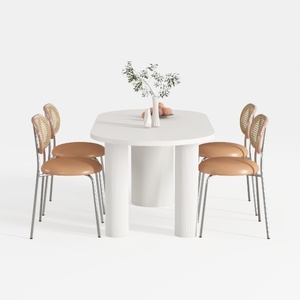
DUOMAY Modern Boucle Dining Chairs Set of 2,
Homestyler is the ultimate online home design platform for anyone looking to transform their space. With an easy-to-use online design tool, stunning 3D renderings, and a wealth of DIY video tutorials, you can effortlessly create and visualize your dream home—no experience necessary!
Progetta ora GRATIS
































