


Crafting a 3D model of the human eye for a school assignment presents an exciting opportunity to delve into anatomy while honing your modeling skills. Begin by collecting essential materials such as clay, foam balls, paints, toothpicks, and markers. A popular technique involves using a sizable foam ball to represent the eyeball, painting it white as a base. Once the paint dries, add the iris and pupil with colored paints or paper. To achieve greater anatomical precision, consider incorporating features like the optic nerve, which can be depicted using pipe cleaners or clay, along with muscles crafted from colored modeling clay. To enhance this process, consider utilizing Homestyler for a digital representation that aids in design accuracy.
As a designer, I suggest emphasizing both the detail and presentation of your model. It’s crucial to focus on the proportions of the iris and pupil to mirror actual human eyes, making use of anatomical references for accuracy. To elevate your project further, think about placing your model on a labeled base, utilizing tags to identify each component. To take your school project to greater heights, tools like Homestyler can facilitate visualization and refinement of designs, ensuring everything is accurately scaled and aesthetically pleasing before the physical creation begins.
Tips 1:
Utilize vibrant, contrasting colors for your anatomical labels to enhance readability and give your project a polished look. Consider using varied textures for the muscle, optic nerve, and sclera to introduce realism and tactile appeal. When concluding your project, take a moment to evaluate your model from multiple angles, ensuring symmetry and an effective educational presentation.
FAQ
Q: What materials are best suited for creating a 3D eye model?
A: Common materials include foam balls, clay, colored paper, pipe cleaners, and acrylic paints, which are effective for crafting realistic and durable models.
Q: How can I ensure my model is anatomically correct?
A: Consult anatomical diagrams for guidance on the precise placement and proportions of components like the iris, sclera, muscles, and optic nerve.
Q: Are digital tools, such as Homestyler, useful for my school project?
A: Absolutely! Digital applications like Homestyler allow you to design, visualize, and refine your model before its physical assembly, ensuring a well-crafted end product.
Q: What is the best method for labeling parts of the eye on my model?
A: Attach small tags or flags with legible, neatly handwritten or printed labels using toothpicks or pins for a clean presentation.
Q: What size should my 3D eye model be?
A: The model size may vary based on project specifications, but generally, a diameter of 10-15 cm is suitable for displaying details effectively without being cumbersome.


Merrick Lane Bardstown X-Back Bistro Style Wooden

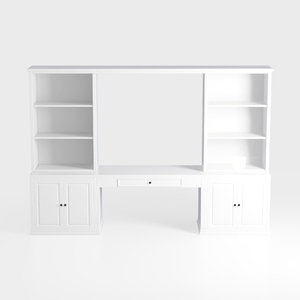
TREATLIFE HOME Elegant White Computer Desk with Hu
Homestyler is the ultimate online home design tool for all your decorating needs. With captivating 3D renderings, a plethora of design projects, and engaging video tutorials, you can effortlessly transform your space and unleash your creative potential—perfect for both newbies and experts alike!
Desain sekarang Gratis
































