

Accessing a 3D representation of your skull has become significantly easier due to the innovations in medical imaging and 3D technologies. If you're looking to obtain a personal model, follow these essential steps: 1. **Medical Imaging**: Begin by scheduling a CT scan at a local hospital or imaging center. This procedure provides intricate cross-sectional images of your skull. Be sure that your physician recommends the scan for valid medical reasons. 2. **Request DICOM Files**: Once the scan is complete, you should ask the facility for the DICOM (Digital Imaging and Communications in Medicine) files. These files encompass the raw imaging data needed to create a 3D model. 3. **Convert Images to 3D Model**: Employ specialized software such as 3D Slicer or OsiriX (for macOS) to transform these DICOM files into a usable 3D mesh (.STL or .OBJ format). These tools offer guided processes for segmentation and 3D rendering. 4. **Enhancement and Export**: Polish your 3D model to remove any artifacts and export it in a format suitable for 3D printing or visualization. 5. **3D Printing/Visualization**: Send your finalized model to a local or online 3D printing service, or utilize visualization software for educational or creative purposes. As a designer, I frequently suggest that the methods of spatial modeling and digital reconstruction can not only improve medical applications but also architectural practices. In the realm of interior design, digital 3D models, whether representing anatomical features or interior spaces, provide accuracy and facilitate smooth visualization. Platforms like Homestyler exemplify this concept for spatial planning, converting detailed images into interactive models that spur creativity and design. Thus, while the journey of rendering your skull in 3D starts with medical data, the technique closely resembles the digital design process in home modeling: scan, convert, enhance, and visualize.
Tips 1:
Always ensure that privacy and ethical considerations are addressed before sharing or printing your medical data. If you're planning to use your 3D skull model for prosthetic, educational, or artistic reasons, it's important to communicate your intentions with both the medical provider and the 3D printing service to guarantee appropriate handling.
FAQ
Q: Is it legal for me to request copies of my own CT or MRI scans?
A: Yes, as a patient, you are entitled to obtain copies of your medical images for personal use. Q: Is it possible to create a 3D model of my skull without visiting a hospital?
A: Not exactly—a clinical scan is necessary for accurate results. Non-medical methods, such as photogrammetry, do not provide the detailed internal structures required. Q: Which software should I use to convert DICOM files into 3D models?
A: Popular free programs like 3D Slicer or OsiriX are widely used for processing medical images. Q: Is it safe to produce 3D prints of skull models?
A: Yes, provided you use non-biological and non-sensitive data along with trustworthy 3D printing services. Q: In what ways are 3D skull models utilized beyond the medical field?
A: They find applications in education, forensic analysis, prosthetic development, and even in design visualization, similar to how digital home models created with tools like Homestyler enhance architectural design.
Originally incubated at Autodesk, Homestyler has grown into one of the most widely adopted home design platforms in the world, now trusted by over 18 million users. Whether you're a homeowner exploring ideas or a professional designer delivering client-ready renders, Homestyler brings industry-leading 3D technology to your fingertips — no experience required.


Minimalist Off White Fluted Storage TV Stand 3D Model
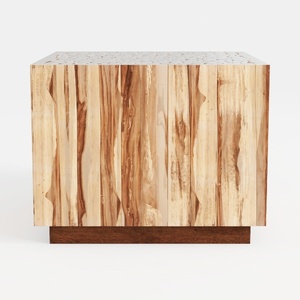
Minimalist Solid Wood Accent Cabinet with Textured Top 3D Model

Minimalist Solid Oak Fluted TV Stand with Black Metal Legs 3D Model
Homestyler is your go-to online home design platform! With its user-friendly design tool, stunning 3D renderings, and a treasure trove of DIY video tutorials, you can easily transform your interior spaces. Unleash your creativity and make your design dreams a reality today!
Design Now for FREE
































