


The project of creating a 3D model of a chlorine atom offers an excellent hands-on experience for students, teachers, and anyone passionate about visualizing atomic structures. Chlorine, with an atomic number of 17, features a nucleus composed of protons and neutrons, while electrons orbit in various energy levels. Below, you’ll find a comprehensive guide to constructing a 3D model of a chlorine atom, including tips on materials and design strategies:
For those pursuing digital modeling, utilizing 3D design software can enhance your ability to illustrate electron orbitals more authentically. As a design enthusiast, I'd advise maintaining balance and proportionality throughout the model—proper spatial arrangement and effective color-coding can significantly enrich both comprehension and visual attractiveness. If you’re looking to digitally plan scientific displays for classrooms or exhibitions, exploring tools like Homestyler can be particularly beneficial for designing educational models in tailored environments.
Tips 1:
When crafting your chlorine atom model, be mindful of the size ratios between the nucleus and electron shells; disproportionate sizes may compromise scientific accuracy. For a striking visual presentation, evenly distribute electrons and employ vibrant colors for different particle types. If collaborating with others, consider assigning specific assembly tasks for efficiency and to foster creative contributions.
FAQ
Q: What are the primary benefits of constructing a 3D chlorine atom model?
A: It enables a clearer visualization and comprehension of atomic structure, particularly how electrons are arranged around the nucleus. Q: How many electrons does a chlorine atom contain?
A: A neutral chlorine atom consists of 17 electrons. Q: Which materials are most effective for representing protons, neutrons, and electrons?
A: Utilizing colored beads, clay, or styrofoam balls is ideal—ensure you color-code each particle type for enhanced clarity. Q: Is it possible to create a digital 3D model of a chlorine atom?
A: Absolutely, you can use 3D design software or platforms to create and customize atomic models in a digital format. Q: What steps can I take to ensure my model maintains scientific accuracy?
A: Verify the counts of protons, neutrons, and electrons, and make sure to space the electron shells uniformly around the nucleus for an accurate representation.


Minimalist White Solid Wood Office Desk with Swivel Chair 3D Model
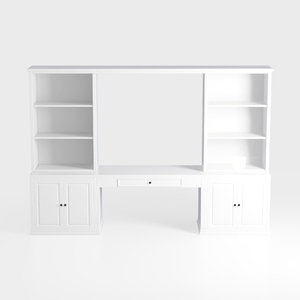
Minimalist White Solid Wood Home Office Desk With Bookcase Cabinets 3D Model
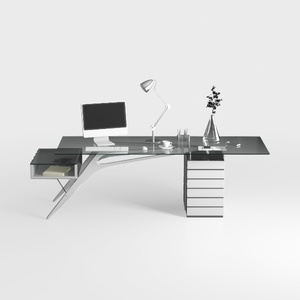
Modern Glass Top Metal Frame Office Desk 3D Model
Looking to transform your space? Homestyler is the ultimate online home design platform that simplifies the design process. With its user-friendly design tool, stunning 3D renderings, inspiring design projects, and informative video tutorials, you can effortlessly create your dream home—no experience necessary!
Design Now for FREE
































