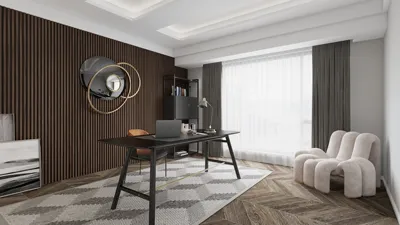


I still chuckle at the time a client challenged me to fit a standing desk, a sofa, a bookshelf, and a treadmill into a compact 6㎡ nook — all while ensuring it looked great on Instagram. This design obstacle highlighted for me how limitations can ignite creativity, revealing that with a few clever strategies, any office can be turned into a productive and welcoming workspace. For optimal results, I typically begin by outlining compact office layouts to define functional zones before making any purchases.
1. Define zones using furniture instead of walls
I enjoy utilizing slender bookcases or low cabinets to categorize work, meeting, and relaxation areas within a small office. The benefit of this approach is its adaptability: as team sizes change, you can easily rearrange the space, making it a cost-effective solution. However, the key is selecting furniture pieces that are appropriately sized to maintain an open feel in the area.
save pin
2. Embrace vertical storage solutions
Given the precious nature of floor space, I often look upward. Using tall, slim shelving units, pegboards, and wall-mounted cabinets can keep desks organized while injecting personality into the workspace. This approach is not only budget-friendly but also practical, although you might occasionally need a ladder and a clear labeling system to prevent the upper shelves from becoming cluttered.
save pin
3. Opt for multi-functional furniture
One of my preferred strategies is incorporating a foldable meeting table that can also function as a standing desk — this design choice not only saved a client money but also relieved them of a common headache. While some initial planning is necessary to ensure accurate measurements, the return on investment for compact spaces is significant. I often create quick 3D models with tools like Homestyler to help clients visualize how furniture will fit before making a final decision.
save pin
4. Use light, mirrors, and consistent flooring to enhance space
Maximizing natural light and utilizing a uniform flooring option can make a small office appear larger than it actually is. Strategically placed mirrors reflecting natural light, along with cleverly zoning rugs, are both affordable and effective tricks. However, I remain cautious of glare — testing screen placements to avoid causing eye strain is always a priority.
save pin
5. Technology-driven designs for improved focus
I focus on how individuals actually work: considering monitor size, cable management, and soundproofing for meetings. Incorporating power strips beneath desks and selecting acoustic panels can drastically boost productivity. For projects with tight timeframes, I sometimes leverage AI-driven layout recommendations, such as those from Homestyler, for swift iterations.
save pin
Frequently Asked Questions
Q: What is the ideal size for a compact office?
A: There isn’t a one-size-fits-all answer, but many efficient single-person offices start around 4–6㎡. Strategic design choices like vertical storage and multi-purpose furniture can make even the smallest spaces functional.
Q: How can I prevent a small office from feeling cramped?
A: Employ a consistent flooring option, maximize natural light, and maintain clear sight lines with low-profile furniture. Mirrors and a limited color scheme help to create an illusion of a larger space.
Q: Are standing desks suitable for small offices?
A: Absolutely — particularly foldable or height-adjustable models. They offer versatility for various tasks and can also serve as meeting surfaces in tight areas.
Q: How much should I allocate for a compact office makeover?
A: A modest update (painting, lighting, storage) can cost anywhere from a few hundred to a couple of thousand dollars, depending on material choices. Prioritizing ergonomic investments over decorative elements is advisable.
Q: What type of lighting promotes productivity?
A: Layering ambient, task, and accent lighting is key. Choosing LED fixtures with adjustable color temperatures can help reduce eye strain and accommodate various tasks.
Q: Can I resolve acoustic problems in a tiny office?
A: Definitely — soft furnishings, wall panels, and ceiling baffles can absorb noise effectively without breaking the bank. Additionally, positioning desks away from reflective surfaces can diminish echoes.
Q: Where can I find trustworthy ergonomic design guidelines?
A: The American Society of Interior Designers (ASID) and similar organizations provide published guidance on ergonomics and spatial planning; their resources are excellent starting points (source: https://www.asid.org/).
Q: How long does a redesign of a small office typically take?
A: A straightforward reconfiguration may only require a weekend if materials are on hand; however, more extensive renovations, particularly those involving custom woodworking, can take between 2 to 6 weeks. I always account for potential delays due to delivery or unexpected changes.
Homestyler is your go-to online platform for home design. With an easy-to-use design tool, stunning 3D renderings, and a treasure trove of DIY video tutorials, you can effortlessly create and visualize your dream spaces. Transform your home design journey today!
지금 무료로 디자인하세요
































