

Conclusion
Serene Japanese and Scandinavian Minimalism both champion simplicity and tranquility but diverge significantly in their cultural aesthetics and material warmth. The former leans toward muted, natural hues and subtle textures rooted in Japanese tradition, while the latter embraces brighter palettes and functional forms with mid-century influences. Choosing between them depends on your affinity for cultural nuance versus contemporary comfort, as well as how you prioritize natural materials and spatial flow.
Style A Deep Dive
The Serene Japanese style is defined by its restrained, almost meditative use of space and elements. It favors natural tones such as soft beiges, muted grays, and warm wood, focusing on craftsmanship and organic materials. Typical features include tatami mats, shoji screens, low-profile furniture, and minimalist décor that emphasizes empty space as much as objects. This style suits those who appreciate cultural authenticity and seek a calm retreat within their living environment. Its limitations include less emphasis on color variety and potential challenges in adapting to smaller urban spaces due to traditional elements.
Style B Deep Dive
Scandinavian Minimalism embraces clarity and functionality, characterized by bright whites punctuated with pastel colors and natural wood finishes. It highlights simplicity with a focus on ergonomic furniture and efficient layouts optimized for compact living. The style appeals in its adaptability, ease of integration with modern decor, and a warmer take on minimalism through textiles and lighting. However, it may lack the deep cultural symbolism of Serene Japanese, sometimes feeling more generic despite its increasing popularity in Western markets.
Head-to-Head
| Dimension | Serene Japanese | Scandinavian Minimalism |
|---|---|---|
| Color Palette | Natural muted tones: beige, warm wood, stone gray | Bright whites, soft pastels, natural wood accents |
| Materials | Organic fibers, bamboo, paper screens, natural wood | Light wood, cotton, wool textiles, functional metal elements |
| Spatial Experience | Emphasizes empty space and flow, low furniture profiles | Open, bright spaces with efficient furniture arrangement |
| Target Users | Those seeking cultural depth and traditional serenity | Modern minimalists valuing function and lightness |
How to Choose
Assess your lifestyle needs and emotional inclinations toward design. Select Serene Japanese if you prioritize cultural-driven, contemplative spaces with a focus on craftsmanship and natural quietude. Opt for Scandinavian Minimalism if you desire a brighter atmosphere, pragmatic layouts, and textile warmth that fits urban living. Size of your space and flexibility in décor should also factor into your choice, along with how much natural light the environment receives.
Designing the Look
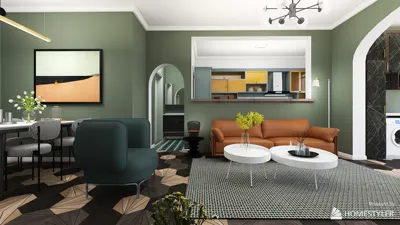
If Serene Japanese is the direction you're drawn to, Homestyler's 'Serene Japanese' gives you a ready-built library to start experimenting immediately — no sourcing, no scale guesswork, just design.

Mid-Century Solid Wood Nightstand with Decorative Backrest 3D Model

Minimalist Solid Wood Cane Boucle Fabric Dining Armchair 3D Model

Rustic Solid Wood Natural Branch Display Shelf 3D Model

Minimalist Ceramic Potted Pine Branch Decor 3D Model
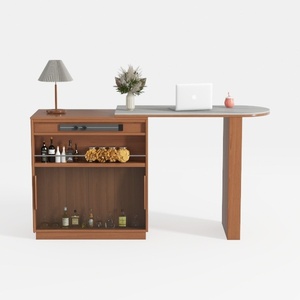
Modern Solid Wood Marble Top Multi functional Bar Cabinet Desk 3D Model

Mid Century Walnut Rattan 4 Drawer Dresser Cabinet 3D Model
FAQ
Q1: What are the main cultural differences between Serene Japanese and Scandinavian Minimalism?
The Serene Japanese style deeply reflects traditional Japanese aesthetics such as wabi-sabi and ma (negative space) and includes cultural artifacts like tatami and shoji. Scandinavian Minimalism prioritizes Nordic simplicity and functionality, focusing on practicality with a modern twist and less emphasis on traditional symbolism.
Q2: Which style is better for small urban apartments?
Scandinavian Minimalism tends to be more adaptable for compact, urban spaces due to its focus on furniture efficiency and bright, open layouts. Serene Japanese can work as well but requires careful selection of traditionally larger elements, like low seating and tatami, balancing authenticity with spatial constraints.
Q3: How do lighting approaches differ between these two styles?
Serene Japanese design utilizes soft, indirect lighting to maintain a tranquil atmosphere often emulating natural light filtered through paper screens. Scandinavian Minimalism favors ample natural light supplemented by functional yet unobtrusive light fixtures to brighten and warm the space.
Homestyler's roots trace back to Autodesk, the global leader in design and engineering software. That heritage lives on in every feature we build. Today, with a community of more than 18 million users worldwide, Homestyler continues to make professional-quality interior design accessible to everyone — from first-time decorators to seasoned architects.
With Homestyler, you can design and visualize your living spaces online with stunning, realistic results.
Design Now for FREE
































