

Introduction
Rustic Style embodies a deliberate celebration of natural imperfection and simplicity, deeply rooted in the ethos of rural life and traditional craftsmanship. This aesthetic originates from a desire to connect spaces with the organic world, favoring materials and forms that reflect authenticity instead of polished sophistication. By embracing the unrefined beauty of weathered wood, exposed structural elements, and earthy color palettes, Rustic interiors reject excess ornamentation and modern sleekness. Instead, they invite warmth, comfort, and an unmistakable tactile quality into spaces. The philosophy behind Rustic Style holds that beauty arises from the patina of age and the rawness of nature—it is the rugged, the handmade, and the lived-in that creates visual and emotional resonance. This style nurtures an environment where simplicity meets character through an honest portrayal of material origins. In doing so, it bridges past craftsmanship traditions with contemporary living, creating interiors that feel both timeless and grounded. Rustic Style is therefore not merely a decorative choice but a narrative of place, memory, and endurance expressed through spatial design, texture, and tone.
Core Elements
Color Palette: Rustics’ chromatic foundation lies in warm, earthy hues that echo the natural environment. Think moss greens, burnt sienna, deep ochres, and soft taupes—all hues that feel pulled from the surrounding landscape rather than imposed upon it. This restrained, nature-inspired palette provides a backdrop that enhances the raw materials used throughout the space without overwhelming or competing for attention. The colors convey a sense of grounded stability and evoke a welcoming ambiance reminiscent of a countryside hearth.
Materiality: One cannot speak of Rustic Style without acknowledging its unwavering commitment to authentic materials. Textural richness drives this style: heavily grained woods with visible knots, rough-hewn stone accents, and wrought iron details dominate interiors. Fabrics naturally sourced like burlap, linen, and leather offer tactile warmth while complementing the robust structural elements. The use of unfinished or aged materials encapsulates Rustic’s celebration of historical craftsmanship and imperfection, welcoming the story each surface carries. This profound material honesty creates depth and vitality within interiors, counterbalancing modern detachment from the tactile world.
Form and Shape: Rustic forms tend to be utilitarian and straightforward, drawn from traditional furniture and architectural elements that prioritize function. Shapes are sturdy and substantial, often oversized with a handcrafted quality — from chunky timber beams to large farmhouse tables with raw edges. Curves are rare and usually subtle; instead, rectangles, squares, and solid geometric forms dominate. This sense of grounded solidity reflects the lifestyle connection to land and labor—every piece feels as if forged with purpose and endurance. The overall composition stresses comfort and permanence over minimalist refinement.
Designing the Look
Integrating Rustic Style into interior projects requires careful selection of materials, colors, and forms to authentically capture its essence. Homestyler’s ‘Rustic Style’ offers a comprehensive set of ready-to-use 3D models specifically curated to embody this aesthetic, allowing designers to achieve authentic results with professional-grade textures and forms. This resource simplifies the exploration of Rustic interiors by providing a rich vocabulary of modeled elements—weathered wooden beams, stone fireplaces, handcrafted furniture—that are all pre-textured and modeled to the highest standard. Utilizing these assets empowers designers to focus on composition and layering of rustic elements within a spatial context, without the barrier of constructing each detail from scratch. The result is a simulation that communicates the tactile and visual warmth of Rustic Style with precision and ease. Moreover, these assets enable experimentation with lighting and color temperature complimentary to the style’s earthy hues, often bringing to life the nuanced interplay between natural and artificial light on raw materials. For designers aiming to create spaces conveying comfort, history, and grounded authenticity, this model pack is a practical and powerful tool for creating convincing Rustic interiors within varied project scales.

Minimalist Solid Wood Art Easel Display Stand 3D Model

Luxury Velvet Ruffled Decorative Throw Pillow 3D Model

Classic White Carved Rams Head Plant Stand Side Table 3D Model


Bohemian Rattan Glass Top Round Side Table 3D Model
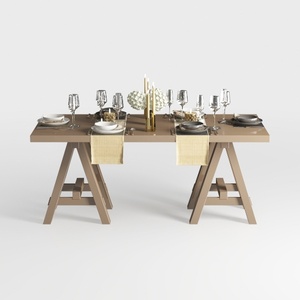
Modern Minimalist Solid Wood Dining Table Set 3D Model
FAQ
Q1: How can I prevent Rustic Style from making a space feel outdated or heavy?
Rustic interiors walk a fine line between historic charm and appearing antiquated. To avoid heaviness, mix rustic elements with clean-lined modern accents that offer contrast without eroding warmth. Use Rustic materials sparingly and deliberately rather than overcrowding. Incorporating ample natural light softens the rugged textures. Choosing lighter or mid-tone earthy colors over very dark woods also keeps spaces fresh while grounded.
Q2: What are some key furniture pieces that define Rustic Style?
Signature items include solid wood farmhouse tables with visible grain, distressed leather armchairs, simple open shelving made from rough lumber, and heavy iron fixtures. Furniture often features handmade joinery with exposed nails or bolts to emphasize authenticity. These tactile and substantial forms anchor Rustic interiors by lending durability and comfort.
Q3: Can Rustic Style work in urban apartments or is it only suited for country homes?
Absolutely, Rustic Style can translate well into urban settings by focusing on essential elements like natural textures and restrained earthy tones. In smaller spaces, select compact rustic furniture and avoid overuse of heavy materials. A single rustic focal element, such as a reclaimed wood accent wall or a stone fireplace surround, can introduce warmth without overwhelming modern urban architecture.
Homestyler's roots trace back to Autodesk, the global leader in design and engineering software. That heritage lives on in every feature we build. Today, with a community of more than 18 million users worldwide, Homestyler continues to make professional-quality interior design accessible to everyone — from first-time decorators to seasoned architects.
Homestyler's powerful 3D rendering feature brings your design concepts to life with incredible detail.
Zaprojektuj teraz za darmo
































