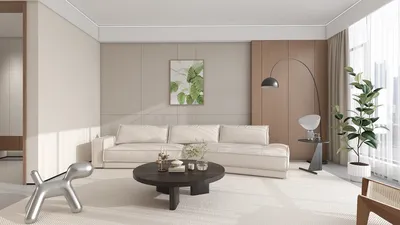


What is the Root Issue in No-Style Design?
The most common problem in No-Style design is the lack of deliberate intention, resulting in chaotic minimalism that fails to achieve true simplicity.
Quick Takeaways
1. No-Style risks becoming an unintentional mix of incomplete ideas. 2. Over-simplification can strip away essential personality. 3. Neglecting spatial harmony disrupts flow. 4. Inconsistent materials confuse the palette. 5. Poor lighting choices weaken subtle architectural features.
Introduction
I often see designers attracted to the No-Style ethos because of its promise of bare simplicity. However, it’s precisely this allure that leads many to misapply the concept, creating spaces that feel half-finished or like forgotten palettes without emotional connection. Ambiguity in intention can translate to confused environments that neither relax nor inspire, making No-Style one of the trickiest aesthetics to execute well.
Why It Goes Wrong
The fundamental error lies in mistaking emptiness for elegance. No-Style is often mishandled by either cluttering the space with random elements that negate its minimalist foundation or removing too much, resulting in sterile atmospheres lacking warmth or coherence. Incorrect spatial proportions or disregarding the dialogue between form and function convert this style’s intended quietness into visual dissonance.
Mistake 1
The Mistake: Introducing mismatched objects that compete rather than complement. Why It Happens: A misunderstanding that minimalism means fewer rules or any element can work. The Fix: Choose objects with clear related purposes and harmonious visual weights; limit the palette to 2-3 tonal ranges.
Mistake 2
The Mistake: Neglecting the importance of texture variation, resulting in flat, lifeless surfaces. Why It Happens: The assumption that smooth, bare surfaces define No-Style. The Fix: Incorporate subtle textures such as matte, rough linen, or soft wood grain to introduce quiet depth without breaking simplicity.
Mistake 3
The Mistake: Poor lighting that washes out the calm atmosphere or creates harsh contrasts. Why It Happens: Minimalist settings are incorrectly paired with typical bright, clinical lighting. The Fix: Use layered lighting with dimmable sources and focus on highlighting architectural details or natural materials.
Mistake 4
The Mistake: Spatial imbalance where large empty zones feel cold, or cramped corners disrupt flow. Why It Happens: Underestimating scale and volume due to an overemphasis on emptiness. The Fix: Design functional negative space that shapes movement and comfort, guided by architectural rhythm and proportion rules.
Mistake 5
The Mistake: Allowing the space to look unfinished because of incomplete narratives. Why It Happens: Viewing No-Style as the absence of style rather than a deliberate design choice. The Fix: Develop a clear, simple story about how each element interacts within the overall scheme and verify cohesion repeatedly during planning.
Designing the Look
Homestyler’s ‘No-Style’ offers a comprehensive set of ready-to-use 3D models specifically curated to embody this aesthetic, allowing designers to achieve authentic results with professional-grade textures and forms.

Modern Gold Metal Mesh 3 Tier Console Table 3D Model

Minimalist White Metal Slatted Armchair 3D Model

Minimalist White Metal TV Stand Cabinet With Open Shelves 3D Model
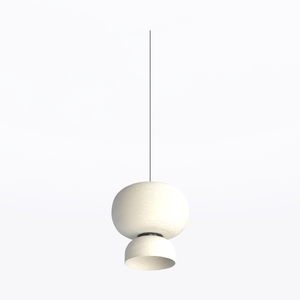
Minimalist White Fabric Pendant Lamp 3D Model

Minimalist Solid White Concrete Round Side Table 3D Model

Minimalist Neutral Tone Ceramic Vase Set 3D Model
FAQ
Q1: How can I ensure my No-Style interior doesn’t feel empty or cold?
Understanding that No-Style is about intentional simplicity rather than the absence of style is key. To prevent coldness, focus on layering subtle textures, such as soft fabrics, natural wood grains, or matte finishes. Warm, indirect lighting is critical; avoid harsh overhead lights and opt for adjustable lamps or concealed sources that highlight surfaces gently. Finally, allow the space's architectural form to contribute to the atmosphere by preserving clean, uncluttered lines that feel inviting rather than hollow.
Q2: What materials work best in a No-Style aesthetic?
Materials that offer understated elegance work best in No-Style spaces. This includes light-colored woods with natural grain, smooth concrete, unpolished plaster, and textiles like linen or cotton in neutral tones. The emphasis is on quality and texture rather than ornamentation. Avoid overly glossy or patterned surfaces, which can disrupt the calm balance. The goal is to create harmony through restraint and tactile subtlety.
Q3: Is it necessary to eliminate color entirely in No-Style design?
No; the absence of style does not mean absence of color. Instead, color should be applied sparingly and thoughtfully. Neutral palettes dominate, including whites, creams, soft greys, and muted earth tones, ensuring a cohesive and soothing environment. Accent colors, if used, must be restrained and carefully curated to maintain visual calm and serve a purpose, such as drawing attention to architectural features or adding warmth. This selective coloring prevents the space from feeling bland or disconnected.
Homestyler's roots trace back to Autodesk, the global leader in design and engineering software. That heritage lives on in every feature we build. Today, with a community of more than 18 million users worldwide, Homestyler continues to make professional-quality interior design accessible to everyone — from first-time decorators to seasoned architects.
Homestyler's powerful 3D rendering feature brings your design concepts to life with incredible detail.
Design Now for FREE
































